Cooling Tower Fill Block Size: How to Measure It Correctly
Cooling Tower Fill Block Size: How to Measure It Correctly
When planning a cooling tower fill replacement, one of the first things you need to know is the correct fill block size. It sounds simple, but measuring cooling tower fill is not always as straightforward as measuring a box.
Different cooling towers use different fill arrangements, sheet designs, corrugation patterns, and installation methods. If the measurements are incorrect, the new fill blocks may not fit properly. You could end up with gaps, overlapping sections, installation problems, or even reduced cooling performance.
Whether you are replacing old film fill in an industrial cooling tower or ordering new cooling tower media for a refurbishment project, this guide explains how to measure fill blocks accurately and what information you should prepare before requesting a quotation.
1. What Does Cooling Tower Fill Block Size Mean?
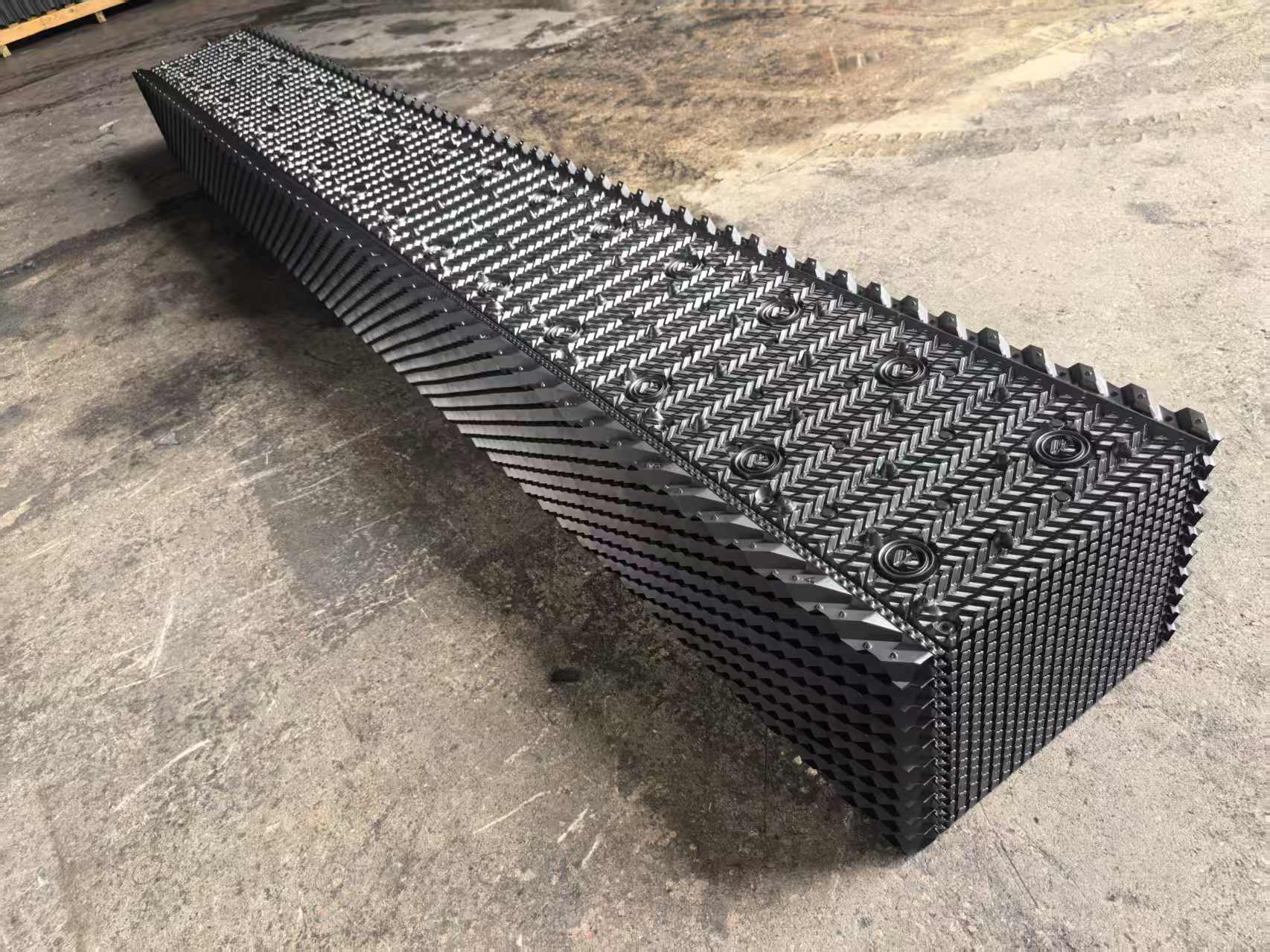
Cooling tower fill block size normally refers to the overall dimensions of an assembled fill pack or block. In most replacement projects, three measurements are required:
- Length: The dimension measured along the length of the fill block.
- Width: The side-to-side dimension of the assembled block.
- Height: The vertical dimension of the fill block when installed.
For example, a fill block may measure 600 mm × 1,000 mm × 1,200 mm. Always confirm which measurement represents the vertical direction, especially when the fill is installed at an angle or in a multi-section arrangement.
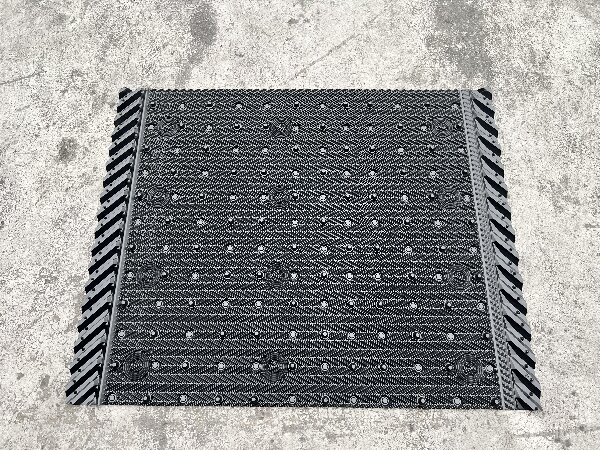
One important point: the overall fill block dimensions are not the same as the dimensions of an individual PVC sheet. A block is made from multiple sheets bonded or assembled together. Sheet width, sheet length, pitch, corrugation angle, and block dimensions all affect the final product.
2. How to Measure Cooling Tower Fill Blocks Step by Step
Step 1: Identify the Fill Arrangement
Before measuring, identify whether the cooling tower uses crossflow fill or counterflow fill.
Crossflow fill is commonly installed in a horizontal airflow arrangement. Water flows downward while air moves horizontally through the fill. The fill packs are often installed in sections between the tower structure and water distribution system.
Counterflow fill is normally installed beneath the water distribution system. Air moves upward against the downward-flowing water. Its block arrangement and support requirements may differ from those of crossflow fill.
Do not assume that two fill blocks with similar outside dimensions are interchangeable. Their airflow direction, water distribution arrangement, and corrugation design may be different.
Step 2: Measure the Overall Length
Measure the longest horizontal dimension of the assembled fill block. If the fill consists of several connected sections, measure each section separately and record the total installed length.
For irregular or segmented arrangements, do not rely only on the total dimension. Record the dimensions of each individual section, including any interlocking or overlapping areas.
Step 3: Measure the Overall Width
Measure from one outer edge of the fill block to the other. If several blocks are installed side by side, measure both the individual block width and the total installation width.
Pay attention to support beams, structural columns, and gaps between sections. The available installation space may be smaller than the original nominal block dimensions.
Step 4: Measure the Fill Height
Measure the vertical height of the fill pack from its bottom edge to its top edge. If the fill is installed in multiple layers, measure each layer separately and record the total fill depth.
Also check the clearance between the fill and nearby components, such as the water distribution pipes, spray nozzles, support grids, and drift eliminators. A replacement fill block must fit within the available space without interfering with these components.
Step 5: Record Sheet and Corrugation Details
Overall dimensions are only part of the information needed to reproduce an existing fill pack. For film fill cooling tower applications, the sheet design is equally important.
Where possible, record the following details:
- Material: PVC, PP, or another specified material.
- Sheet thickness.
- Sheet pitch or spacing.
- Corrugation angle.
- Flute profile and pattern.
- Sheet orientation and airflow direction.
- Whether the sheets are glued, welded, or mechanically assembled.
These details help determine whether the replacement Cooling Tower Media will match the original design and operating requirements.
3. Example: How to Record Cooling Tower Fill Block Measurements
Let's say you are replacing an existing crossflow fill pack. The measurements taken from the old installation are:
| Measurement | Recorded Size |
|---|---|
| Block length | 1,000 mm |
| Block width | 600 mm |
| Block height | 1,200 mm |
| Material | PVC |
| Sheet thickness | To be verified |
| Pitch and angle | To be verified |
This information provides a useful starting point for a quotation. However, before manufacturing, the supplier should also confirm the original fill arrangement, sheet profile, installation direction, and actual available space.
If the original fill is badly damaged or deformed, its current dimensions may not represent the original design. In that case, measurements from the tower structure and original drawings are often more reliable.
4. Common Mistakes When Measuring Cooling Tower Fill
Measuring Only One Fill Block
Some cooling towers contain multiple fill sections with different dimensions. Measuring only one block may lead to an incomplete order. Check every section, especially around corners, columns, and pipework.
Confusing Sheet Dimensions with Block Dimensions
A single corrugated sheet and an assembled fill block are two different things. The dimensions of the PVC sheet cannot be used directly as the finished block dimensions.
Ignoring the Installation Direction
Film fill relies on a specific arrangement of corrugated sheets to distribute water and allow airflow. Installing the fill in the wrong direction can affect heat transfer and pressure drop.
Forgetting the Support Structure
Before ordering replacement fill, check the support beams, grids, brackets, and available installation clearance. Even a correctly manufactured fill block can cause problems if the supporting structure has changed.
Choosing a Replacement Based on Size Alone
Two fill blocks may have identical dimensions but different thermal performance. Sheet thickness, flute geometry, pitch, material, and airflow characteristics all matter. A replacement should be checked against the cooling tower's operating conditions, not just its physical size.
5. What Information Should You Prepare Before Ordering Replacement Fill?
If you want to avoid repeated measurements and delays, prepare a basic specification sheet before contacting a cooling tower fill manufacturer.
- Cooling tower type: crossflow or counterflow.
- Number of fill blocks required.
- Length, width, and height of each block.
- Material and sheet thickness, if known.
- Pitch, corrugation angle, and flute profile, if known.
- Operating water temperature and water quality.
- Existing drawings, photos, or sample pieces.
- Installation method and delivery requirements.
Photos are particularly helpful. A few clear pictures showing the old fill, its installation direction, and the support structure can help a manufacturer understand the application much faster.
6. Choosing the Right Fill for a Cooling Tower Replacement Project
Once the measurements are confirmed, the next step is choosing the right replacement material and fill design.
PVC film fill is widely used in industrial cooling towers because it offers good heat transfer characteristics and can be manufactured in different sheet profiles and configurations. However, the right choice depends on water quality, operating temperature, fouling conditions, and the original tower design.
For general industrial applications, take a look at our Industrial Cooling Tower Fill.
If you are replacing complete fill packs or need blocks made to specific dimensions, our Cooling Tower Fill Blocks page provides more information about available fill block solutions.
For a cooling tower replacement, always confirm that the proposed fill is suitable for the tower's thermal duty, airflow, water loading, and structural arrangement. A simple dimensional match does not guarantee equivalent cooling performance.
7. Can Cooling Tower Fill Blocks Be Made to Custom Sizes?
Yes. Many replacement projects require custom dimensions because cooling towers have different layouts, ages, and structural designs. Standard fill block sizes may not fit every installation.
As a cooling tower fill manufacturer, we can produce different fill specifications for crossflow and counterflow applications. Customization may include block dimensions, sheet thickness, pitch, corrugation profile, material, and packing method, subject to the technical requirements of the project.
When the old fill is no longer available, drawings, measurements, photographs, or a sample sheet can help us evaluate a suitable replacement design.
8. Frequently Asked Questions
What are standard cooling tower fill block sizes?
There is no single standard size for all cooling towers. Fill block dimensions vary depending on tower design, manufacturer, airflow arrangement, and installation space. Always check the original drawings or measure the existing installation.
How do I measure cooling tower fill for replacement?
Measure the overall length, width, and height of each fill block. Then record the fill material, sheet thickness, pitch, corrugation angle, and installation direction. Photos and drawings can help confirm the details.
Can I replace old cooling tower fill with a different size?
Sometimes, but the new dimensions must fit the available space and maintain the required airflow and water distribution. Any design change should be checked by a qualified cooling tower engineer or the fill supplier before installation.
Does fill block size affect cooling tower performance?
Yes. Block dimensions influence how much fill can be installed in the tower, but performance also depends on the sheet profile, surface area, airflow resistance, water loading, and thermal design. Bigger blocks do not automatically mean better cooling.
What if the old fill is too damaged to measure?
Measure the available space inside the cooling tower and inspect the support structure. Original drawings, maintenance records, photos, and measurements from adjacent undamaged sections can also help determine the required dimensions.
9. Need Help Measuring Your Cooling Tower Fill?
Getting the fill block dimensions right is an important first step in any cooling tower replacement project. But you do not have to identify every technical detail on your own.
Send us your fill block dimensions, photos, drawings, or existing specifications. Our team can help review the requirements and recommend a suitable PVC cooling tower fill solution for your application.
We manufacture crossflow and counterflow fill with a wide range of moulds and produce our own PVC roll sheets, helping us maintain consistent material quality and reliable delivery.
Contact our team for cooling tower fill specifications and a quotation.