Cooling Tower Fill Replacement Cost: 6 Factors That Affect the Price
Replacing cooling tower fill is one of the most common maintenance jobs for industrial cooling towers. But when you ask for a replacement price, you may receive very different quotations from different suppliers. Why does this happen?
The cost of cooling tower fill replacement is not determined by the fill material alone. Tower dimensions, fill design, material thickness, operating conditions, installation requirements, and shipping volume can all affect the final price.
If you are planning a cooling tower replacement project, this guide explains what you should check before requesting a quotation and how to avoid unnecessary costs.
1. What Is the Typical Cost of Cooling Tower Fill Replacement?
There is no single standard price for cooling tower fill replacement. Two cooling towers with similar dimensions may require completely different fill designs and materials.
For example, a small HVAC cooling tower using standard PVC film fill will have a different replacement cost from a large industrial cooling tower operating with high water temperatures or heavily contaminated circulating water.
When calculating the budget, it is useful to separate the cost into several parts:
- Cooling tower fill material: The price of PVC or PP fill sheets, blocks, or assembled packs.
- Custom manufacturing: Special dimensions, flute designs, sheet thicknesses, and mold requirements.
- Shipping and packaging: Fill media can occupy considerable container space, so freight may be a significant part of the total cost.
- Installation labor: Removing old fill, cleaning the tower, and installing new media.
- Additional components: Support grids, spacers, fasteners, and other parts that may need replacement.
For an accurate estimate, it is better to evaluate the complete replacement project rather than compare suppliers only by the price per square meter or per block.
2. Six Main Factors That Affect Cooling Tower Fill Replacement Cost
2.1 Cooling Tower Size and Fill Quantity
The first factor is the amount of fill required. Larger cooling towers naturally need more Cooling Tower Media, but the relationship is not always straightforward.
The fill arrangement, block dimensions, tower layout, and available installation space all affect the quantity. Some towers also have irregular shapes or restricted access, which can increase cutting, fitting, and installation work.
Before requesting a quotation, prepare the tower dimensions and the required fill arrangement. If possible, provide drawings or photos of the existing fill packs.
2.2 Fill Material: PVC or PP?
PVC and PP are two commonly used materials for cooling tower fill. Each has its own advantages, and the right choice depends on the operating conditions.
- PVC cooling tower fill: Commonly used in HVAC and many industrial cooling tower applications. It offers a practical balance of cost, performance, and ease of manufacturing.
- PP cooling tower fill: Often selected for applications requiring higher temperature resistance or particular chemical compatibility. The actual suitability depends on the PP grade and operating environment.
Do not select a material based on price alone. Water temperature, chemical concentration, cleaning methods, and mechanical requirements should all be considered.
If you are comparing material options, see our Industrial Cooling Tower Fill for different industrial applications.
2.3 Fill Design and Flute Pitch
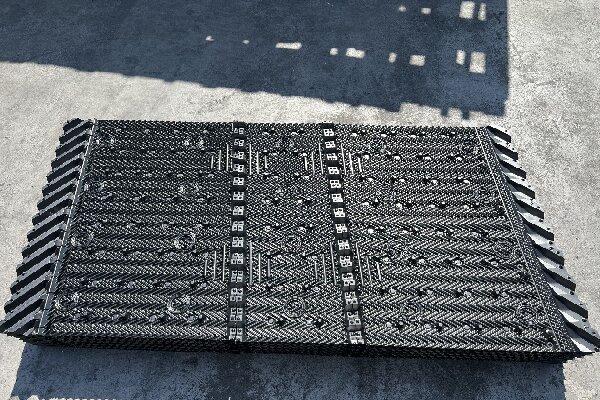
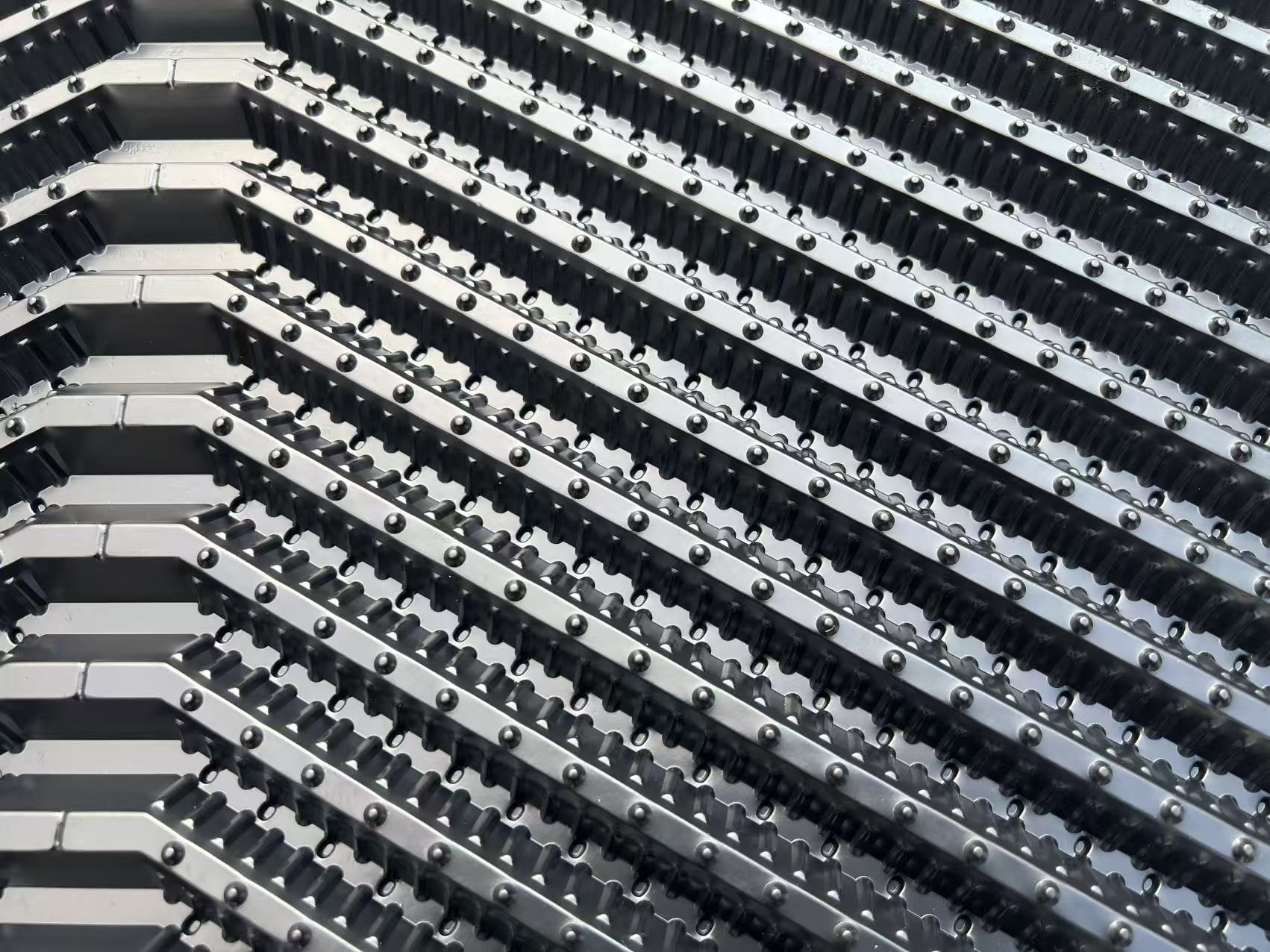
Film fill cooling tower systems use closely spaced corrugated sheets to create a large surface area for heat and mass transfer. However, not every Corrugated Fill design is suitable for every cooling tower.
Flute pitch, sheet geometry, corrugation angle, and fill height can affect heat transfer, airflow resistance, and fouling behavior.
Smaller flute spacing may provide more surface area, but it can also make the fill more sensitive to suspended solids and biological growth. Wider passages may be more suitable for water with a higher solids content.
When replacing existing tower fill, it is usually safer to check the original design and operating conditions before changing the flute geometry. A different design should be evaluated for both thermal performance and pressure drop.
2.4 Sheet Thickness and Product Quality
Sheet thickness has a direct influence on material consumption and manufacturing cost. Thicker sheets generally use more raw material, but simply choosing the thickest option does not guarantee better cooling tower performance.
What matters is whether the fill has enough mechanical strength to maintain its shape under actual operating conditions.
Pay attention to:
- Actual sheet thickness and thickness consistency.
- Uniform corrugation and bonding quality.
- Resistance to deformation during operation.
- Material suitability for water temperature and chemical conditions.
A reliable manufacturer should be able to explain the material specifications rather than offering only a price per kilogram.
2.5 Fouling and Water Quality
Water quality can have a major influence on the service life of cooling tower fill. If circulating water contains suspended solids, minerals, algae, or other contaminants, deposits can gradually accumulate between the fill sheets.
As fouling becomes more severe, airflow resistance may increase and cooling performance may decline. In some cases, cleaning can restore the fill. In others, replacement is the more practical solution.
For applications with a higher fouling risk, an anti-fouling design with wider passages may be worth considering. You can learn more about our Anti-Fouling Fill Media.
2.6 Transportation and Installation
Shipping is easy to underestimate when budgeting for cooling tower fill replacement. Fill packs are relatively lightweight compared with many industrial components, but they can take up a large amount of space.
Packaging method, container loading, destination, and whether the fill is shipped as flat sheets or assembled packs can all affect freight costs.
Installation conditions matter too. If the tower is difficult to access, or old fill needs to be removed and disposed of, labor costs may become a significant part of the project.
3. When Should You Replace Cooling Tower Fill Instead of Cleaning It?
Not every dirty cooling tower fill needs to be replaced. In many cases, proper cleaning can restore acceptable airflow and water distribution. The important thing is to identify whether the fill is still structurally sound.
Replacement should be considered when you find:
- Severe deformation, sagging, or collapsed fill packs.
- Cracks or brittle sheets caused by aging or operating conditions.
- Heavy scaling or deposits that cannot be removed effectively.
- Damaged bonding points or separated fill sheets.
- Persistent high pressure drop or poor cooling performance after cleaning.
Before making a decision, inspect the fill throughout the tower rather than checking only the top layer. Some damage may be hidden inside the pack.
4. How to Reduce the Total Cost of Cooling Tower Replacement
There are several practical ways to control replacement costs without compromising cooling tower performance.
Choose the Right Fill Design for Your Water Conditions
Do not automatically replace old fill with a tighter flute design. If your cooling water contains a lot of suspended solids, a design with more open passages may reduce the risk of frequent blockage and maintenance.
Confirm Dimensions Before Ordering
Incorrect dimensions can lead to cutting waste, installation delays, or even a second order. Confirm the fill width, length, height, pitch, and block arrangement before production begins.
Compare the Complete Supply Cost
A low factory price does not always mean a low project cost. Compare product specifications, packaging, freight, delivery time, and installation requirements together.
Work with a Manufacturer That Can Customize
Standard sizes are not suitable for every cooling tower. A manufacturer with different molds and in-house raw material production may be able to provide a closer match to your existing fill design and reduce unnecessary modifications.
5. What Information Should You Prepare Before Requesting a Quote?
If you want suppliers to provide an accurate quotation, try to prepare the following information:
- Cooling tower type: crossflow or counterflow.
- Existing fill dimensions: width, length, and height.
- Fill pitch or flute spacing, if available.
- Material preference: PVC or PP.
- Sheet thickness, if known.
- Required quantity or number of cooling tower cells.
- Operating water temperature and water quality.
- Delivery destination and preferred packaging method.
- Photos, drawings, or samples of the existing fill.
You do not need to know every technical detail before contacting a manufacturer. Photos and basic dimensions are often enough to start a discussion and identify the right fill option.
6. Why Does Buying Directly from a Cooling Tower Fill Manufacturer Matter?
When sourcing cooling tower fill, working directly with a manufacturer can make communication and customization easier.
At Fengbei Plastic, we manufacture PVC and PP cooling tower fill for both crossflow and counterflow applications. With more than 350 molds and our own PVC roll-sheet production, we can support different dimensions, flute designs, and project requirements.
Producing PVC raw materials in-house also gives us better control over material quality and production scheduling. For replacement projects, we can review existing fill samples, drawings, or dimensions to help identify a suitable product.
Whether you need standard Film Fill, industrial tower fill, or customized Corrugated Fill, the goal is not simply to supply new media. It is to help you find a practical replacement that fits the cooling tower and its operating conditions.
7. Frequently Asked Questions
How much does cooling tower fill replacement cost?
The cost depends on fill quantity, material, sheet thickness, design, packaging, shipping, and installation. The most reliable way to get a price is to provide the existing fill dimensions, specifications, and required quantity.
How long does cooling tower fill last?
There is no fixed service life for all cooling tower fill. Material quality, water treatment, operating temperature, UV exposure, and maintenance practices all affect its lifespan. Regular inspection is more useful than relying on a fixed replacement schedule.
Can I replace PVC fill with PP fill?
In some applications, yes. However, you should first check operating temperature, chemical compatibility, fill geometry, and thermal performance requirements. A material change should not be made based on price alone.
Can I replace only part of the cooling tower fill?
Partial replacement may be possible if the remaining fill is still in good condition and the new fill can match the existing arrangement. However, mixing different designs or heights may affect water distribution and airflow, so compatibility should be checked first.
Can I use a different fill design during replacement?
Yes, but it should be evaluated carefully. Changes in flute pitch, fill height, or geometry can affect heat transfer and pressure drop. Ask the manufacturer or a cooling tower engineer to review the design before ordering.
8. Final Advice: Compare More Than the Price per Block
Cooling tower fill replacement is an investment in the long-term operation of your cooling system. The cheapest product may not be the most economical choice if it causes higher pressure drop, frequent cleaning, or early deformation.
Before placing an order, compare the material, dimensions, fill design, quality control, and total delivered cost. A properly selected cooling tower fill can help restore cooling performance and reduce unnecessary maintenance work.
If you are planning a cooling tower replacement project, contact Fengbei Plastic. Send us your fill dimensions, photos, or drawings, and we will help you review suitable PVC or PP cooling tower fill options for your application.