How to Reduce Scale Buildup on Cooling Tower Fill
How to Reduce Scale Buildup on Cooling Tower Fill
Scale buildup is one of the most common problems in cooling tower operation. If you have ever opened a cooling tower and found white, hard deposits covering the fill surfaces, you already know how difficult this problem can be.
At first, a little scale may not seem like a serious issue. But as deposits continue to grow, they can block the water distribution channels, reduce airflow, and prevent water from spreading evenly over the fill. Eventually, cooling performance drops, fan energy consumption may increase, and maintenance becomes more expensive.
So, how can you reduce scale buildup on cooling tower fill? In our experience, the best approach is to control water quality, maintain proper operating conditions, and choose suitable fill media for the application. Let's look at what actually works in the field.
1. Why Does Scale Build Up on Cooling Tower Fill?
Before trying to remove scale, it is important to understand where it comes from.
Cooling towers continuously evaporate a portion of the circulating water to remove heat. However, dissolved minerals such as calcium and magnesium do not evaporate with the water. As evaporation continues, these minerals become more concentrated in the remaining water.
When their concentration becomes too high, they can precipitate and form hard deposits on the cooling tower fill, water distribution pipes, spray nozzles, and basin surfaces.
Several operating conditions can make the problem worse:
High Water Hardness
Water containing high levels of calcium and magnesium has a greater tendency to form calcium carbonate and other mineral deposits. If makeup water is naturally hard, scale control needs particular attention.
High Cycles of Concentration
As water evaporates, dissolved solids become more concentrated. If blowdown is insufficient, the cycles of concentration may become too high, increasing the risk of scale formation.
Incorrect Water Treatment
Insufficient scale inhibitors, poor chemical dosing, or unstable pH control can allow minerals to precipitate more easily. Water treatment should be adjusted according to the actual water analysis and operating conditions.
Poor Water Distribution
When spray nozzles become blocked or water is distributed unevenly, some areas of the fill may receive too little water. These dry or partially wetted areas can become more vulnerable to mineral deposits and other fouling problems.
2. How to Reduce Scale Buildup on Cooling Tower Fill
There is no single chemical or maintenance method that solves every scaling problem. A reliable solution usually combines water treatment, regular inspection, and proper tower operation.
1. Control Water Hardness and Water Chemistry
Start with a water analysis. Check calcium hardness, total alkalinity, pH, conductivity, and other relevant water quality indicators.
Based on the results, your water treatment specialist can determine whether softening, chemical scale inhibitors, or other treatment methods are appropriate.
Do not simply increase chemical dosage whenever scale appears. Excessive or unsuitable chemical treatment can create other problems, including corrosion or additional deposits. The treatment program should be designed for the actual water conditions.
2. Maintain Proper Blowdown and Cycles of Concentration
Blowdown removes a portion of concentrated circulating water and replaces it with fresh makeup water. This helps prevent dissolved minerals from building up to levels where they are likely to precipitate.
Conductivity-based blowdown control can help maintain more consistent water quality. However, the correct cycles of concentration depend on makeup water quality, system design, and the water treatment program.
If blowdown is too low, mineral concentration may rise. If it is unnecessarily high, water and treatment chemicals are wasted. The goal is to maintain a suitable balance.
3. Keep Spray Nozzles and Water Distribution Systems Clean
Even a well-designed cooling tower fill cannot perform properly if water is not distributed evenly.
Inspect spray nozzles, distribution basins, and headers regularly. Remove mineral deposits and debris that may restrict water flow. Make sure the water reaches the entire fill surface rather than concentrating in only a few areas.
Good water distribution helps maintain effective wetting across the film fill cooling tower and reduces the chance of localized dry spots.
4. Schedule Regular Cooling Tower Fill Inspections
Don't wait until cooling performance drops significantly before checking the fill.
During routine inspections, look for:
- White or yellowish mineral deposits on fill surfaces.
- Blocked or narrowed water passages.
- Uneven water distribution across the fill pack.
- Increased pressure drop or reduced airflow.
- Cracked, deformed, or brittle fill sheets.
Taking photos during inspections is a simple way to compare the condition of the fill over time. It also helps maintenance teams decide whether cleaning is sufficient or a cooling tower replacement project should be considered.
3. How to Clean Scale from Cooling Tower Fill
If scale has already formed, cleaning may help restore water passages and improve heat transfer. But the cleaning method should depend on the type of deposit and the condition of the fill.
Light Scale Deposits
For light deposits, flushing with suitable water and removing loose material may be sufficient. Check that the spray system is working correctly and that the water can flow freely through the fill.
Heavy Mineral Deposits
Hard calcium-based deposits may require a controlled chemical cleaning process. The cleaning chemical, concentration, temperature, and contact time should be selected by a qualified water treatment professional.
Always check chemical compatibility with the fill material and other cooling tower components before cleaning. PVC and PP fill media have different material characteristics, and unsuitable chemicals or excessive cleaning conditions can damage the sheets.
When Should You Avoid Aggressive Cleaning?
If the fill is already brittle, badly deformed, cracked, or heavily blocked, aggressive cleaning may cause more damage than it solves.
In these cases, compare the cost and expected service life of cleaning with the cost of replacing the damaged fill. A replacement project may be the more practical long-term solution.
4. Can Cooling Tower Fill Design Help Reduce Scaling?
Yes, fill design can make a difference, although it cannot eliminate scale formation on its own.
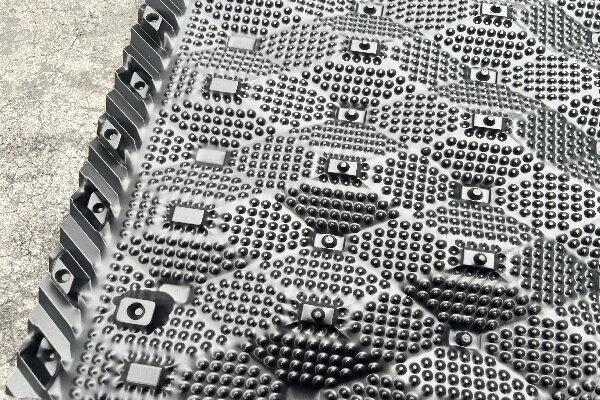
Different fill designs have different channel geometries, spacing, and surface characteristics. These affect water distribution, airflow resistance, fouling behavior, and cleaning access.
Choose Fill with Suitable Channel Spacing
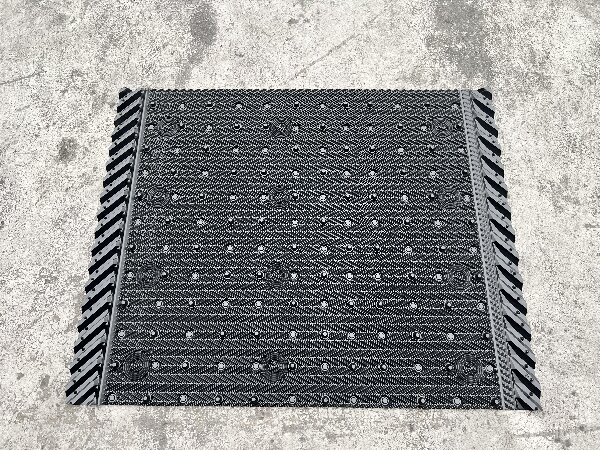
Fine-pitch film fill provides a large heat transfer surface, making it suitable for many applications. However, in water with high suspended solids or a strong fouling tendency, narrow passages may be more vulnerable to blockage.
For these applications, engineers should evaluate wider-channel or anti-fouling designs. The right choice depends on water quality, tower configuration, thermal requirements, and available airflow.
Consider Anti-Fouling Cooling Tower Fill
Anti-fouling fill is designed for applications where deposits, suspended solids, or biological fouling are major concerns. Its channel design can make it more suitable for certain difficult water conditions.
However, anti-fouling fill does not mean scale-proof fill. Proper water treatment and routine maintenance are still necessary.
If your cooling tower frequently suffers from fouling or mineral deposits, you can learn more about our Anti-Fouling Fill Media and review whether its design is suitable for your operating conditions.
5. PVC or PP Cooling Tower Fill: Which Is More Suitable?
Material selection is another important part of a cooling tower fill replacement project.
PVC fill is widely used in industrial and HVAC cooling towers because it offers a practical balance of cost, performance, and manufacturing flexibility. PP fill can be considered for applications that require different temperature or chemical resistance characteristics, depending on the specific material grade and operating conditions.
When selecting a material, engineers should consider:
- Normal and maximum operating water temperature.
- Water chemistry and chemical cleaning requirements.
- Exposure to sunlight and outdoor conditions.
- Mechanical strength and expected service life.
- Fill geometry and compatibility with the existing tower.
For industrial applications, it is important to evaluate the complete operating environment rather than choosing fill based on material name alone.
You can also review our Industrial Cooling Tower Fill for different industrial cooling tower configurations and project requirements.
6. When Is Cooling Tower Fill Replacement Necessary?
Cleaning is not always the best answer. If the fill has lost its structural strength or the deposits cannot be removed without damaging the sheets, replacement should be considered.
Here are some common signs that a cooling tower fill replacement may be necessary:
- Large areas of fill are blocked by hard mineral deposits.
- Fill sheets have become brittle, cracked, or deformed.
- Water distribution remains uneven after cleaning and nozzle maintenance.
- Cooling performance cannot return to the required level.
- Repeated cleaning costs are becoming too high.
Before replacing the fill, measure the existing fill dimensions and check the tower's internal layout. Confirm the fill type, sheet spacing, block dimensions, support arrangement, and water flow direction.
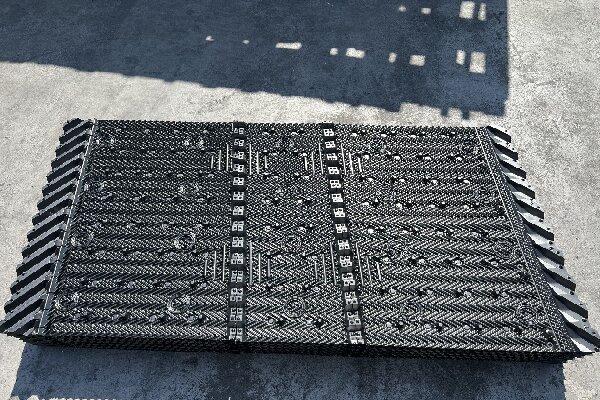
For crossflow and counterflow cooling towers, the replacement fill must match the tower design and operating requirements. Using the wrong geometry can affect both thermal performance and pressure drop.
7. A Practical Scale Prevention Checklist for Maintenance Teams
For day-to-day operation, a simple inspection routine can prevent small scaling problems from turning into expensive maintenance work.
- Test makeup and circulating water quality regularly.
- Monitor conductivity and maintain suitable blowdown control.
- Review chemical treatment performance with your water treatment provider.
- Inspect spray nozzles and distribution pipes for blockage.
- Check cooling tower fill surfaces for early mineral deposits.
- Record changes in cooling performance and pressure drop.
- Clean the fill using a method compatible with its material.
- Evaluate anti-fouling fill or replacement options when recurring problems cannot be controlled.
8. Final Thoughts: Preventing Scale Is Better Than Removing It
Scale buildup on cooling tower fill is usually a water quality and operating issue, not simply a problem with the fill itself.
The most effective long-term approach is to keep water chemistry under control, maintain proper blowdown, ensure even water distribution, and inspect the fill before deposits become severe.
If your cooling tower operates with hard water or frequently experiences fouling, it may also be worth reviewing the existing fill design. The right corrugated fill or anti-fouling cooling tower media can make maintenance easier when selected according to the actual operating conditions.
At Fengbei Plastic, we manufacture cooling tower fill for both crossflow and counterflow applications. With more than 350 moulds and in-house PVC sheet production, we can support different fill dimensions, designs, and project requirements.
If you are planning a cooling tower fill replacement or looking for a suitable tower fill solution, feel free to contact our team. We would be glad to review your requirements and help you find a practical solution.
```