Cooling Tower Fill Pressure Drop Explained: What Engineers Need to Know
Cooling Tower Fill Pressure Drop Explained: What Engineers Need to Know
When a cooling tower starts losing performance, most engineers check the water flow, fan operation, and temperature readings first. But there is another factor that deserves attention: pressure drop across the cooling tower fill.
Pressure drop affects how much air the fan needs to move through the tower. If the resistance becomes too high, airflow may decrease, fan power consumption can rise, and the cooling tower may struggle to reach its target cold-water temperature.
Understanding cooling tower fill pressure drop helps you choose the right fill media, diagnose performance problems, and plan a cooling tower replacement without creating unnecessary operating costs.
1. What Is Cooling Tower Fill Pressure Drop?
In a cooling tower, air passes through the fill while water flows over the fill surface. The fill creates contact between air and water, allowing heat to transfer from the warmer water to the air.
However, the fill also creates resistance to airflow. The pressure difference measured before and after air passes through the fill is commonly called the fill pressure drop.
In simple terms, the higher the resistance, the harder the fan has to work to move air through the tower. This does not mean that lower pressure drop is always better. A cooling tower fill must provide enough air-water contact for effective heat transfer while keeping airflow resistance within an acceptable range.
2. Why Does Pressure Drop Matter in a Film Fill Cooling Tower?
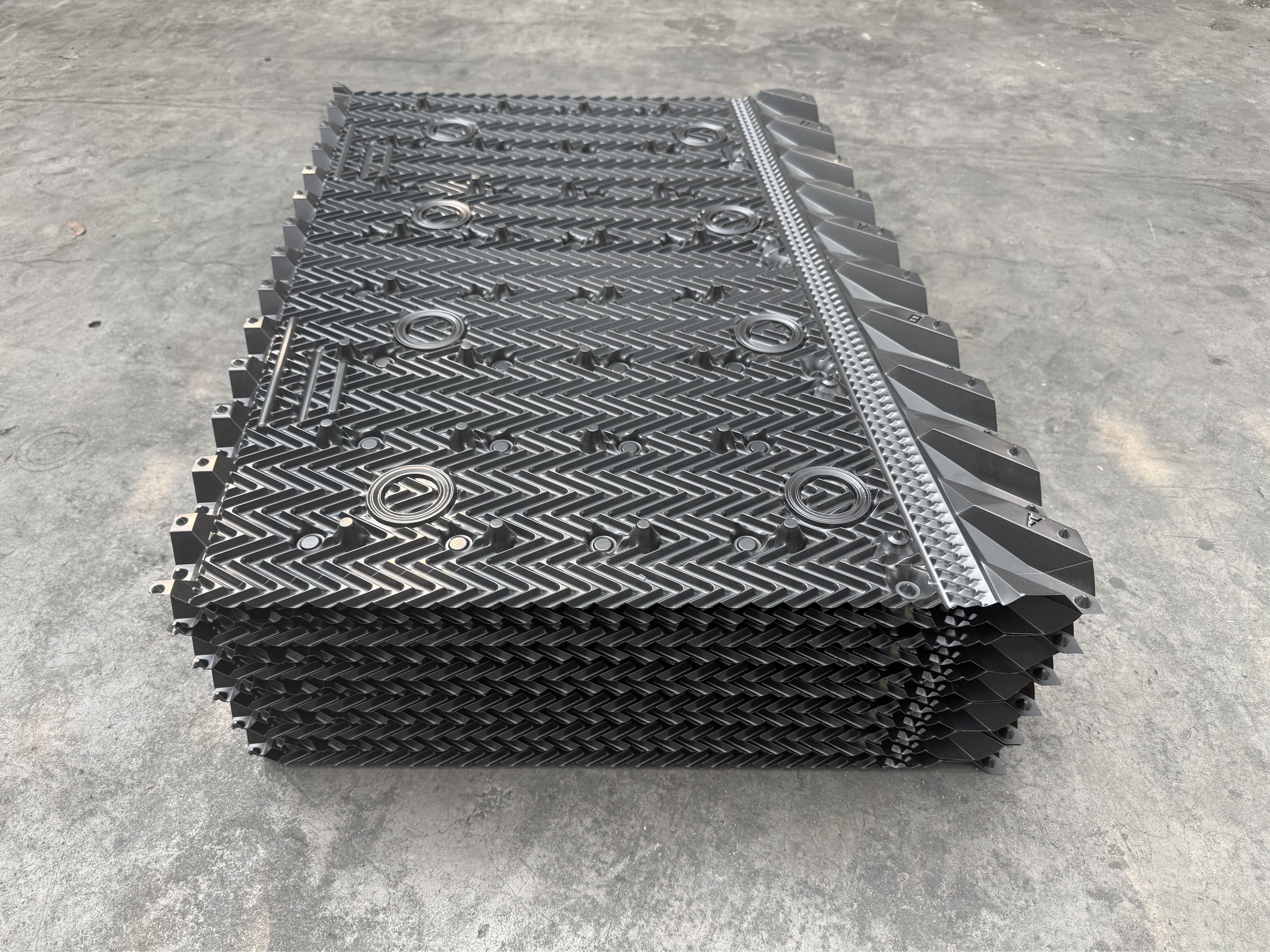
A film fill cooling tower uses closely spaced sheets to spread water into thin films. This arrangement provides a large effective contact area between air and water, making film fill suitable for many industrial and HVAC cooling applications.
The same closely spaced channels that improve contact can also restrict airflow if the fill geometry is unsuitable for the operating conditions or if deposits build up between the sheets.
Airflow and fan energy consumption
When the pressure drop across the fill increases, the fan may need to operate at a higher pressure to maintain the required airflow. Depending on the fan curve and control system, this can increase power consumption or reduce the actual airflow through the tower.
For a fixed airflow and fan efficiency, a useful engineering approximation is that the fan power associated with overcoming an additional pressure loss increases in proportion to airflow multiplied by pressure rise. Actual power consumption also depends on the system curve, fan speed, and operating conditions.
Cooling capacity and approach temperature
If airflow falls below the design requirement, heat and mass transfer may decrease. The tower may then struggle to cool the circulating water to the desired temperature, especially during hot weather or periods of high process demand.
However, pressure drop alone does not determine cooling capacity. Water distribution, inlet-water temperature, wet-bulb temperature, fill condition, and air-water flow rates must also be considered.
3. What Causes High Pressure Drop Across Cooling Tower Fill?
Fouling, scale, and biological growth
One of the most common causes is the accumulation of scale, suspended solids, algae, and biological deposits. These materials can narrow the air passages between fill sheets and create uneven airflow.
If the cooling tower operates with poor water treatment or receives water containing high levels of suspended solids, deposits may build up faster than expected. In severe cases, blocked passages can cause significant airflow resistance and uneven water distribution.
Incorrect fill spacing or geometry
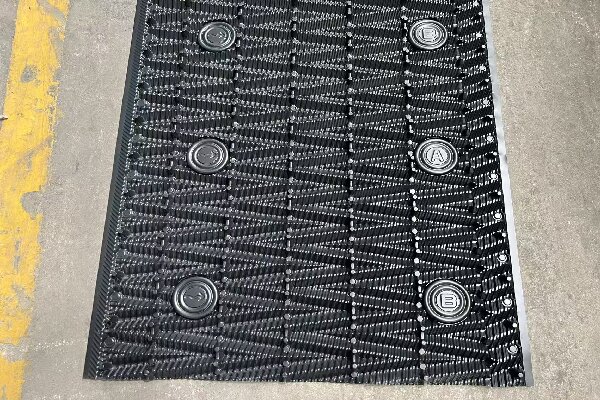
Not all Corrugated fill designs have the same pressure-drop characteristics. Sheet spacing, flute geometry, channel direction, fill depth, and the arrangement of the fill pack all influence airflow resistance.
A fill design with narrow passages may provide a large contact area, but it can also be more sensitive to fouling in applications with dirty circulating water. Choosing fill based only on surface area can therefore lead to operating problems.
Improper installation or compressed fill packs
Cooling tower fill blocks must be installed according to the intended arrangement. Misaligned sheets, compressed blocks, gaps between packs, or incorrectly positioned supports can disturb airflow and water distribution.
During a cooling tower replacement project, engineers should check the available space, support structure, fill dimensions, and airflow path before installing new tower fill.
Excessive water loading
Water flow also affects the resistance through some fill designs. Excessive water loading, uneven distribution, or water collecting in areas where it should drain freely may affect the effective airflow passages.
Before replacing the fill, check the spray nozzles, distribution headers, and operating water flow. A fill problem is sometimes caused or made worse by a water distribution problem.
4. How Fill Design Affects Pressure Drop
The relationship between heat transfer and pressure drop is one of the most important considerations when selecting Cooling Tower Media. Engineers need to balance thermal performance, airflow resistance, fouling risk, and operating cost rather than optimize only one parameter.
Film fill and corrugated fill
Film fill generally uses formed sheets to create thin water films and extensive contact between air and water. Corrugated fill refers to the shaped sheet geometry used in many fill designs. Corrugation angle, flute pitch, channel arrangement, and sheet spacing all influence the resulting pressure drop and heat-transfer performance.
There is no single pressure-drop value that applies to every film fill or corrugated fill product. Two products with similar dimensions may behave differently because of their geometry, depth, water loading, and test conditions.
Counterflow and crossflow fill
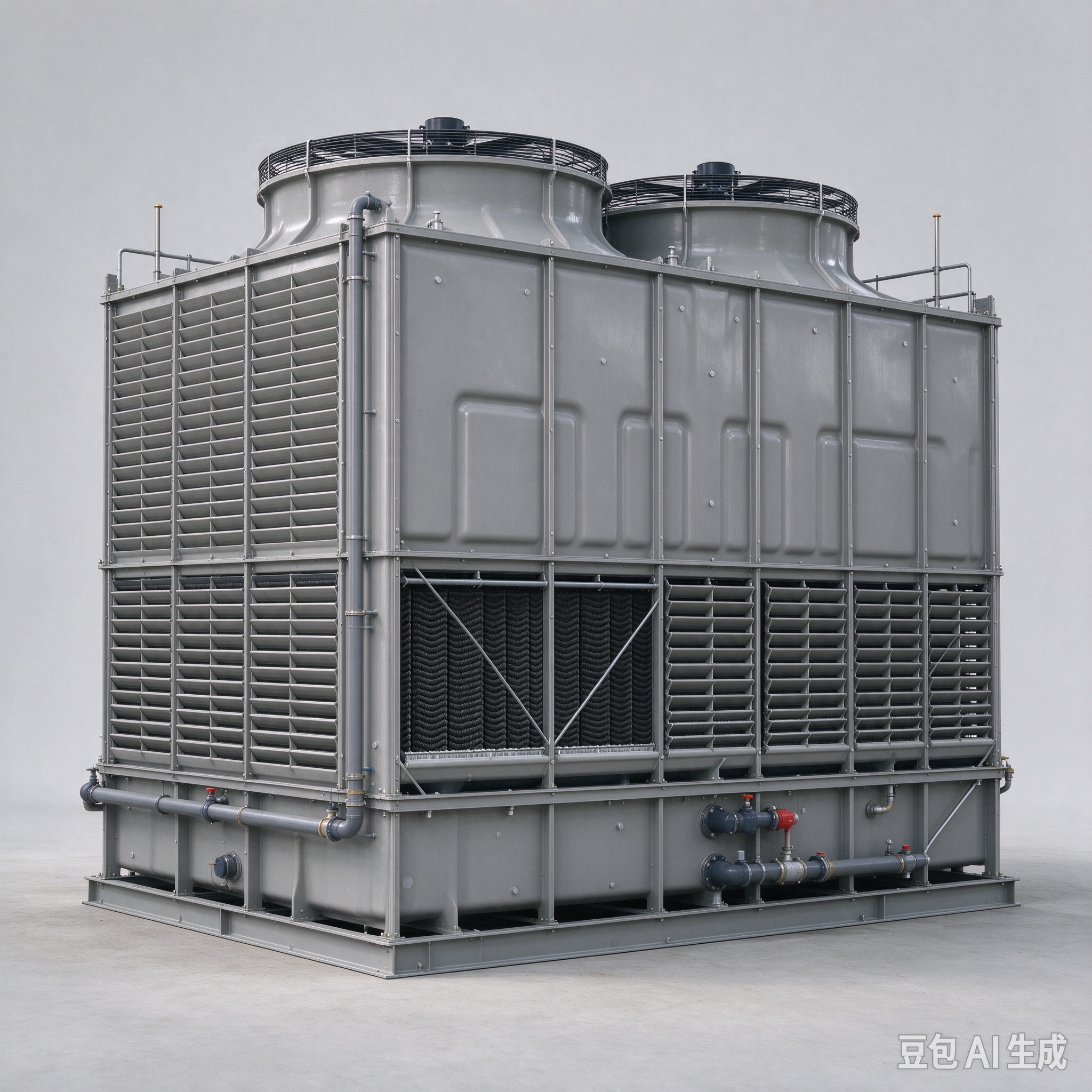
In a counterflow cooling tower, air moves upward while water flows downward through the fill. In a crossflow cooling tower, air moves horizontally through the fill while water flows downward.
The airflow path and the fill arrangement differ between these systems, so pressure-drop data should be evaluated using the appropriate configuration. A fill product should not be selected solely because it has a lower pressure drop under different test conditions.
For project-specific options, see our Counter Flow Fill Media page for counterflow applications.
5. How to Check Cooling Tower Fill Pressure Drop
If you suspect that the fill is restricting airflow, start with operating measurements before deciding to replace the fill. A single pressure reading rarely explains the entire problem.
Step 1: Measure the pressure difference
Use suitable pressure-measuring instruments to measure the static pressure difference across the fill. Record the fan speed, airflow conditions, water flow, and other relevant operating data at the same time.
Step 2: Compare readings under similar conditions
Compare the measurements with the original design data, commissioning records, manufacturer performance curves, or previous readings taken under comparable conditions. Pressure drop changes with airflow, so measurements taken at different fan speeds may not be directly comparable.
Step 3: Inspect the fill condition
Look for blocked channels, scale deposits, biological growth, deformed sheets, collapsed fill blocks, and uneven water distribution. Follow site safety procedures before entering or inspecting any cooling tower structure.
Step 4: Check the fan and air path
Inspect fan blades, rotation, speed, louvers, air inlets, drift eliminators, and other components that may restrict airflow. High system resistance does not always originate in the fill itself.
Step 5: Decide whether cleaning or replacement makes sense
If deposits can be removed safely and the fill remains structurally sound, cleaning may restore performance. If the fill is brittle, badly deformed, permanently blocked, or damaged by chemical or thermal exposure, cooling tower replacement of the fill may be the more practical long-term solution.
6. How to Select Cooling Tower Fill with the Right Pressure Drop
When selecting replacement fill, avoid choosing a product based only on sheet spacing or advertised surface area. The best option depends on the cooling tower design and the conditions in which it operates.
Before making a selection, review the following information:
- Cooling tower type: counterflow or crossflow.
- Required cooling capacity and design water flow.
- Airflow rate, fan performance, and available static pressure.
- Fill dimensions, depth, flute geometry, and sheet spacing.
- Operating water quality and the risk of fouling or scaling.
- Water temperature, chemical exposure, and material compatibility.
- Available installation space and support requirements.
For industrial applications, a suitable fill design should provide the required thermal performance without exceeding the airflow resistance the tower can handle. Where operating conditions are demanding, engineers should review pressure-drop and thermal-performance data together.
Explore our Corrugated Cooling Tower Fill options for different fill configurations and project requirements.
7. Can Low Pressure Drop Always Improve Cooling Tower Performance?
Not necessarily. A low pressure drop can reduce airflow resistance, but it does not automatically mean that the fill will deliver the required cooling capacity.
If the fill provides insufficient air-water contact under the actual operating conditions, the tower may not achieve the desired thermal performance. On the other hand, a high-area fill with excessive resistance may limit airflow or increase fan energy consumption.
The practical goal is to find a suitable balance between heat transfer, pressure drop, fouling resistance, and the operating cost of the cooling tower. This is why pressure-drop data should always be considered together with thermal performance data.
8. Frequently Asked Questions
What is a normal pressure drop for cooling tower fill?
There is no universal normal value. Pressure drop depends on fill geometry, fill depth, airflow rate, water loading, and the test method. Use the manufacturer's performance data for the specific fill design and compare measurements at equivalent operating conditions.
Does dirty cooling tower fill increase pressure drop?
It often does. Scale, biological growth, and suspended solids can restrict air passages and increase resistance. However, the actual effect depends on the type and location of the deposits, so inspection and measurement are both important.
Should I replace cooling tower fill if pressure drop is high?
Not immediately. First check the measuring method, airflow, fan condition, water distribution, and fill fouling. Cleaning may be sufficient in some cases. Replacement is worth considering when the fill is permanently blocked, deformed, brittle, or no longer delivers acceptable performance.
Can different corrugated fill designs have different pressure drops?
Yes. Sheet spacing, flute geometry, fill depth, and the arrangement of the channels can all influence airflow resistance. Compare performance data under equivalent test conditions rather than relying on a single product dimension.
Conclusion: Balance Airflow Resistance and Heat Transfer
Cooling tower fill pressure drop is an important part of cooling tower performance, but it should never be considered in isolation. High resistance may indicate fouling, unsuitable fill geometry, installation problems, or restrictions elsewhere in the air path.
For a new installation or cooling tower replacement project, review the fill dimensions, operating conditions, airflow requirements, and thermal data before selecting a product. The right Cooling Tower Fill should meet the cooling duty while keeping pressure drop within the limits of the existing system.
If you are evaluating replacement fill or developing a new cooling tower project, contact our team with your fill dimensions, tower type, water flow, and application details. We can discuss suitable fill configurations and customized manufacturing options for your project.