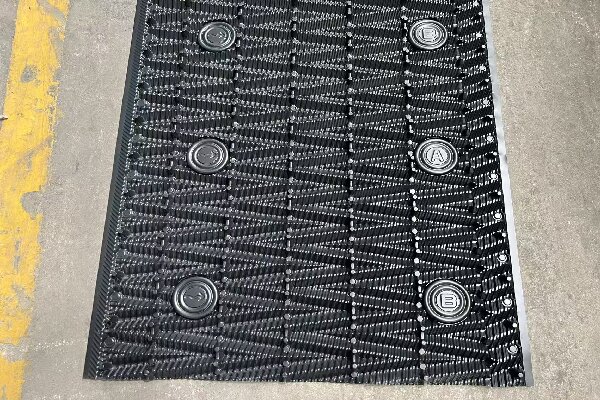
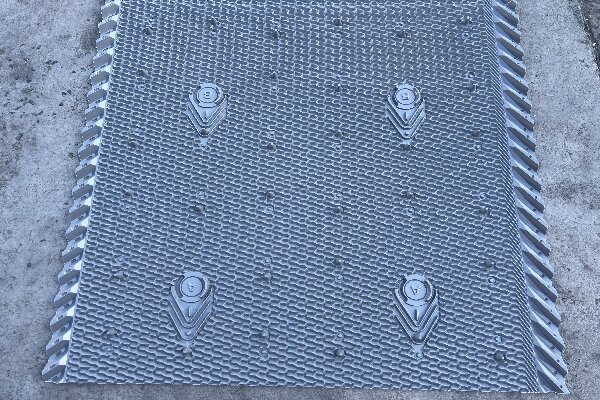
Why Cooling Tower Fill Turns Brown, Black or Brittle
Why Cooling Tower Fill Turns Brown, Black or Brittle
If you inspect a cooling tower regularly, you may notice that the fill no longer looks the way it did when it was installed. Some sheets turn brown, others develop black patches, and in more serious cases, the material becomes hard, brittle, or easy to break by hand.
Does this mean the cooling tower fill has reached the end of its service life? Not necessarily. Discoloration can be caused by mineral deposits, biological growth, chemical exposure, or material aging. These problems look similar at first, but they do not always require the same solution.
In this guide, we will look at why Cooling Tower Media changes color, how to identify the likely cause, and when cleaning is enough or a cooling tower replacement project should be considered.
1. Why Does Cooling Tower Fill Turn Brown?
Brown cooling tower fill is often associated with mineral deposits, corrosion products, or organic material carried by circulating water. The actual cause depends on the water quality, operating conditions, and the type of cooling tower.
Mineral Scale and Water Deposits
When circulating water evaporates, dissolved minerals remain behind. If water chemistry is not properly controlled, calcium carbonate and other deposits can build up on the surface of the fill. Over time, these deposits may give the sheets a yellow, tan, or brown appearance.
Scale does more than change the color. It can reduce the effective heat-transfer area, restrict water flow, and increase resistance to airflow. In a film fill cooling tower, even a relatively thin layer of deposits can interfere with the water film spreading evenly across the corrugated sheets.
Rust and Corrosion Products
Brown or reddish-brown stains may also come from corrosion in steel pipes, support structures, or other components in the cooling water circuit. These particles can travel with the water and settle on the fill.
If the discoloration appears together with rusty water, corroded metal parts, or deposits around the water distribution system, check the entire water circuit rather than blaming the tower fill alone.
2. Why Does Cooling Tower Fill Turn Black?
Black discoloration can have several causes, so color alone is not enough to identify the problem. In industrial cooling systems, black patches may be related to biological growth, accumulated dirt, chemical deposits, or degraded material.
Algae, Biofilm, and Organic Deposits
Cooling towers provide moisture, warmth, and a steady supply of nutrients. Under suitable conditions, algae, bacteria, and other microorganisms can grow on wet surfaces. Biofilm may trap dust and suspended solids, creating dark patches that gradually spread across the fill.
Black or dark green deposits are particularly worth investigating when they appear alongside slime, unpleasant odors, uneven water distribution, or a noticeable drop in cooling performance.
However, black deposits should not automatically be identified as algae or mold. A visual inspection may suggest biological growth, but water testing and appropriate maintenance checks can help establish the cause.
Dirt and Suspended Solids
Dust, process contamination, airborne particles, and suspended solids can accumulate inside a cooling tower. If the water treatment system is not removing these contaminants effectively, the deposits may become dark and difficult to remove.
In this situation, cleaning the fill without correcting the source of contamination will usually provide only temporary improvement. Review filtration, basin cleanliness, blowdown settings, and water treatment practices.
3. Why Does Cooling Tower Fill Become Brittle?
Discoloration does not always mean that plastic has deteriorated. Brittleness, cracking, and loss of flexibility are more concerning because they may indicate that the material's mechanical properties have changed.
Heat and Long-Term Thermal Exposure
PVC and PP cooling tower fill are designed for specific operating conditions. If the circulating water temperature regularly exceeds the material's suitable service range, the fill may age faster, lose strength, or deform.
Repeated temperature fluctuations can also place stress on thin sheets and bonded fill blocks. When evaluating an aging tower fill, review actual operating temperatures rather than relying only on the normal design temperature.
Chemical Exposure
Water treatment chemicals are essential for controlling scale, corrosion, and biological growth. However, unsuitable chemical concentrations, incorrect dosing, or incompatible cleaning agents can damage fill materials over time.
If the fill becomes brittle shortly after a chemical cleaning or treatment change, review the chemical type, concentration, contact time, and material compatibility. Do not assume that every plastic fill product will tolerate the same chemical conditions.
UV Exposure and Material Aging
Ultraviolet radiation can contribute to polymer aging when plastic components are exposed to sunlight. The degree of damage depends on the material formulation, stabilizers, exposure intensity, temperature, and service duration.
Indoor fill that remains wet and shaded may age differently from plastic exposed to direct sunlight during outdoor storage or installation. If UV exposure is a concern, select a material and formulation suitable for the actual exposure conditions.
Mechanical Stress and Poor Support
Fill can crack or break when support beams are damaged, blocks are installed incorrectly, or the sheets are exposed to excessive loading. Water distribution problems and localized clogging can also create uneven loads.
If the fill is brittle in some areas but remains flexible elsewhere, compare the affected locations. Localized damage may point to support problems, uneven water loading, chemical exposure, or differences in operating conditions.
4. How to Tell Whether the Fill Needs Cleaning or Replacement
Before ordering new tower fill, check whether the problem is mainly surface contamination or actual material deterioration. A simple inspection can help you make a more practical decision.
When Cleaning May Be Enough
- The sheets remain structurally sound and do not crack easily.
- Brown or dark deposits are mainly on the surface.
- Water can still pass through the fill without severe blockage.
- The fill blocks remain properly supported and retain their original shape.
- A suitable cleaning method can remove the deposits without damaging the material.
When Cooling Tower Replacement Is Worth Considering
- The sheets crack, crumble, or break during normal handling.
- Fill blocks have collapsed, sagged, or lost their shape.
- Heavy scale or biological deposits cannot be removed effectively.
- Blocked passages cause persistent airflow or water distribution problems.
- The tower cannot maintain the required cooling performance despite appropriate maintenance.
Replacement decisions should consider the fill's structural condition, cooling performance, cleaning costs, and expected remaining service life. A color change by itself is not sufficient evidence that the fill must be replaced.
5. Does PVC or PP Cooling Tower Fill Resist Aging Better?
PVC and PP are both widely used for cooling tower fill, but neither material is automatically the best choice for every application. The right option depends on operating temperature, water chemistry, mechanical requirements, and the fill design.
PVC Cooling Tower Fill
PVC film fill is widely used in many industrial and HVAC cooling towers because it can provide a practical balance of cost, formability, and performance under suitable operating conditions. Its long-term condition still depends on temperature, chemical compatibility, water quality, and the specific material formulation.
If you are evaluating replacement options, review our PVC Cooling Tower Fill for applications where PVC is appropriate.
PP Cooling Tower Fill
Polypropylene can be a suitable alternative when the operating conditions call for different temperature or chemical-resistance characteristics. However, PP grades also have operating limits, and performance depends on the formulation and design of the finished fill.
Before changing materials, confirm the maximum water temperature, chemical exposure, sheet thickness, support arrangement, and compatibility with the existing cooling tower. You can learn more about our PP Cooling Tower Fill and evaluate whether it suits your project.
6. How to Prevent Cooling Tower Fill from Aging Too Quickly
You cannot prevent all aging, but good operating practices can reduce avoidable damage and help extend the useful life of your cooling tower fill.
- Control water chemistry: Monitor scale-forming minerals, corrosion indicators, and treatment conditions according to the system's requirements.
- Keep water distribution even: Check spray nozzles, distribution pipes, and flow patterns to avoid dry areas and localized deposits.
- Manage biological growth: Follow an appropriate water treatment and cleaning program. Cooling tower hygiene is also important for controlling Legionella risks.
- Inspect support structures: Look for sagging, broken supports, displaced blocks, and areas under excessive loading.
- Use compatible cleaning methods: Confirm that the cleaning chemicals, pressure, and procedures are suitable for the installed material.
- Choose the right replacement material: Consider temperature, water chemistry, UV exposure, fill geometry, and the tower's original design requirements.
These checks are useful whether you operate a counterflow or crossflow cooling tower. Corrugated fill and other Film Fill designs depend on clear passages and reasonably uniform water distribution to deliver the expected heat-transfer performance.
7. What Should You Check Before Ordering Replacement Fill?
If the existing fill has become brittle or severely damaged, do not order replacement material based only on its color or appearance. Confirm the dimensions and operating conditions first.
- Cooling tower type: counterflow or crossflow.
- Existing fill block dimensions and installation arrangement.
- Sheet pitch, flute geometry, and material thickness.
- Operating water temperature and water chemistry.
- Required material: PVC, PP, or another technically suitable option.
- Support dimensions, water distribution arrangement, and available installation space.
For a cooling tower replacement project, matching the original dimensions is important, but it is not the only consideration. A change in fill geometry can affect airflow resistance, water distribution, and thermal performance. Check compatibility with the tower design before making substitutions.
Conclusion
Brown cooling tower fill is often associated with mineral deposits or corrosion products, while black discoloration may come from biological growth, dirt, or other deposits. Brittle fill is a different warning sign because it can indicate material aging, chemical damage, excessive temperature, or mechanical stress.
The practical approach is to identify the cause before deciding whether to clean or replace the fill. Good water treatment, even water distribution, regular inspection, and appropriate material selection can all help reduce premature deterioration.
If your existing fill is damaged or you need a replacement for a specific cooling tower, our team can help review your dimensions, material requirements, and application conditions. Contact us for cooling tower fill solutions and share your project details for further discussion.
```