Open Cooling Tower vs Closed Circuit Cooling Tower for HVAC: Which Is Better
Open Cooling Tower vs Closed Circuit Cooling Tower for HVAC: Which Is Better?
When choosing a cooling tower for an HVAC system, many engineers focus on cooling capacity, energy consumption, and installation cost. But there is another important question: should you use an open cooling tower or a closed circuit cooling tower?
Both systems can remove heat from chillers and industrial cooling equipment, but they work differently. The right choice depends on water quality, maintenance requirements, available space, and the operating conditions of the building.
As a general rule, an open cooling tower is often a practical choice when cost-effective heat rejection is the priority. A closed circuit cooling tower may be more suitable when the process fluid must remain isolated from the outside environment. Understanding these differences also helps engineers select the right Cooling Tower Media, plan maintenance, and reduce unexpected downtime.
1. What Is an Open Cooling Tower?
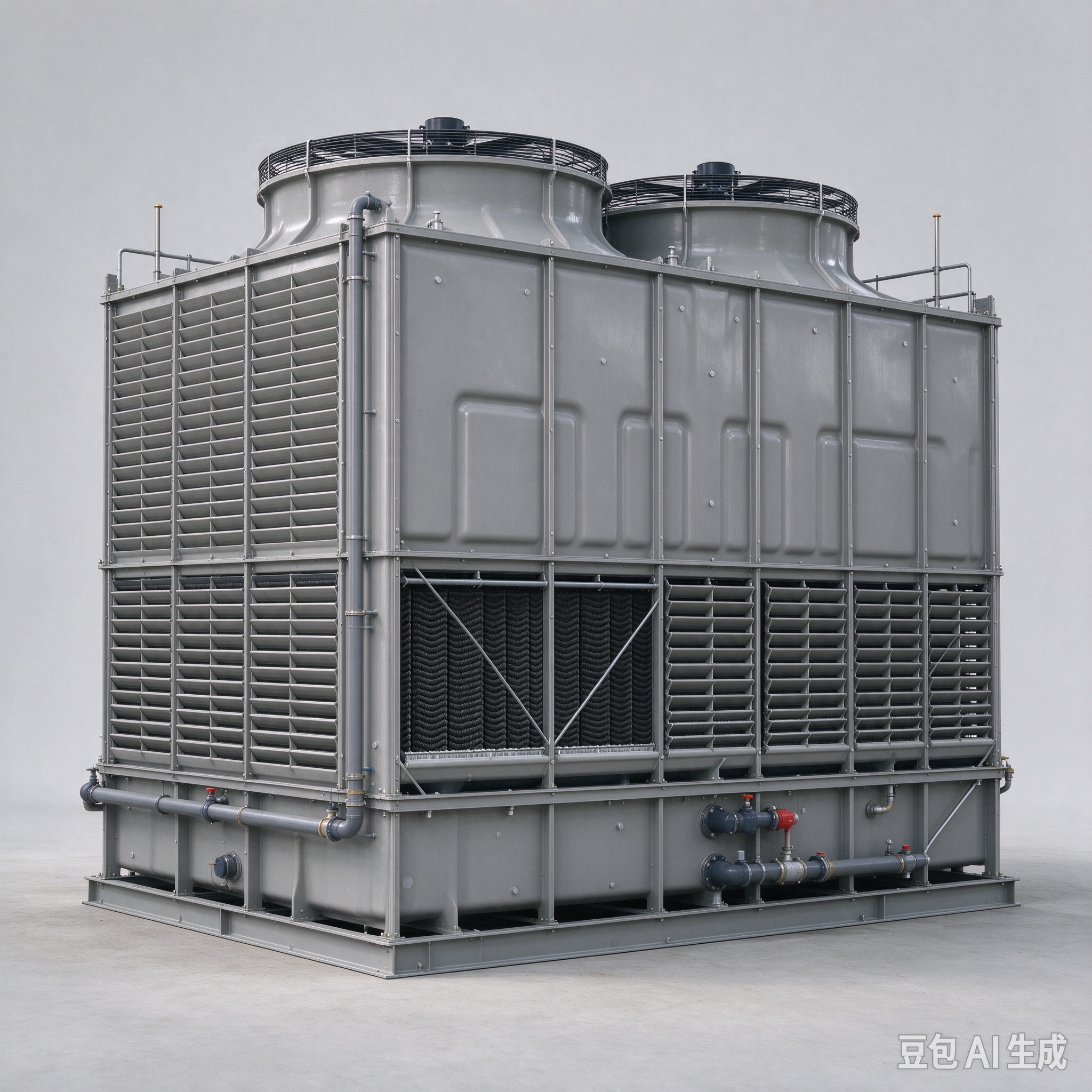
An open cooling tower cools circulating water through direct contact between the water and the air. Warm water from the chiller condenser enters the tower and is distributed over the fill. As air passes through the fill, a small portion of the water evaporates, carrying heat away from the remaining water.
The cooled water collects in the basin and returns to the condenser. Because the circulating water is directly exposed to the atmosphere, evaporation, airborne dust, and other contaminants can affect water quality.
The Role of Cooling Tower Fill
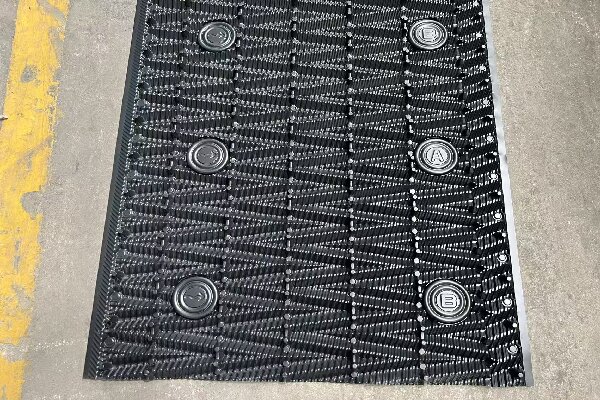
In an open cooling tower, Cooling tower Fill is one of the main components affecting heat transfer. Film fill spreads water into thin films over a large surface area, improving contact between water and air. Corrugated fill sheets create flow channels that help distribute water and air throughout the fill pack.
A properly selected film fill cooling tower design can provide effective heat transfer without requiring an unnecessarily large tower. However, fill selection must balance heat transfer performance, air resistance, water quality, and the tower's operating conditions.
For HVAC systems with relatively clean circulating water, PVC film fill is commonly used. Where operating temperatures, chemical exposure, or other conditions require different material properties, engineers may also consider PP cooling tower fill.
2. What Is a Closed Circuit Cooling Tower?
A closed circuit cooling tower uses a heat exchanger coil to keep the primary process fluid separate from the outside air and spray water. The warm fluid flows inside the coil, while air and, in many designs, external spray water remove heat from the coil surface.
This arrangement reduces direct exposure of the primary fluid to airborne contaminants. It can be useful for HVAC applications where maintaining a cleaner closed fluid circuit is important, or where the system uses a specialized fluid mixture.
However, closed circuit cooling towers are generally more complex than open cooling towers. The heat exchanger coil, spray-water system, and additional equipment can increase initial investment and create different maintenance requirements.
3. Open vs Closed Circuit Cooling Tower: Key Differences
| Comparison | Open Cooling Tower | Closed Circuit Cooling Tower |
|---|---|---|
| Heat transfer method | Water contacts air directly over the fill | Primary fluid transfers heat through a coil |
| Primary fluid exposure | Exposed to the atmosphere | Kept inside a closed coil circuit |
| Initial cost | Often lower | Often higher |
| Water quality concerns | Circulating water can collect airborne contaminants | Primary fluid is protected, but external spray water still needs treatment |
| Main heat transfer components | Fill, water distribution system, and air-moving equipment | Heat exchanger coil, spray system, and air-moving equipment |
| Typical maintenance | Fill inspection, basin cleaning, water treatment, and distribution checks | Coil inspection, spray-system maintenance, water treatment, and scale control |
These are general comparisons rather than fixed rules. Actual costs and efficiency depend on tower design, climate, water conditions, system temperatures, and the manufacturer's performance data.
4. Which Cooling Tower Is Better for HVAC Systems?
Choose an Open Cooling Tower When Cost and Simplicity Matter
Open cooling towers are widely used with water-cooled chillers in commercial buildings, hotels, shopping centers, office complexes, and many industrial HVAC systems.
They can be a good choice when the system can accommodate routine water treatment and the circulating water does not need to remain isolated from the atmosphere. Their relatively straightforward design can also make replacement and servicing easier.
For these systems, the quality of the tower fill matters. Damaged, blocked, or incorrectly installed fill can reduce effective contact between water and air, increase airflow resistance, and contribute to poor cooling performance.
Choose a Closed Circuit Cooling Tower When Fluid Isolation Matters
A closed circuit cooling tower may be preferable when the primary fluid needs protection from external contamination, when a glycol-water mixture is used, or when the system design requires a closed process loop.
It is important to evaluate the complete system rather than assuming a closed circuit unit always delivers lower operating costs. Coil fouling, spray-water treatment, fan power, pump energy, and seasonal operating conditions all affect the final result.
5. How Cooling Tower Fill Affects HVAC Efficiency
For an open cooling tower, fill is not simply a plastic component inside the casing. It directly affects the contact area available for heat and mass transfer between water and air.
Film fill uses closely spaced, formed sheets to spread water over a large surface. This design can deliver strong thermal performance in applications with suitable water quality. Corrugated Fill also creates flow paths that guide water and air through the fill pack.
But a higher-density fill is not automatically the best choice for every HVAC tower. If the water contains excessive suspended solids, biological growth, or scale-forming minerals, narrow passages may become blocked. This can reduce performance and increase pressure drop.
When selecting replacement tower fill, engineers should check:
- Original tower model, fill dimensions, and support arrangement.
- Required cooling capacity and available airflow.
- Water quality, fouling risk, and cleaning frequency.
- Operating temperature and suitable PVC or PP material.
- Fill depth, sheet spacing, and compatibility with the existing water distribution system.
For a new installation or an upgrade, explore our Counter Flow Fill Media for counterflow tower designs. If the project uses a crossflow arrangement, our Cross Flow Fill Media is another option to evaluate.
6. Can You Replace Open Cooling Tower Fill Without Changing the Whole Tower?
In many cases, yes. If the tower casing, structure, fan, and water distribution system remain in suitable condition, cooling tower replacement may involve replacing the fill rather than the entire unit.
However, replacement fill should not be selected by dimensions alone. A fill pack that physically fits may still have different thermal characteristics or air resistance from the original design. Those differences can affect cooling capacity, fan operation, and overall system performance.
Before ordering replacement Cooling Tower Media, confirm the tower type, original fill arrangement, sheet dimensions, material, water quality, and required thermal duty. For older towers or systems with limited documentation, a review of available drawings and operating data is particularly useful.
It is also worth checking the condition of the drift eliminators, water distribution nozzles, and fill supports during replacement. Installing new fill will not fully solve a cooling problem if blocked nozzles or uneven water distribution remain uncorrected.
7. Maintenance: What Should HVAC Engineers Check?
Regardless of whether the installation uses an open or closed circuit design, regular inspection helps prevent avoidable efficiency losses.
For open cooling towers, check the fill for scale, biological growth, deformation, broken sheets, and blocked passages. Look for uneven water distribution and inspect the basin and strainers for accumulated debris.
For closed circuit cooling towers, inspect the heat exchanger coil for fouling or corrosion, verify that the spray system distributes water evenly, and maintain appropriate water treatment. The closed primary circuit still requires suitable fluid quality and periodic checks for leaks or deterioration.
If an open cooling tower shows reduced cooling capacity, do not assume that the fill is the only cause. Check water flow, air movement, ambient wet-bulb temperature, nozzle condition, and the chiller's operating load before deciding on a replacement.
8. Final Recommendation: Start With the Application, Not the Tower Type
For many commercial HVAC systems, an open cooling tower offers a cost-effective solution when water treatment and routine maintenance are properly managed. A closed circuit cooling tower is worth considering when protecting the primary fluid or meeting specific process requirements justifies the additional equipment and investment.
If you operate an open cooling tower, selecting the right tower fill is an important part of maintaining heat transfer performance. Material, sheet spacing, fill geometry, water quality, and airflow resistance should all be considered together rather than choosing a product based on price alone.
Whether you are building a new system or planning a cooling tower replacement, matching the fill to the actual tower design can help avoid installation problems and unnecessary operating costs.
Need Cooling Tower Fill for Your HVAC Project?
We manufacture cooling tower fill media for different tower configurations and project requirements. If you need replacement fill or are comparing options for a new installation, share your tower type, fill dimensions, material requirements, and application details with our team.
Contact us for cooling tower fill solutions and project support.
```