How to Prevent Algae Growth on Cooling Tower Fill
How to Prevent Algae Growth on Cooling Tower Fill
Algae growth is a common problem in open cooling towers, especially in warm climates where sunlight, moisture, and nutrients are available throughout the day. At first, it may look like a thin green layer on the cooling tower fill. But if left untreated, algae can develop into thick deposits that restrict water flow, reduce heat transfer efficiency, and increase maintenance work.
If you are responsible for cooling tower operation or maintenance, preventing algae is much easier than dealing with a heavily contaminated fill system. Let's look at why algae develops and what you can do to keep your Cooling Tower Media clean and working properly.
1. Why Does Algae Grow on Cooling Tower Fill?
Algae need three basic conditions to grow: sunlight, moisture, and nutrients. Unfortunately, an open cooling tower provides all three.
Sunlight and Warm Water
Cooling towers are often installed outdoors, where sunlight reaches the water distribution area and sometimes the fill surface. Combined with warm circulating water, these conditions create a suitable environment for algae growth.
Nutrients in Circulating Water
Dust, organic matter, airborne particles, and other contaminants can enter the cooling water. These materials may provide nutrients that support algae and biological growth.
Poor Water Distribution
When spray nozzles become blocked or water distribution is uneven, some areas of the fill may remain wet while receiving insufficient flushing. These locations can become ideal spots for algae and other biological deposits to develop.
2. How Does Algae Affect Cooling Tower Fill Performance?
Algae is more than just a cleaning problem. Once it spreads across the fill surface, it can interfere with the normal contact between air and water.
- Reduced heat transfer: Algae layers cover the fill surface and interfere with effective heat exchange.
- Restricted water flow: Heavy biological growth can block fill passages and create uneven water distribution.
- Higher pressure drop: Accumulated algae and other deposits can restrict airflow through the cooling tower.
- More frequent maintenance: Operators may need additional cleaning, water treatment, and inspection work.
- Shorter fill service life: Persistent contamination and aggressive cleaning methods can contribute to premature fill damage.
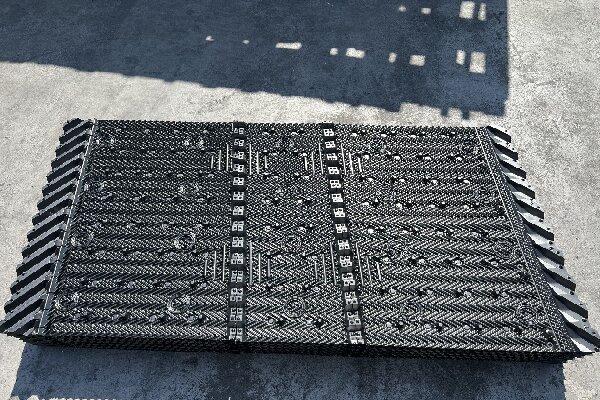
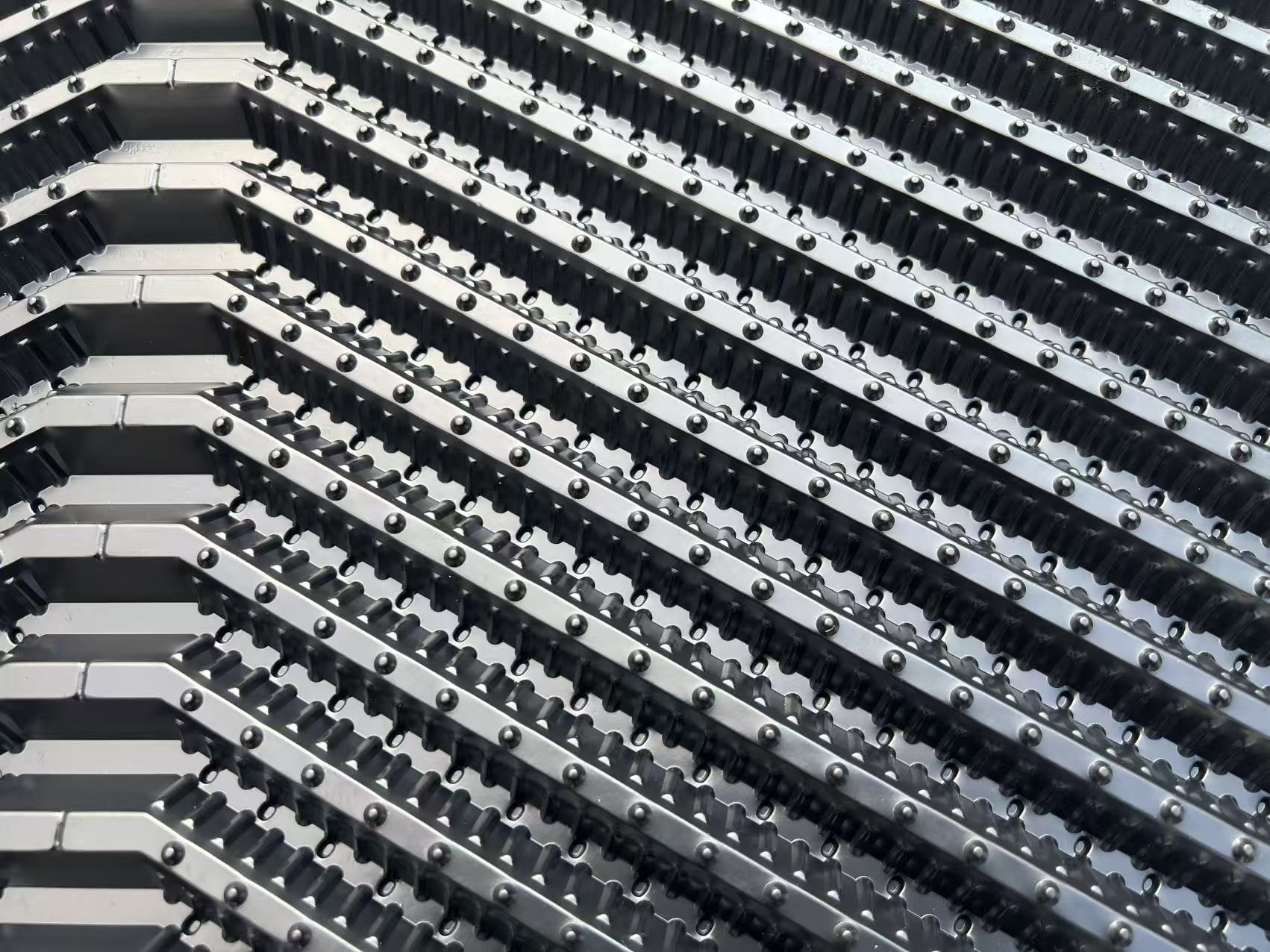
For film fill cooling tower systems, narrow passages between corrugated sheets can be particularly difficult to clean once biological deposits become heavy. This is why regular prevention matters.
3. Practical Ways to Prevent Algae Growth
Maintain a Proper Water Treatment Program
A well-managed water treatment program is one of the most effective ways to control algae and other biological growth. Use suitable biocides as part of a treatment plan designed for your cooling water conditions. Oxidizing and non-oxidizing biocides may be used depending on the system and treatment strategy.
Dosage and treatment frequency should be determined by a qualified water treatment specialist. Avoid simply adding more chemicals without checking water quality and system conditions.
Reduce Unnecessary Sunlight Exposure
Where practical, use suitable covers, louvers, or shading arrangements to limit direct sunlight reaching exposed water surfaces. The goal is to reduce the conditions that encourage algae growth without restricting the airflow required for cooling tower operation.
Keep Water Distribution Even
Inspect spray nozzles, distribution pipes, and water basins regularly. Replace blocked or damaged nozzles and check that water reaches the entire fill area evenly. Good distribution helps avoid stagnant or poorly flushed sections.
Control Water Quality and Blowdown
Monitor conductivity, pH, suspended solids, and other important water quality parameters. Proper blowdown helps control dissolved solids and reduces the accumulation of contaminants in the circulating system. Water treatment and blowdown should work together rather than being treated as separate maintenance tasks.
Schedule Regular Cleaning and Inspection
Do not wait until the fill becomes completely blocked. Regularly inspect accessible fill surfaces, water basins, and spray systems. Remove accumulated dirt and biological deposits using cleaning methods compatible with the fill material.
4. How to Clean Algae from Existing Cooling Tower Fill
If algae has already developed, the cleaning method should depend on the amount of contamination and the condition of the fill.
- Inspect the fill: Check the extent of algae growth, blocked passages, deformation, and material damage.
- Remove loose deposits: Use suitable low-pressure water cleaning to remove loose biological material and dirt.
- Apply appropriate treatment: Use a compatible cleaning or disinfection program recommended by your water treatment specialist.
- Check the water distribution system: Clean spray nozzles, pipes, and basins to prevent rapid recontamination.
- Evaluate the fill condition: If the fill is brittle, badly deformed, or heavily blocked, replacement may be more practical than repeated cleaning.
Avoid excessive water pressure, aggressive chemicals, or mechanical scrubbing that could damage PVC or PP fill sheets. Always follow the equipment manufacturer's recommendations and applicable safety procedures when cleaning a cooling tower.
5. Does Cooling Tower Fill Material Affect Algae Control?
The fill material and surface design can influence how easily deposits accumulate and how practical cleaning will be. However, no PVC or PP cooling tower fill should be considered completely algae-proof.
PVC Cooling Tower Fill
PVC is widely used in industrial cooling tower fill because of its practical balance of cost, weight, and performance. It is suitable for many standard cooling water applications, provided the operating temperature and water chemistry remain within the material's limits.
PP Cooling Tower Fill
Polypropylene fill is often considered for applications requiring higher temperature resistance than standard PVC can provide. The correct choice depends on operating conditions, chemical exposure, and the cooling tower design.
Anti-Fouling Fill Design
For systems where biological deposits and suspended solids are recurring problems, an appropriately designed anti-fouling fill may help improve cleaning and maintenance conditions. The flute geometry and passage dimensions should be selected according to water quality and airflow requirements.
You can also explore our Anti Fouling Fill Media for applications where fouling control is an important consideration.
6. When Should You Consider Cooling Tower Fill Replacement?
Cleaning can restore performance when the fill is still structurally sound. However, there comes a point when repeated cleaning is no longer an economical solution.
Consider cooling tower replacement fill when you notice:
- Severely blocked or permanently contaminated fill passages.
- Cracked, brittle, or deformed PVC or PP sheets.
- Repeated algae and fouling problems despite proper water treatment.
- Significant airflow or water distribution problems.
- Reduced cooling performance that cannot be restored through normal maintenance.
Before selecting new fill, check the original dimensions, flute spacing, corrugation angle, material requirements, and installation arrangement. Choosing the correct replacement is important for maintaining the cooling tower's original design performance.
7. UV Exposure and Outdoor Cooling Tower Fill Maintenance
For outdoor cooling towers, long-term sunlight exposure can gradually affect plastic materials. UV radiation may contribute to discoloration, brittleness, and reduced mechanical strength, depending on the material formulation and exposure conditions.
UV-resistant materials can help improve resistance to sunlight-related aging. However, UV resistance does not directly prevent algae growth. Biological control still depends on water treatment, proper distribution, and regular cleaning.
For outdoor installations, take a look at our UV Resistant Fill Media for applications where improved resistance to UV exposure is required.
8. A Simple Cooling Tower Fill Maintenance Checklist
Here is a practical checklist that maintenance teams can use during routine inspections:
- Check for green algae or slimy deposits on fill surfaces.
- Inspect spray nozzles and water distribution patterns.
- Remove accumulated dirt and organic debris from the basin.
- Monitor water treatment conditions and biological activity.
- Check for blocked fill passages and restricted airflow.
- Look for brittle, cracked, or deformed fill sheets.
- Record cleaning results and monitor recurring problem areas.
Conclusion: Prevention Is Better Than Repeated Cleaning
Algae growth on cooling tower fill is usually a sign that water treatment, sunlight exposure, or system maintenance needs attention. Regular inspection, proper biocide control, even water distribution, and good water quality management can help prevent heavy biological deposits.
For cooling tower operators, the goal is not simply to keep the fill looking clean. It is to maintain stable airflow, water distribution, and heat transfer performance over the long term. When cleaning is no longer enough, selecting suitable replacement fill can help restore reliable operation.
At Fengbei Plastic, we manufacture PVC and PP cooling tower fill for different tower designs and operating conditions. Based in Shenzhen, China, we support customized production according to drawings, dimensions, material requirements, and project applications, helping customers find practical cooling tower fill solutions for replacement and new installations.
If you are evaluating cooling tower fill options for your next maintenance or replacement project, contact our team to discuss your requirements.