Cooling Tower Fill for Power Plants: What Engineers Should Consider
In a power plant, the cooling tower plays an important role in keeping the entire cooling system running properly. When the cooling tower fill becomes clogged, damaged, or poorly matched to the operating conditions, heat rejection can suffer, and the plant may have difficulty maintaining its expected performance during periods of high demand.
Choosing the right Cooling Tower Fill is not simply a matter of finding a material that fits inside the tower. Engineers need to consider heat transfer, airflow resistance, water quality, operating temperature, and the conditions the fill will face over many years of service.
Whether you are designing a new cooling tower or planning a cooling tower replacement, here are the key points worth checking before selecting new fill media for a power plant.
1. Understand the Cooling Tower Operating Conditions
Before choosing any tower fill, start with the actual operating conditions. Two power plants may use similar cooling towers but have very different requirements because of their cooling loads, circulating water quality, climate, and operating schedules.
Engineers should review the following information before making a selection:
- Circulating water flow rate and water temperature at the inlet and outlet.
- Required cooling range and design approach temperature.
- Airflow rate and available fan capacity.
- Ambient wet-bulb temperature during normal and peak operating conditions.
- Water quality, including suspended solids, biological growth, and scaling tendency.
- Existing fill dimensions, support arrangements, and available installation space.
These details help determine whether a high-efficiency film fill design is suitable or whether a more open fill structure would be a better choice. Replacing the existing media with a different design without checking the operating conditions can create unexpected problems, even if the new fill looks similar.
2. Film Fill Cooling Tower Performance: Heat Transfer Matters
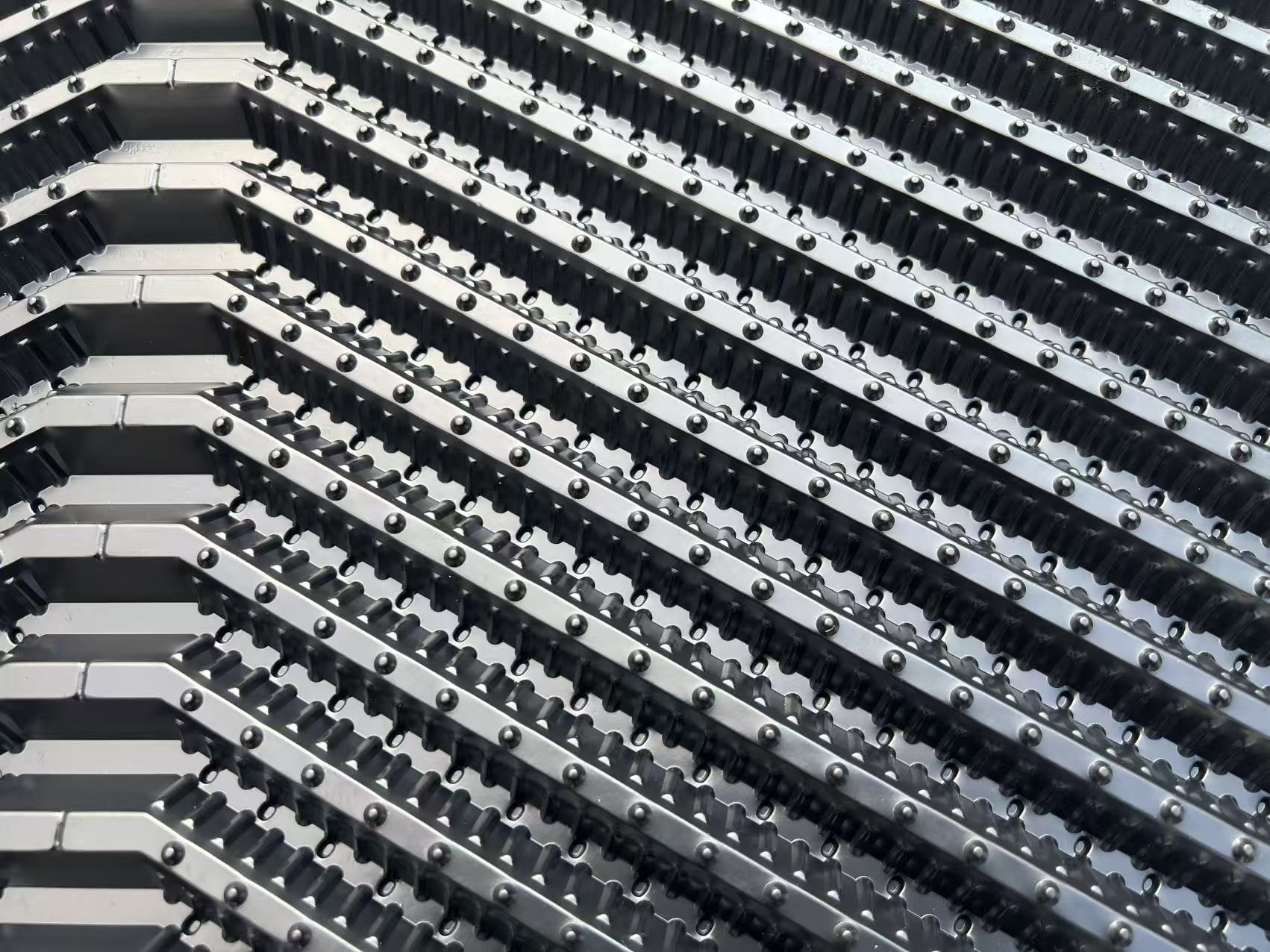
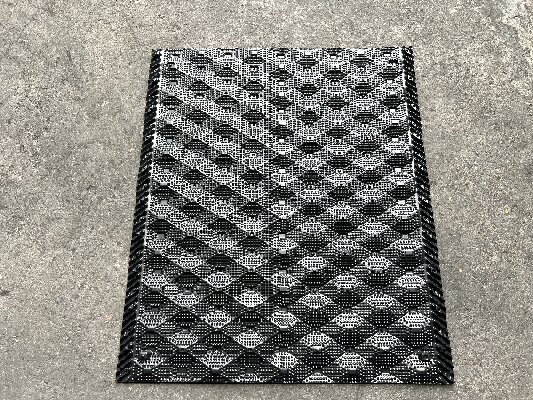
Many industrial cooling towers use film fill because it spreads water into thin films over a large surface area. This increases contact between the water and the air, helping heat transfer take place within a relatively compact space.
For a power plant, this can be especially important when the cooling tower needs to handle a large circulating water flow without increasing its overall footprint.
However, more surface area does not automatically mean better cooling performance. Fill geometry, flute spacing, water distribution, airflow, and the cleanliness of the media all influence how effectively the tower operates.
What should engineers compare?
- Heat transfer performance: Can the fill meet the required cooling duty under the specified design conditions?
- Air and water distribution: Will the structure support reasonably uniform distribution throughout the fill pack?
- Operating resistance: Does the fill create an acceptable pressure drop at the required airflow and water loading?
- Long-term performance: Is the design suitable for the site's water quality and maintenance practices?
When evaluating Cooling Tower Media, engineers should compare thermal performance data under comparable conditions rather than choosing a product based on surface area or flute dimensions alone.
For industrial applications, our Industrial Cooling Tower Fill is one option to review when evaluating fill media for demanding cooling systems. The final selection should always match the tower design and operating requirements.
3. Pressure Drop and Fan Power: A Balance Engineers Cannot Ignore
Pressure drop is one of the most important factors to consider when selecting film fill for a power plant cooling tower. As air passes through the fill pack, it encounters resistance. If that resistance is too high, the fan may need to work harder to maintain the required airflow.
In a large cooling tower operating for many hours each year, even a relatively small increase in fan energy consumption can become significant over time.
On the other hand, choosing a fill with very low resistance is not enough if its heat transfer performance cannot meet the cooling duty. The goal is to find a suitable balance between thermal performance and airflow resistance.
Questions to ask when reviewing fill data
- What is the pressure drop at the design air and water loading?
- Are the thermal performance and pressure drop data based on comparable test conditions?
- Will the existing fan system provide the required airflow after the fill replacement?
- Could fouling or mineral deposits increase resistance during operation?
For a replacement project, engineers should avoid comparing pressure drop figures from different suppliers without checking the test conditions. A lower figure is only meaningful when the airflow, water loading, fill depth, and other relevant conditions are comparable.
4. PVC or PP: Choosing the Right Fill Material
Material selection is another important decision for power plant cooling towers. PVC and polypropylene (PP) are both used in cooling tower fill, but neither material is automatically the best choice for every application.
PVC cooling tower fill
PVC is widely used in cooling tower fill applications because it offers a practical combination of formability, cost, and performance under suitable operating conditions. It can be a good choice for many industrial cooling systems when the operating temperature and water chemistry are compatible with the material.
Before specifying PVC fill, engineers should verify its temperature limits, chemical compatibility, mechanical requirements, and any relevant fire-performance requirements for the project.
PP cooling tower fill
PP may be worth considering when the operating conditions call for a material with different temperature or chemical-resistance characteristics. Its suitability still depends on the specific grade, product design, support arrangement, and actual service conditions.
Do not select a material based on its name alone. Ask the supplier for the applicable material specifications and confirm that they meet the project's requirements.
5. Water Quality and Fouling in Power Plant Cooling Towers
Power plant cooling water can carry suspended solids, biological growth, mineral deposits, and other contaminants. Over time, these materials may accumulate on the fill surface or obstruct the narrow passages between adjacent sheets.
When fouling becomes severe, the tower may experience uneven water distribution, higher pressure drop, reduced heat transfer, and more frequent maintenance requirements.
This is why the right Corrugated Fill design should be selected with the actual water quality in mind. A fill structure that performs well with relatively clean water may be less suitable for a system with a high solids load or a strong tendency toward biological growth.
When should engineers consider anti-fouling fill?
If the tower has a history of rapid clogging, recurring deposits, or difficult cleaning, it may be worth evaluating an anti-fouling fill design. Open passages and suitable sheet geometry can help reduce blockage risks in some applications, but no fill design is completely immune to fouling.
Before making a change, check the source of the deposits, water treatment performance, filtration arrangements, and cleaning procedures. Replacing the fill without addressing the underlying water-quality problem may only provide temporary improvement.
6. Crossflow or Counterflow: Which Design Fits the Project?
Power plants use different cooling tower configurations, and the fill selection must be compatible with the existing tower arrangement. Crossflow and counterflow towers have different air and water flow paths, so their fill layouts and installation requirements are not interchangeable by default.
Crossflow cooling towers
In a crossflow tower, air generally moves horizontally through the fill while water flows downward. The fill arrangement must suit the tower's water distribution system, air inlet layout, and available installation space.
Engineers planning a crossflow fill replacement should confirm the dimensions of the existing fill packs, water distribution arrangement, support system, and access for maintenance.
Counterflow cooling towers
In a counterflow tower, air moves upward against the downward flow of water. Fill selection must account for the tower's internal arrangement, airflow requirements, water loading, and the available space below the distribution system.
Our Counter Flow Fill Media page provides a starting point for reviewing fill options for counterflow applications.
Whichever configuration you use, confirm that the proposed fill design is compatible with the tower rather than relying on a general product description.
7. Structural Strength and Long-Term Reliability
Cooling tower fill in a power plant must withstand more than its own weight. It is exposed to continuous water loading, airflow, temperature changes, cleaning activities, and the effects of long-term service.
If the fill deforms, sags, or collapses, water and air may no longer distribute as intended. This can reduce cooling performance and create additional maintenance work.
During a fill inspection or replacement project, engineers should check:
- Whether the existing fill supports and structural members remain in good condition.
- Whether the new fill dimensions match the support spacing and installation layout.
- Whether the proposed material is suitable for the operating temperature and water chemistry.
- Whether the fill can be installed, inspected, and cleaned safely.
- Whether the product meets the project's mechanical and fire-performance requirements.
It is also important to check the quality consistency of the supplied fill blocks. Consistent sheet dimensions, forming quality, bonding where applicable, and assembly accuracy can make installation easier and help avoid gaps or poorly fitted sections.
8. Cooling Tower Replacement: What Should Be Checked First?
When an existing power plant cooling tower no longer delivers the expected performance, the fill may be one of several possible causes. Before deciding on a cooling tower replacement project, engineers should determine whether the problem comes from the fill itself or from another part of the cooling system.
Common warning signs include:
- Visible cracking, deformation, sagging, or collapsed fill packs.
- Heavy deposits or biological growth that cannot be removed effectively.
- Increasing pressure drop or reduced airflow through the tower.
- Uneven water distribution or dry areas within the fill pack.
- Cooling performance that remains below expectations after other operating issues have been checked.
Information to prepare before ordering replacement fill
To help the supplier evaluate a replacement project, prepare as much of the following information as possible:
- Cooling tower manufacturer and model, if available.
- Crossflow or counterflow configuration.
- Existing fill dimensions, sheet spacing, and flute geometry.
- Required material, sheet thickness, and operating temperature.
- Estimated quantity and installation arrangement.
- Water quality information and the main fouling problems, if any.
- Thermal performance requirements and available operating data.
Photos of the existing fill, drawings, and measurements are also useful when the original product specifications are unavailable. For larger projects, confirm the proposed design and performance requirements with the responsible cooling tower engineer before placing the order.
9. Installation and Maintenance Should Be Part of the Decision
A suitable fill design should not only perform well when new. It should also fit the available maintenance plan and the practical conditions at the plant.
Before installation, check the condition of the supports, remove accumulated debris, and verify that the water distribution system is working properly. Fill packs should be installed according to the approved layout, with attention to alignment, fit, and the manufacturer's instructions.
During operation, regular inspections can help identify early signs of fouling, deformation, or uneven water distribution. Cleaning methods should be compatible with the fill material and should not damage the sheets or bonded sections.
For plants with limited maintenance windows, it is worth discussing fill dimensions, packaging, delivery schedules, and installation arrangements with the supplier in advance. Good preparation can reduce delays during a planned outage.
10. Final Thoughts: Choose Cooling Tower Fill Based on the Whole System
For power plants, selecting the right Cooling Tower Fill means balancing heat transfer, pressure drop, material compatibility, fouling resistance, structural reliability, and maintenance requirements. The most suitable option is the one that meets the actual operating conditions of the tower, not simply the one with the highest surface area or the lowest initial price.
If you are planning a new installation or evaluating replacement options, start with the existing tower data and the problems you want to solve. Comparing the relevant product specifications and performance data will help you make a more informed decision.
We manufacture cooling tower fill media for industrial applications and can discuss different dimensions, materials, and fill configurations according to project requirements. Sharing your drawings, existing fill dimensions, or operating conditions is a practical first step toward identifying a suitable option.
Contact our team to discuss your cooling tower fill requirements.