How to Measure Your Cooling Tower Before Ordering Replacement Fill
How to Measure Your Cooling Tower Before Ordering Replacement Fill
Replacing cooling tower fill sounds straightforward until the new fill arrives and doesn't fit properly. A few millimeters of difference, an incorrect block width, or a misunderstanding of the tower's internal layout can turn a routine cooling tower replacement into a frustrating installation job.
Whether you're replacing old film fill, upgrading a cooling tower, or ordering new Cooling Tower Media for a refurbishment project, getting the measurements right is one of the most important steps before placing an order.
In this guide, we'll walk through the measurements you should take, what to check inside the tower, and some practical tips to help avoid fitting problems. These are the things worth checking before ordering replacement fill, rather than discovering them after the material arrives.
1. Why Accurate Measurements Matter When Replacing Cooling Tower Fill
Cooling tower fill is designed to fit within a specific space while allowing water and air to flow properly through the tower. Even when the existing fill looks relatively simple, its dimensions are closely related to the tower's structure, water distribution system and airflow arrangement.
Ordering the wrong size of cooling tower fill can lead to several problems:
- Fill blocks may not fit properly within the available space.
- Gaps between blocks may allow water to bypass the fill.
- Incorrect fill height may interfere with the water distribution system or drift eliminators.
- Oversized blocks may make installation difficult.
- Incorrect flute orientation can affect airflow and water distribution.
- Additional cutting or modification may be required during installation.
For a cooling tower replacement project, the goal isn't simply to match the dimensions of the old fill. It's to make sure the new Cooling Tower Fill fits the tower's internal structure and works with its existing operating conditions.
2. What Measurements Should You Take Before Ordering Cooling Tower Fill?
Before removing the existing fill, try to collect as much information as possible about the cooling tower. If the tower is still operating, measurements and photographs taken during an inspection can save time when preparing a replacement order.
Measure the Internal Width
Measure the available internal width of the fill installation area. This is the distance the new fill blocks need to cover, rather than the external width of the cooling tower casing.
For crossflow cooling towers, the fill is commonly installed across the air inlet area. Depending on the tower design, the available width may be divided into several sections.
For counterflow cooling towers, the fill is generally installed beneath the water distribution system. The internal dimensions may differ between individual cells or compartments.
If the tower has multiple fill sections, measure each section separately instead of assuming that all sections are identical.
Measure the Fill Height
Fill height is another important dimension. Measure the vertical space available for the fill between the supporting structure and the relevant upper components.
Before deciding on the replacement height, check whether the existing fill height is the original design height. In some towers, previous maintenance work may have involved modifications or additional layers.
Pay attention to the clearance between the fill and:
- Water distribution pipes and spray nozzles.
- Drift eliminators.
- Support beams and structural members.
- Other internal components.
If you're considering a different fill height, it is worth checking the tower's design and operating conditions before making the change.
Measure the Fill Length or Depth
The fill length or depth depends on the cooling tower design and the direction of airflow.
For crossflow cooling towers, the fill depth is generally related to the airflow path through the fill. For counterflow towers, the fill depth is usually measured horizontally across the fill section, while air moves upward through the fill.
Don't assume that the existing fill dimensions are standard. Different cooling tower manufacturers may use different block sizes, arrangements and support configurations.
Check the Existing Block Dimensions
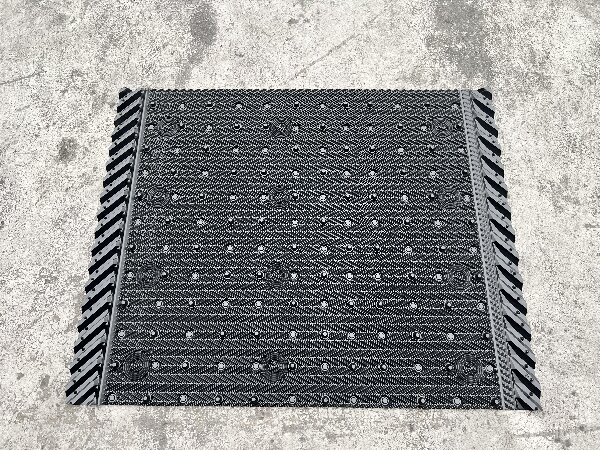
If possible, measure an individual fill block before ordering. Record the block width, length, height and any additional dimensions that may affect installation.
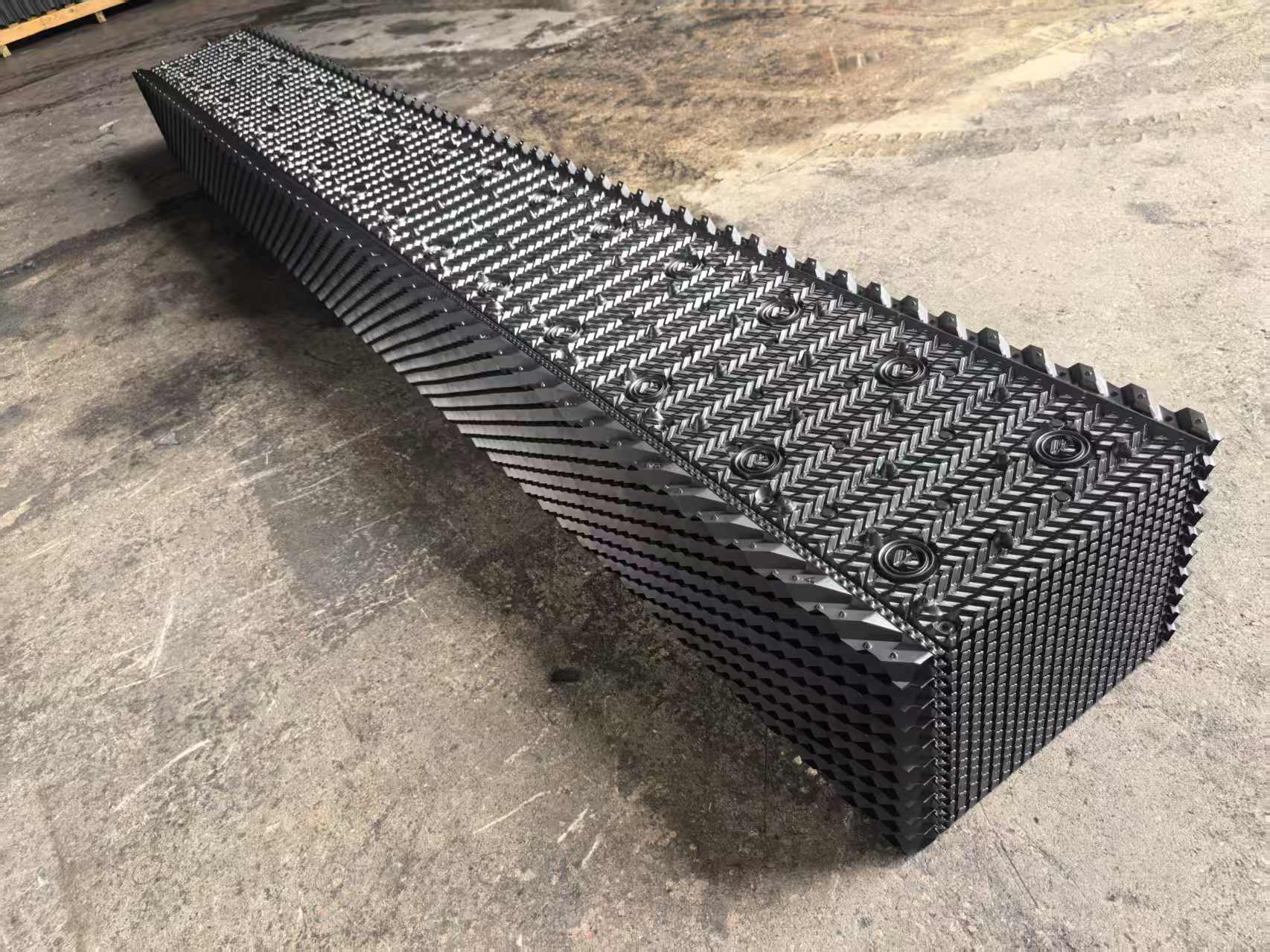
Some cooling tower fill blocks are supplied as individual sections, while others are arranged in multiple layers or assembled into larger packs.
If the existing fill has been glued together, check whether the new fill needs to follow the same arrangement. In many replacement projects, supplying individual blocks can make transportation, handling and installation easier.
3. Check the Fill Type Before Measuring
Not all cooling tower fill is interchangeable. The type of fill installed in your tower should be identified before ordering replacement material.
Film Fill
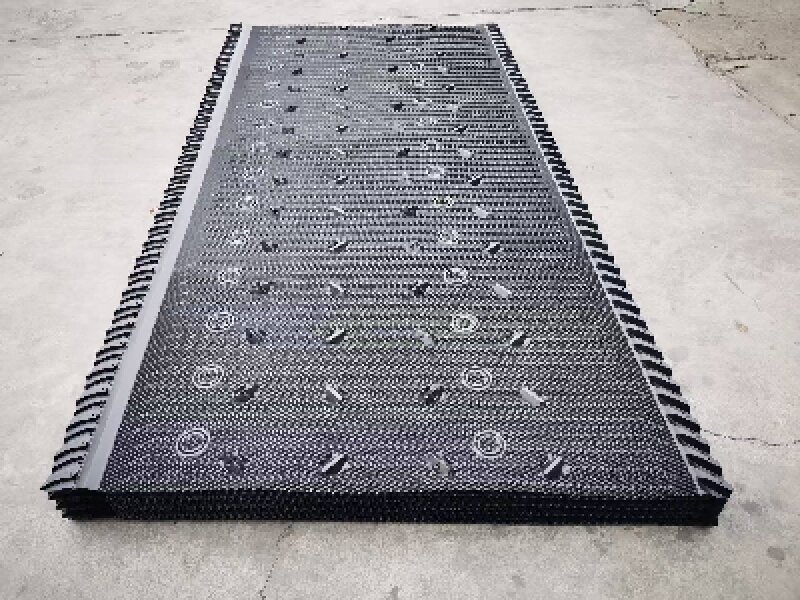
Film fill is commonly used in many industrial and HVAC cooling towers. Water spreads over the corrugated surfaces, creating a thin film that increases the contact area between water and air.
Film Fill is generally suitable for applications where water quality and operating conditions allow the use of closely spaced fill surfaces.
When measuring film fill, pay attention to the block dimensions, sheet spacing, corrugation profile and installation orientation.
Corrugated Fill
Corrugated fill is formed from sheets with specific surface patterns and angles. These corrugations help guide water flow and air movement through the fill.
Different Corrugated Fill designs may have different flute angles, pitches and sheet configurations. Two blocks with similar external dimensions may not necessarily have the same thermal or hydraulic performance.
When ordering replacement fill, try to confirm the original fill design or provide photographs of the existing material.
Crossflow Fill vs. Counterflow Fill
The airflow arrangement is one of the most important things to identify before ordering replacement fill.
In a crossflow cooling tower, air generally moves horizontally through the fill while water flows downward. In a counterflow cooling tower, air moves upward through the fill against the downward flow of water.
These two configurations use different fill arrangements and installation layouts. Selecting the correct fill type is essential for fitting the tower properly.
If you're replacing fill in a crossflow tower, you can learn more about our Cross Flow Fill Media.
For counterflow applications, see our Counter Flow Fill Media.
4. Don't Forget the Fill Pitch, Thickness and Flute Angle
External dimensions are only part of the measurement process. The fill's internal structure can also influence cooling performance, pressure drop and its suitability for the application.
Sheet Spacing or Fill Pitch
Fill pitch refers to the spacing between corrugated sheets or the corresponding geometric spacing within the fill design. Different pitches are used for different cooling tower applications.
Closely spaced film fill may provide a larger surface area for heat transfer, but it can also be more sensitive to fouling when water quality is poor.
Wider spacing may be considered for applications where suspended solids or fouling conditions are a concern, depending on the fill design and operating requirements.
Sheet Thickness
Sheet thickness can influence the fill's rigidity, durability and handling characteristics.
When replacing existing fill, try to confirm the original material thickness or provide the supplier with a sample for comparison. If a different thickness is proposed, the suitability should be evaluated according to the tower's operating conditions and the fill design.
Corrugation Angle
Corrugation angle influences how water spreads across the fill surfaces and how air moves through the fill.
Before ordering, check whether the existing fill uses a particular corrugation angle or profile. This is especially useful when the replacement material needs to match an existing cooling tower design.
5. Take Photos Before Removing the Existing Fill
Measurements are useful, but photographs can provide additional information that numbers alone may not capture.
Before removing the old cooling tower fill, take photographs of the following:
- The entire fill installation area.
- Individual fill blocks.
- The fill support structure.
- The water distribution system.
- The arrangement of multiple fill sections.
- Any unusual cutting, connections or installation details.
Photographs can help your supplier understand the existing arrangement and identify potential installation issues before the replacement material is manufactured.
If the fill is heavily damaged or difficult to measure, a few clear photographs from different angles can be particularly helpful.
6. Common Mistakes When Ordering Cooling Tower Replacement Fill
Using the External Tower Dimensions
One common mistake is measuring the cooling tower's external dimensions instead of the actual fill installation area.
The casing, support structure and internal components may reduce the available space. Always measure the area where the fill will actually be installed.
Assuming All Fill Blocks Are the Same
Many cooling towers have multiple fill sections, and their dimensions may vary. Check each section rather than relying on a single measurement.
Ignoring Water Quality
Replacing fill with exactly the same design may not always be the best option if the tower has experienced severe fouling, scaling or biological growth.
In some situations, a different fill configuration may be worth considering. However, any change should be evaluated carefully to make sure it is compatible with the tower's thermal performance, airflow, water distribution and operating conditions.
Choosing Fill Based Only on Price
Lower-cost fill may look attractive, but the replacement material should also be evaluated for dimensional accuracy, material quality, structural strength and suitability for the application.
For long-term operation, the right replacement fill should fit properly and meet the requirements of the cooling tower system.
7. A Simple Checklist Before Ordering Cooling Tower Fill
Before sending your specifications to a cooling tower fill supplier, make sure you have the following information:
- Cooling tower type: Crossflow or Counterflow.
- Internal fill installation width.
- Fill height.
- Fill length or depth.
- Individual block dimensions.
- Existing fill pitch or sheet spacing, if available.
- Sheet thickness, if available.
- Fill material: PVC, PP or other material.
- Operating temperature and water conditions.
- Photos of the existing fill and installation area.
- Required quantity and project delivery requirements.
You don't need to have every technical detail available before contacting a supplier. Even basic dimensions and photographs can help start the discussion, and additional specifications can be confirmed during the quotation process.
8. Choosing the Right Cooling Tower Fill Supplier
When planning a cooling tower replacement, it's worth working with a supplier who understands more than just the dimensions of the fill blocks.
A reliable cooling tower fill manufacturer should be able to help confirm product specifications, discuss different fill configurations and provide customized sizes where necessary.
At Fengbei Plastic Co., Ltd., we manufacture PVC cooling tower fill for both crossflow and counterflow applications. With more than 350 molds and our own PVC sheet production, we can supply different fill configurations and customized sizes for cooling tower replacement and refurbishment projects.
Our product range includes industrial cooling tower fill, film fill, corrugated fill and customized fill blocks for different cooling tower designs.
Whether you're replacing damaged fill in an existing tower or preparing material for a new project, confirming the dimensions and installation requirements before ordering can help reduce installation problems and unnecessary modifications.
Conclusion
Measuring your cooling tower before ordering replacement fill is not complicated, but it requires attention to detail.
Check the internal dimensions, identify the fill type, confirm the block arrangement and take photographs of the existing installation. If possible, also record the sheet spacing, material thickness and corrugation profile.
These small steps can make a big difference when ordering Cooling Tower Media and help ensure the replacement fill fits the tower properly.
If you're planning a cooling tower replacement and need customized PVC fill, feel free to contact us with your dimensions, photos or project requirements. We'll be glad to help you find a suitable fill solution.