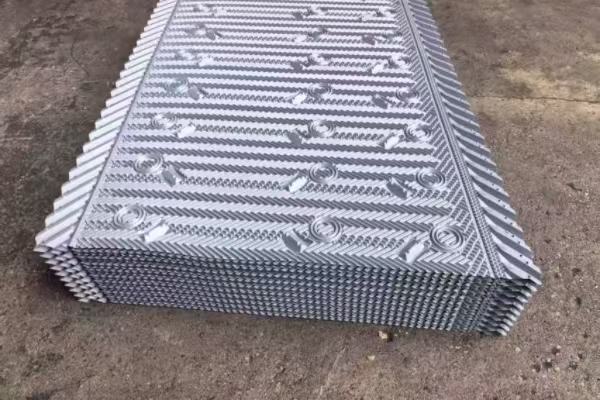
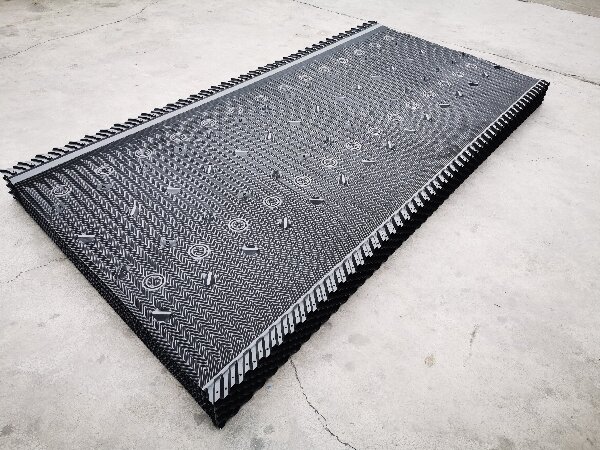
Why Does Cooling Tower Fill Collapse or Deform
Why Does Cooling Tower Fill Collapse or Deform?
When a cooling tower starts losing performance, people often look at the fan, pump, or water flow first. But sometimes the real problem is much lower down inside the tower: the Cooling tower Fill.
Film fill is designed to keep a large amount of water spread over a relatively small volume while allowing air to move through the fill. When the sheets begin to sag, buckle, shrink, or collapse, the water and air distribution can change significantly. The result may be higher outlet water temperature, increased pressure drop, poor airflow, and eventually the need for cooling tower replacement or fill replacement.
So why does film fill cooling tower media deform in the first place? In most cases, it is not caused by one single factor. Temperature, material selection, water quality, installation, mechanical loading, and aging can all play a role.
1. Excessive Temperature Is One of the Most Common Causes
Plastic cooling tower fill is designed to work within a certain temperature range. When the operating temperature becomes too high, the material can gradually lose stiffness.
This is particularly important for PVC film fill. PVC is widely used in cooling towers because it offers a good balance between cost, heat-transfer performance, chemical resistance, and service life. But continuous exposure to temperatures beyond the material's suitable operating range can make the sheets softer.
Once the fill becomes softer, the weight of the upper layers and continuously flowing water can cause the sheets to bend or compress. At first, the deformation may be difficult to notice. Over time, however, several layers can begin to collapse together.
What should you check?
- Actual hot-water inlet temperature
- Whether the temperature is consistently higher than the original design condition
- Whether the deformation is concentrated near the hot-water inlet area
- Whether the same problem appears after every high-temperature operating period
If the deformation is mainly concentrated in the hottest part of the tower, temperature should be one of the first things you investigate.
2. The Wrong Fill Material Can Cause Premature Deformation
Not every Cooling Tower Media is suitable for every cooling tower. This is something that is easy to overlook when selecting replacement fill.
For example, a fill that performs well in a standard HVAC application may not be the best choice for an industrial process where the circulating water temperature is higher or the operating conditions are more demanding.
Material selection should consider operating temperature, water chemistry, UV exposure, fouling potential, mechanical loading, and the type of cooling tower.
For industrial applications where PVC is suitable, you can see the construction and typical application range of our Industrial PVC Fill.
3. Poor Water Distribution Can Put Extra Stress on Film Fill
Good water distribution is not only important for heat transfer. It also affects how evenly the load is applied to the fill.
If some areas receive much more water than others, those sections may experience a much higher hydraulic load. In a badly distributed system, water can continuously concentrate in certain channels instead of spreading evenly across the fill surface.
This can create local deformation, especially when the fill has already become softer due to aging or elevated temperature.
Typical warning signs
- Some fill sections are visibly darker or wetter than others
- Water is concentrated in several obvious paths
- One side of the fill looks more compressed than the other
- Cooling performance varies significantly across the tower
Before replacing all the fill, it is worth checking the spray nozzles, distribution pipes, water pressure, and whether the fill has been installed level.
4. Excessive Weight Can Crush the Fill
Film fill is not designed to carry unlimited mechanical loads. A common mistake is allowing excessive debris, sludge, scale, or other material to accumulate on top of the fill.
Over time, the accumulated weight can compress the upper layers. Once a few layers deform, the load distribution changes and the problem can spread deeper into the fill pack.
This is particularly common in towers operating with dirty circulating water. What initially looks like a simple fouling problem can eventually become a structural problem for the tower fill.
5. Fouling and Scale Can Make Fill Collapse Faster
Fouling is another major reason why Film fill loses its original shape.
Scale, biological growth, suspended solids, and sludge can build up on the surface of the sheets. As the deposits become thicker, the passages between the sheets become smaller.
That creates two problems at the same time: the fill becomes heavier, and airflow becomes more restricted.
In severe cases, the deposits can lock adjacent sheets together. The fill may then lose its flexibility and become much more vulnerable to cracking or deformation.
If fouling is the main problem rather than permanent structural damage, cleaning may extend the service life of the existing fill. If the sheets have already lost their shape or become brittle, however, cleaning alone usually will not restore the original geometry.
6. UV Exposure Can Gradually Weaken Outdoor Fill
UV exposure is often underestimated, especially in cooling towers with sections of fill that are exposed to sunlight.
Long-term UV radiation can gradually affect plastic materials. Depending on the material and formulation, the surface may become brittle, lose strength, or develop cracks.
This does not normally happen overnight. It is a gradual aging process, which is why a tower can appear to be operating normally for years before the fill starts showing visible damage.
For applications where UV exposure is an important concern, our UV Resistant Fill Media is designed specifically for applications requiring improved resistance to long-term UV exposure.
7. Installation Problems Can Also Cause Deformation
Sometimes the fill itself is not the problem.
If the fill blocks are not properly supported, are installed unevenly, or are compressed too tightly during installation, deformation can begin before the tower has even reached normal operating conditions.
Another common problem is using the wrong support arrangement. The fill needs adequate support so that its weight and the hydraulic load are distributed properly.
Before commissioning a new fill installation, check:
- Fill blocks are properly aligned
- Support beams are strong enough and correctly positioned
- There is no excessive compression between fill sections
- Water can pass through the fill evenly
- There are no large gaps or blocked passages
- The fill is installed according to the intended airflow direction
A good Corrugated fill design can provide excellent heat-transfer performance, but even high-quality fill can deform if it is installed incorrectly or subjected to loads outside its intended operating conditions.
8. How to Tell Whether Fill Is Deformed or Simply Dirty
This is an important distinction when deciding whether you need cleaning or a complete cooling tower replacement of the fill.
If the sheets are still flexible and return close to their original shape after deposits are removed, cleaning may be worth considering.
If the sheets remain permanently bent, compressed, cracked, melted, or stuck together, the problem is more serious.
| Condition | Possible Action |
|---|---|
| Light surface fouling | Cleaning and water treatment improvement |
| Moderate scale buildup | Cleaning and inspection |
| Localized deformation | Inspect water distribution and mechanical support |
| Severe permanent deformation | Consider fill replacement |
| Cracked or brittle sheets | Fill replacement is normally recommended |
| Collapsed fill passages | Replace damaged fill and investigate the root cause |
9. Does Collapsed Fill Always Mean You Need New Fill?
Not necessarily.
The first question should be why did the fill collapse?
If you simply install new fill without correcting the original problem, the replacement fill may eventually suffer the same damage.
For example, if excessive temperature caused the original fill to deform, installing the same material under the same operating conditions is unlikely to solve the long-term problem. If poor water distribution caused excessive hydraulic loading, the distribution system should be inspected before installing new fill.
The same principle applies to fouling. If the circulating water contains high levels of suspended solids or biological contaminants, water treatment and filtration may need attention as part of the replacement project.
10. How to Reduce the Risk of Cooling Tower Fill Deformation
There are several practical things operators can do to extend the service life of their Cooling tower Fill.
- Keep operating temperatures within the fill's suitable range.
- Maintain good water distribution across the fill surface.
- Control scale, algae, sludge, and suspended solids.
- Inspect fill condition during regular tower maintenance.
- Avoid unnecessary mechanical loading on fill packs.
- Use a material appropriate for the actual operating environment.
- Pay attention to UV exposure for outdoor applications.
- Check support structures when installing replacement fill.
These steps sound simple, but they can make a significant difference. In many cooling towers, early inspection is much cheaper than waiting until the fill has completely collapsed and airflow and heat transfer are already affected.
When Is Cooling Tower Fill Replacement the Better Option?
If the fill has lost its original geometry, has become brittle, has cracked extensively, or has collapsed enough to restrict airflow and water distribution, replacement is usually more practical than trying to recover it.
The replacement should not be treated as simply buying a new plastic sheet. The new fill should match the tower's dimensions, airflow arrangement, water loading, operating temperature, water quality, and installation method.
Depending on the application, the right solution may be PVC, PP, UV-resistant material, anti-fouling fill, or another suitable configuration.
Final Thoughts
When film fill cooling tower media collapses or deforms, the visible damage is often only the final result of a problem that has been developing for some time.
High temperature, excessive loading, poor water distribution, fouling, UV exposure, unsuitable material selection, and installation problems can all contribute to premature deformation.
So before ordering new Cooling Tower Media, take a few minutes to find the root cause. A correctly selected and properly installed cooling fill can provide much more stable performance and a longer service life.
If you are checking damaged fill or planning a cooling tower replacement, you can contact us with your fill dimensions, tower type, operating temperature, and application details. We can help you identify a suitable fill configuration for the project.