Cooling Tower Fill Market Trends: Why Industrial Plants Are Upgrading Their Cooling Tower Media in 2026
The cooling tower industry is changing quietly, but the change is happening faster than many plant operators expected. In 2026, more industrial facilities are looking at their cooling systems and asking a practical question: Is the existing cooling tower fill still doing its job efficiently?
For years, cooling tower upgrades were often delayed until something went seriously wrong. Fill collapsed, pressure drop became too high, water distribution deteriorated, or the cooling capacity simply could not keep up with production demand. Today, the approach is becoming more proactive.
Instead of waiting for a complete failure, industrial plants are increasingly planning a cooling tower replacement project around performance improvement, energy savings, water quality and longer equipment life.
The biggest change is that Cooling Tower Media is no longer viewed as just a replaceable plastic component. Engineers are paying more attention to fill geometry, material selection, fouling resistance and thermal performance because the right Cooling tower Fill can significantly influence the overall efficiency of the system.
Why Is the Cooling Tower Fill Market Changing in 2026?
Several industrial trends are pushing companies to upgrade their existing tower fill systems.
Energy costs remain a major concern. Water availability is becoming more restricted in many industrial regions. At the same time, older plants are being asked to produce more without completely rebuilding their cooling infrastructure.
This creates a simple challenge: operators need more cooling performance from the same physical space.
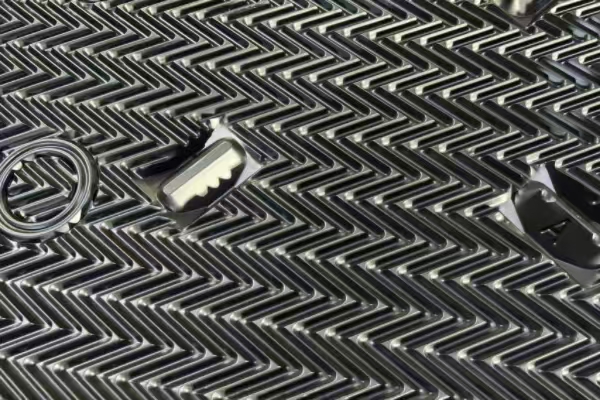
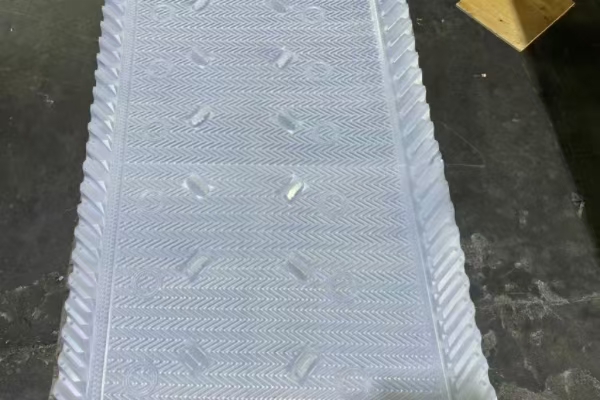
That is where modern film fill cooling tower designs are becoming increasingly important. By improving the surface area and water distribution characteristics inside the tower, modern fill designs can help increase heat transfer efficiency without necessarily expanding the cooling tower structure.
For many plants, replacing old or damaged media is now one of the most practical retrofit options available.
Trend #1: More Plants Are Choosing Cooling Tower Retrofits Instead of Complete Tower Replacement
Building a completely new cooling tower can be expensive and disruptive. It may require engineering approvals, structural modifications, extended shutdown periods and significant capital investment.
Because of this, many industrial facilities are taking a more targeted approach.
Rather than replacing the entire tower, they evaluate individual components that directly affect thermal performance. Cooling tower fill is usually near the top of that list.
During a retrofit, engineers may upgrade old splash fill, damaged PVC sheets or inefficient media with modern high-efficiency Corrugated fill. The objective is straightforward: improve water-to-air contact while keeping airflow resistance within an acceptable range.
This is one reason why modular products such as Cooling Tower Fill Blocks are receiving more attention in industrial refurbishment projects. Modular structures can simplify installation and make future maintenance more manageable.
Trend #2: Fouling Resistance Is Becoming a Bigger Purchasing Factor
In the past, many buyers focused mainly on the initial price of cooling fill. Today, experienced operators are looking more carefully at what happens after installation.
A cheaper fill can quickly become expensive if it clogs easily.
Scale, suspended solids, biological growth and poor water treatment can gradually block the passages inside a Film fill system. Once airflow becomes restricted, fan energy consumption may increase and cooling performance can decline.
That is why low-fouling designs are becoming more important, particularly in industries using recycled water, process water or water with high suspended solids.
The market is moving toward designs with larger flow channels and structures that are easier to clean. In these applications, selecting the right Anti Fouling Fill Media can help reduce long-term maintenance problems compared with using a high-density fill design in the wrong water conditions.
This is an important point that is sometimes overlooked: the fill with the highest theoretical surface area is not always the best choice for the actual operating environment.
Trend #3: Higher Temperature Applications Are Driving Material Changes
Not every cooling tower operates under the same temperature conditions.
Traditional PVC cooling media remains widely used because it offers a good balance between cost, performance and corrosion resistance. However, some industrial processes operate with higher water temperatures or more aggressive chemical environments.
In these cases, engineers are paying closer attention to material selection.
PP materials, for example, are increasingly considered for higher-temperature applications where standard PVC may not be the most suitable option.
The key trend in 2026 is not simply switching from one material to another. It is selecting the material based on the actual operating conditions.
Before purchasing new cooing fill, plant engineers should evaluate:
- Maximum circulating water temperature
- Water chemistry and chemical treatment
- Potential exposure to UV radiation
- Biological fouling conditions
- Mechanical strength requirements
- Expected service life
A fill material that works perfectly in one cooling tower may fail prematurely in another if the operating environment is different.
Trend #4: Industrial Plants Want More Performance Without Increasing Tower Size
Space is becoming a bigger issue, especially in older industrial facilities.
Many plants cannot easily expand their cooling tower footprint. However, production capacity may increase, and the cooling demand grows along with it.
This is where fill design becomes particularly important.
A modern Corrugated Fill structure can increase the contact surface between water and air inside the existing tower volume. When properly selected, the upgrade can improve thermal performance without requiring a completely new cooling tower structure.
However, engineers should avoid the temptation to simply install the densest fill available.
More surface area is useful only when the tower can maintain proper airflow and water distribution. If the passages are too narrow for the water quality, fouling can quickly become a problem.
In retrofit projects, the best solution is usually a balance between:
- Heat transfer efficiency
- Airflow resistance
- Water quality tolerance
- Ease of maintenance
- Mechanical durability
Trend #5: Cooling Tower Replacement Projects Are Becoming More Data-Driven
Another noticeable market trend is the way companies evaluate a cooling tower replacement project.
Instead of ordering the same fill model that was installed twenty years ago, more buyers are reviewing actual operating conditions before making a decision.
A proper evaluation may include:
- Existing cooling capacity
- Approach temperature
- Hot and cold water temperatures
- Water flow rate
- Fan performance
- Water quality
- Existing fill condition
- Available installation space
This approach makes sense because cooling tower problems are rarely caused by one component alone.
For example, replacing old fill with a more efficient Industrial Cooling Tower Fill may improve performance, but the final result will still depend on water distribution, airflow and the condition of other tower components.
Good retrofit projects look at the system as a whole.
Film Fill vs Other Cooling Tower Media: What Are Buyers Looking For?
Film fill continues to dominate many industrial applications because of its ability to create a large heat transfer surface within a relatively compact volume.
In a typical film fill cooling tower, water spreads into thin films across the corrugated surfaces while air moves through the fill structure. This increases the contact area between water and air and supports efficient evaporative cooling.
However, the market is becoming more segmented.
High-Efficiency Film Fill
Best suited for relatively clean water conditions where maximizing thermal performance is the priority.
Low-Fouling Cooling Fill
Designed for applications with suspended solids, biological growth or challenging water quality.
High-Temperature Fill Media
Used in industrial processes where water temperatures exceed the comfortable operating range of standard materials.
Crossflow and Counterflow Designs
Different cooling tower configurations require different fill structures. The airflow and water flow arrangement should always be considered when selecting replacement media.
In other words, there is no universal “best” Cooling Tower Media. The best choice depends on the cooling tower design and the operating environment.
What Should Industrial Buyers Check Before Upgrading Tower Fill?
If you are planning a fill replacement project in 2026, it is worth slowing down before placing the order.
Here are a few practical questions worth asking:
1. Is the Existing Fill Actually the Main Problem?
Inspect the fill for deformation, collapse, brittleness, heavy scaling and biological growth. If the fill passages are blocked or the sheets have lost structural integrity, replacement may be justified.
2. Are the Original Fill Specifications Still Suitable?
Operating conditions may have changed over the years. Production capacity, water temperature and water treatment programs may be different today.
3. Does the New Fill Match the Tower Structure?
Dimensions, flute geometry, support configuration and installation method should all be checked before manufacturing begins.
4. Should the Fill Be Customized?
Standard sizes work for many projects, but industrial retrofits often involve non-standard tower dimensions. Custom sizing can reduce cutting work and improve installation efficiency.
5. What Is the Long-Term Maintenance Requirement?
Don't only compare the purchase price. Consider cleaning frequency, expected service life and potential downtime costs.
The Growing Importance of Custom Cooling Tower Fill
One interesting development in the market is the growing demand for customized solutions.
Older cooling towers often do not match today's standard dimensions. This means replacement projects may require specific sheet sizes, flute spacing, material thickness or block configurations.
Custom manufacturing can help reduce unnecessary gaps, simplify installation and improve compatibility with the existing support system.
For distributors and cooling tower service companies, this is also becoming an important competitive advantage. Being able to provide a replacement fill that matches the customer's existing tower can make a retrofit project much easier to manage.
What Will Drive the Cooling Tower Fill Market Beyond 2026?
Looking ahead, the market will likely continue moving toward higher efficiency and longer service life.
Several factors will continue to influence purchasing decisions:
- Higher industrial energy costs
- Water conservation requirements
- Cooling tower retrofit projects
- More challenging water quality
- Higher production capacity in existing plants
- Demand for customized replacement solutions
- Focus on reducing maintenance downtime
For manufacturers and industrial buyers, the opportunity is clear: cooling tower fill is becoming a more important part of overall cooling system optimization.
It is no longer simply about replacing old plastic sheets with new ones.
The conversation is shifting toward thermal performance, fouling resistance, material durability and lifecycle cost.
Final Thoughts: The Best Upgrade Is Not Always the Most Expensive One
The biggest lesson from the current market trend is simple: choose cooling tower fill based on the actual operating conditions.
A high-performance film fill may be an excellent solution for clean water applications. A wider-channel structure may be more practical where fouling is a constant concern. Higher temperature processes may require a different material entirely.
Before starting a cooling tower replacement project, take the time to understand what is happening inside the tower today.
Check the water quality. Inspect the existing fill. Review the operating temperature. Look at the airflow. Then select the fill structure that fits the application instead of simply ordering the same model used years ago.
That approach may take a little more engineering work at the beginning, but it can save a significant amount of maintenance cost and downtime later.
Planning a Cooling Tower Fill Upgrade?
If you are evaluating an existing cooling tower or preparing a replacement project, providing basic information such as tower type, fill dimensions, operating temperature and water quality can help identify a more suitable solution.
Whether you need standard film fill, customized corrugated cooling tower media or a solution for an industrial retrofit project, selecting the right configuration early can make the installation process much easier.
Contact us to discuss your cooling tower fill replacement or upgrade project and get technical support based on your actual operating conditions.
```