Industrial Cooling Tower Fill Selection Guide for Power Plants and Factories
Choosing the right cooling tower fill is not always as simple as comparing sheet thickness or asking for the lowest price. In industrial projects, especially power plants, chemical plants, steel mills, refineries and large manufacturing facilities, the wrong fill selection can affect cooling efficiency, energy consumption, maintenance frequency and even the operating stability of the entire cooling system.
From my experience, many cooling tower retrofit projects start with the same question: “Which cooling tower fill should we use?” The answer depends on much more than the dimensions of the existing tower.
You need to look at water quality, operating temperature, tower type, airflow direction, fouling conditions and the cooling duty required. A film fill cooling tower operating with relatively clean circulating water may need a completely different solution compared with a heavily fouled industrial cooling system.
What Is Cooling Tower Fill and Why Is It So Important?
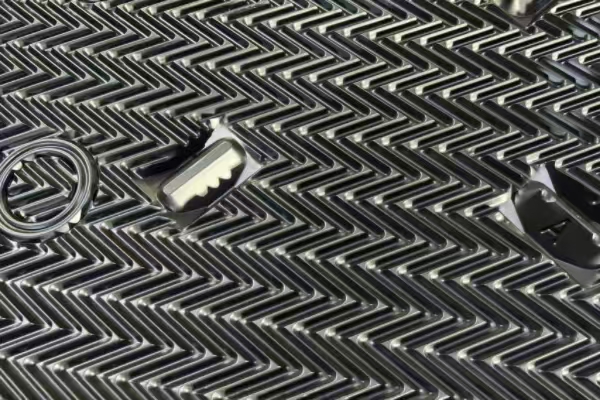
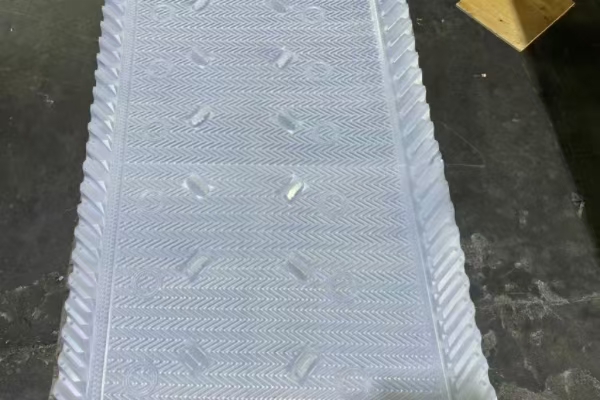
Cooling tower fill, sometimes called Cooling Tower Media, tower fill, cooling fill or film fill, is the heat transfer component installed inside the cooling tower.
Its main job is to increase the contact area between water and air. The larger and more effective the contact surface, the more heat can be transferred from the circulating water to the air.
In simple terms, the fill helps slow down and spread the water so it can release heat more efficiently.
For industrial cooling towers, the fill selection directly affects:
- Cooling efficiency
- Approach temperature
- Water pressure drop
- Fan energy consumption
- Fouling resistance
- Maintenance requirements
- Cooling tower replacement frequency
That is why cooling tower fill should not be treated as just another plastic component. In many industrial towers, it is one of the key factors determining long-term thermal performance.
Step 1: Identify Your Cooling Tower Type
The first thing I usually recommend checking is the tower configuration. Different tower designs require different fill structures.
Counterflow Cooling Towers
In a counterflow cooling tower, air moves upward while water flows downward through the fill. This design normally requires fill with good vertical water distribution and efficient air-water contact.
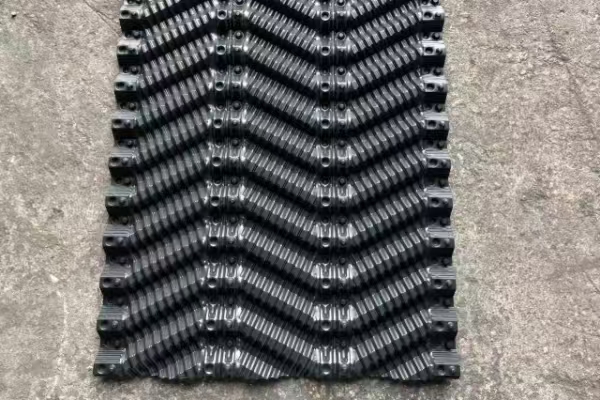
For this type of system, specially designed Counter Flow Fill Media can provide a suitable structure for industrial applications.
When selecting counterflow tower fill, engineers should pay attention to flute geometry, sheet spacing and airflow resistance. Higher surface area is not always better. If the fill is too dense, airflow resistance may increase and fan power consumption can become a problem.
Crossflow Cooling Towers
Crossflow towers operate differently. Water flows vertically downward while air moves horizontally through the fill.
Because of this airflow pattern, the fill design needs to maintain good water distribution while allowing air to pass through efficiently.
For these systems, dedicated Cross Flow Fill Media is usually a better choice than simply installing a general-purpose fill.
The important point here is simple: don't choose cooling fill only based on appearance. A fill designed for counterflow operation may not perform the same way inside a crossflow cooling tower.
Step 2: Check the Water Quality Before Choosing Film Fill
This is probably one of the most commonly overlooked factors.
Film fill cooling tower systems can achieve excellent heat transfer performance, but the structure contains narrow channels. If the circulating water contains high levels of suspended solids, biological growth, fibers, oil or scale-forming minerals, those channels can gradually become blocked.
Before selecting a fill, try to understand:
- Total suspended solids
- Water hardness
- Biological contamination
- Oil contamination
- Scale formation tendency
- Chemical treatment program
For relatively clean water systems, high-efficiency film fill may be an excellent choice.
For dirty industrial water, however, a wider flute spacing or anti-fouling design may provide better long-term performance. Sometimes a fill with slightly lower initial thermal efficiency can actually perform better over several years because it is less likely to clog.
Step 3: Consider Operating Temperature
Temperature is another critical factor when selecting industrial cooling tower fill.
Many standard PVC cooling tower fill products work well under normal operating conditions. However, some industrial applications experience higher circulating water temperatures, chemical exposure or temperature spikes.
For example, power plants and process industries may operate under conditions where the water temperature is significantly higher than a standard HVAC cooling tower.
Before purchasing tower fill, check:
- Normal operating water temperature
- Maximum water temperature
- Possible temperature spikes
- Shutdown and startup conditions
- Chemical exposure
If temperature resistance is ignored during the selection process, the fill may soften, deform or lose structural stability over time.
Step 4: Choose the Right Fill Material
The material is just as important as the fill geometry.
PVC Cooling Tower Fill
PVC is widely used in industrial cooling towers because it provides a good balance between cost, chemical resistance and thermal performance.
PVC Cooling Tower Fill is commonly used in power generation, HVAC systems, industrial process cooling and general cooling tower applications.
It is especially suitable for projects where normal operating temperatures and standard water chemistry are involved.
PP Cooling Tower Fill
Polypropylene, commonly known as PP, is often considered for higher temperature applications.
Compared with standard PVC, PP cooling tower fill can provide better temperature resistance in demanding operating environments.
However, material selection should not be based only on temperature. Mechanical strength, chemical compatibility and project cost should also be considered.
Step 5: Look at Fill Structure, Not Just Sheet Thickness
Some buyers focus heavily on sheet thickness. Thickness is important, but it does not tell the whole story.
The actual cooling performance of corrugated fill depends on several factors:
- Flute angle
- Flute height
- Sheet spacing
- Surface geometry
- Water distribution characteristics
- Airflow resistance
- Bonding strength
A well-designed Corrugated fill creates turbulence as water flows through the channels. This improves the interaction between water and air and increases heat transfer.
However, extremely narrow channels are not always the best choice. In a clean-water application, they may provide excellent performance. In a dirty-water system, they may foul quickly.
This is why industrial cooling tower fill selection should always balance thermal efficiency with fouling resistance.
Cooling Tower Fill Selection for Power Plants
Power plants usually require stable cooling performance and long operating life. A small reduction in cooling efficiency can affect condenser performance and overall plant efficiency.
When selecting cooling tower media for power generation projects, consider:
- Large circulating water volume
- Continuous operation
- Water temperature
- Required cooling range
- Seasonal temperature changes
- Water treatment conditions
- Maintenance accessibility
For large industrial projects, it is also important to consider the physical installation structure. Cooling tower fill blocks should fit the existing support system and allow efficient installation during shutdown periods.
Custom sizes can often reduce cutting work on-site and shorten installation time.
Cooling Tower Fill Selection for Factories
Factory cooling systems can be more complicated because water quality varies significantly between industries.
A steel plant, chemical plant, food processing facility and plastic manufacturing plant may all use cooling towers, but the operating conditions can be completely different.
For factory applications, I would normally recommend looking at the following questions before selecting tower fill:
- Is the water relatively clean or heavily contaminated?
- Does the system operate continuously?
- Are there frequent temperature fluctuations?
- Is there a risk of biological fouling?
- How difficult is it to shut down the tower for maintenance?
- Is the goal maximum cooling efficiency or lower maintenance frequency?
These questions usually help narrow down the correct cooling fill structure much faster than simply comparing catalog specifications.
When Should You Consider Cooling Tower Replacement?
Many industrial facilities wait too long before replacing damaged fill.
Over time, cooling tower media can become blocked, brittle, collapsed or heavily scaled. When this happens, water and air can no longer move through the fill efficiently.
Common signs that a cooling tower replacement project may be necessary include:
- Higher leaving water temperature
- Reduced cooling capacity
- Increased fan energy consumption
- Visible scale or biological growth
- Collapsed fill blocks
- Brittle or broken film fill sheets
- Uneven water distribution
Replacing the fill can sometimes restore cooling performance without replacing the entire cooling tower structure.
This is why cooling tower fill replacement is often considered one of the most cost-effective retrofit solutions for aging industrial cooling systems.
Don't Choose Fill Only by Price
This is probably the most practical advice I can give.
The cheapest cooling tower fill is not always the lowest-cost solution over the life of the equipment.
A lower-quality fill may initially save money, but if it deforms, fouls quickly or needs replacement after a short period of operation, the total project cost can become much higher.
For industrial projects, it is better to compare:
- Expected service life
- Material quality
- Thermal performance
- Fouling resistance
- Installation cost
- Maintenance requirements
- Replacement frequency
A good industrial cooling tower fill should provide a reasonable balance between performance and long-term reliability.
A Practical Checklist Before Ordering Industrial Cooling Tower Fill
Before sending an inquiry to a cooling tower fill manufacturer, try to prepare the following information:
- Cooling tower type: Counterflow or Crossflow
- Existing fill dimensions
- Fill sheet thickness
- Flute height and spacing
- Operating water temperature
- Water quality information
- Required quantity
- Installation structure
- Application industry
If you can provide photos of the existing fill and basic cooling tower dimensions, the supplier can usually recommend a more suitable replacement solution.
Final Thoughts
Selecting the right Cooling tower Fill for a power plant or factory is really about understanding the operating environment.
There is no single film fill that works perfectly for every cooling tower. The best solution depends on tower design, water quality, temperature and maintenance requirements.
For clean water systems, high-efficiency Corrugated fill can provide excellent thermal performance. For more demanding industrial conditions, wider channel designs or specialized Cooling Tower Media may offer better long-term reliability.
If you are planning a cooling tower retrofit, replacement project or new industrial installation, it is worth taking a little extra time to review the operating conditions before ordering.
Need help selecting the right industrial cooling tower fill? Share your cooling tower type, fill dimensions, operating temperature and application details with us. Our team can help evaluate suitable fill options for your project.