How to Choose the Right Cooling Tower Fill
How to Choose the Right Cooling Tower Fill
Choosing cooling tower fill is not simply a matter of picking a size from a product catalogue. In real cooling tower projects, the right fill depends on water quality, operating temperature, airflow, tower type, heat load, and how the tower is maintained.
Many cooling tower problems that appear to be caused by fans, pumps, or poor water distribution actually start inside the fill section. If the Cooling Tower Fill is not suitable for the operating conditions, it can foul quickly, become damaged, restrict airflow, or lose its ability to provide effective heat transfer.
So, how do you choose the right tower fill? The best approach is to look at the actual operating conditions first and the product specification second.
What Does Cooling Tower Fill Actually Do?
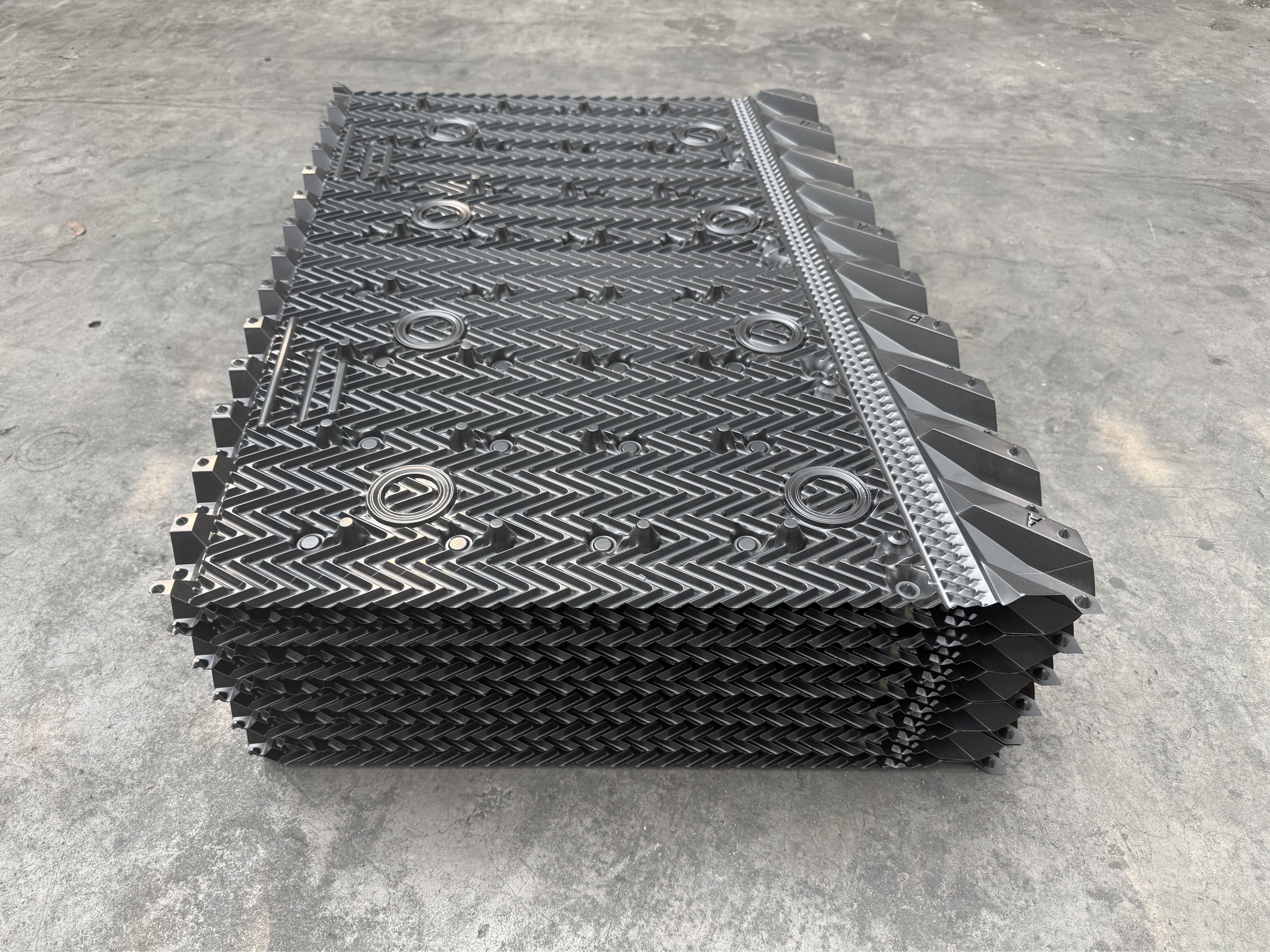
Cooling tower fill is the heat transfer media installed inside a wet cooling tower. Its main job is to increase the contact area between the circulating water and the air moving through the tower.
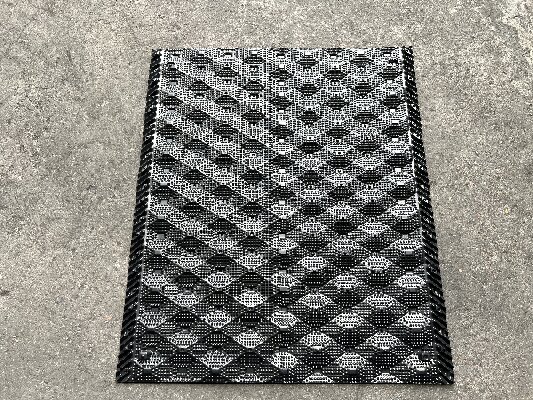
Instead of allowing water to fall directly through the tower, Film Fill spreads the water into thin sheets or films over a large surface area. This gives the air more opportunity to remove heat from the water.
That is why the design of the fill matters so much. A well-designed film fill cooling tower system can achieve efficient heat transfer without requiring an unnecessarily large tower footprint.
Film Fill vs. Splash Fill
Film fill is widely used where water quality is reasonably controlled and high heat transfer efficiency is required. It creates a large effective surface area and is commonly found in modern industrial and HVAC cooling towers.
Splash fill, on the other hand, breaks the water into droplets as it falls over the fill. It is often preferred for applications where suspended solids or fouling are a concern.
For a clean-water application, film fill can be an excellent choice. For heavily contaminated water, however, simply choosing the highest-efficiency fill is not always the smartest decision.
1. Start With the Cooling Tower Type
The first question I would ask before selecting tower fill is: What type of cooling tower are you working with?
The fill arrangement is different between counter-flow and cross-flow cooling towers, so the replacement media should match the original tower design unless the project is being specifically redesigned.
Counter-Flow Cooling Towers
In a counter-flow tower, air moves upward while water flows downward through the fill. This arrangement provides effective contact between air and water and is widely used in industrial cooling systems and HVAC applications.
Counter Flow Fill Media is normally designed around the airflow direction, water distribution system, and available fill depth. When replacing existing fill, the original dimensions and operating conditions should be checked carefully rather than assuming that any standard sheet will work.
For industrial applications, you can see our Counter Flow Fill Media for a typical counter-flow solution.
Cross-Flow Cooling Towers
Cross-flow towers are arranged differently. Air moves horizontally through the fill while water travels vertically downward. The fill is usually installed in large sections alongside the air inlet.
This means the replacement fill needs to match the existing tower geometry, water distribution method, and installation arrangement.
If you are replacing media in a cross-flow tower, do not select the fill only by sheet thickness or surface appearance. The overall block dimensions and flute design are equally important.
2. Consider the Water Quality Before Choosing Film Fill
This is probably the point that gets overlooked most often.
A cooling tower fill can have excellent heat transfer performance on paper, but if the circulating water contains high levels of suspended solids, biological growth, oil, or scale-forming minerals, the actual service life can be much shorter.
Before choosing Cooling Tower Media, check the water conditions.
- Suspended solids and dirt concentration
- Water hardness and scaling tendency
- Biological growth and algae
- Oil or grease contamination
- Operating pH
- Water treatment chemicals
- Cycles of concentration
If the water is relatively clean, a standard high-efficiency Film Fill may provide excellent results. If fouling is a recurring problem, an anti-fouling design may be a better long-term choice even if its initial heat-transfer performance is slightly different.
3. PVC or PP Cooling Tower Fill?
The material is another important part of the selection process. PVC and PP are two common materials used for cooling tower fill, but they should not simply be treated as interchangeable.
PVC Cooling Tower Fill
PVC is widely used in industrial and HVAC cooling towers because it offers a good balance between cost, rigidity, processability, and heat-transfer performance.
For many conventional applications, PVC cooling tower fill is a practical starting point. It is particularly common in standard operating temperature ranges where the water chemistry is properly controlled.
PP Cooling Tower Fill
PP can be considered when the operating conditions require higher temperature resistance or when the application involves conditions where PP is more suitable from a material compatibility perspective.
The important thing is not to choose the material simply because one sounds stronger. Check the actual water temperature, chemical environment, and expected operating life first.
4. Check the Operating Temperature
Temperature is one of the first technical parameters I would check when evaluating a cooling tower fill replacement.
The water entering the fill section may be significantly hotter than the ambient air, particularly in industrial processes. If the operating temperature is close to the material's practical limit, the fill can gradually deform, shrink, become brittle, or lose its original geometry.
Once the flute structure changes, the airflow and water distribution can also change. That means a temperature-related fill problem can eventually become a cooling-capacity problem.
So before ordering Cooling Fill, record the normal operating temperature and, more importantly, the maximum temperature that the fill may experience during abnormal operating conditions.
5. Look at the Fill Design, Not Just the Material
Two cooling tower fills can both be made from PVC but perform quite differently.
The difference can come from flute geometry, sheet thickness, surface texture, spacing, bonding arrangement, block dimensions, and the way water spreads across the surface.
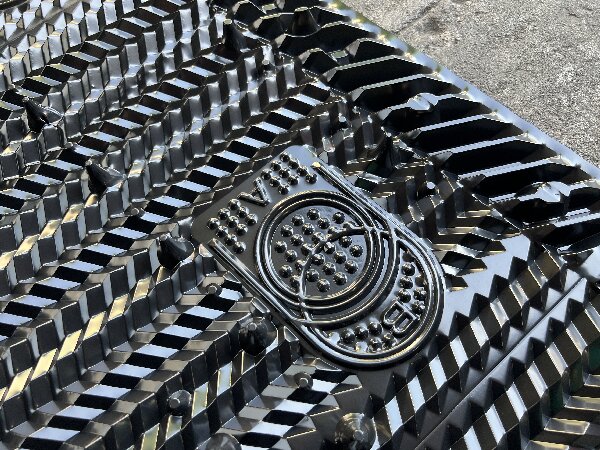
This is why Corrugated Fill is often specified by more than just material and thickness. The corrugated structure determines how water spreads and how air passes through the fill.
Why Flute Geometry Matters
A smaller flute structure can provide a large contact area and strong heat-transfer performance, but it may also be more sensitive to dirt and suspended solids.
A more open structure may be easier to keep clean and can tolerate poorer water quality, although the available heat-transfer surface area may be different.
In other words, the highest surface area is not automatically the best solution for every cooling tower.
6. When Should You Choose Anti-Fouling Fill?
If the tower regularly suffers from scale, algae, mud, or other deposits, it may be worth considering an anti-fouling design instead of installing exactly the same fill again.
A common mistake during cooling tower replacement projects is to remove an old fill that has repeatedly clogged and replace it with the same design without investigating why it failed.
If the original fill was too restrictive for the water quality, the new fill may simply develop the same problem a few months later.
For applications where fouling is a known issue, our Anti-Fouling Fill Media can be considered as an alternative.
7. Measure the Existing Fill Before Ordering a Replacement
When replacing existing tower fill, measurements are extremely important.
Before placing an order, I recommend checking at least the following:
- Overall fill block length
- Overall fill block width
- Fill height
- Sheet thickness
- Flute angle and geometry
- Existing support arrangement
- Water distribution system
- Airflow direction
- Operating water temperature
If the original drawings are available, use them. If not, take several measurements from the existing fill rather than measuring only one block. Old fill can deform over time, and a single measurement may not represent the original dimensions.
8. Should You Replace All the Cooling Tower Fill?
Not every dirty cooling tower fill needs immediate replacement.
If the fill is structurally sound and the deposits are mainly loose dirt or biological growth, cleaning may restore much of the original performance. But if the sheets are cracked, heavily deformed, brittle, collapsed, or permanently blocked with scale, replacement is usually the more sensible option.
Here is a simple way to think about it:
- Light dirt: cleaning may be enough.
- Algae or biological growth: improve water treatment and clean the fill.
- Moderate scale: inspect whether cleaning can restore water passages.
- Severe blockage: replacement is often more economical.
- Cracked or deformed fill: replacement should be considered.
- Repeated fouling: review the fill design instead of simply installing the same product again.
9. Don't Ignore Water Distribution
Even a good Cooling Tower Fill cannot compensate for poor water distribution.
If some areas of the fill receive too much water while other areas remain relatively dry, the actual heat-transfer performance will be lower than expected.
Before replacing fill, inspect spray nozzles, distribution pipes, headers, and strainers. A blocked nozzle can sometimes create a cooling problem that looks like a fill problem.
This is particularly important when evaluating an old tower. Replacing the fill without checking the distribution system can mean spending money without solving the real problem.
10. A Practical Cooling Tower Fill Selection Checklist
If you are selecting fill for a new tower or planning a cooling tower replacement, I would start with these questions:
- Is the tower counter-flow or cross-flow?
- What is the circulating water temperature?
- What is the required heat load and water flow?
- How clean or dirty is the circulating water?
- Is scaling or biological fouling already a problem?
- What material is currently being used?
- What are the existing fill dimensions?
- What flute or corrugated structure is required?
- Can the existing support system handle the replacement fill?
- Does the new fill need to be customized?
Once these questions are answered, selecting the right tower fill becomes much easier. You are no longer choosing based only on a catalogue picture; you are matching the fill to the actual cooling tower.
Our Industrial Cooling Tower Fill Options
For industrial and commercial cooling tower applications, we supply different types of PVC and PP cooling tower media according to tower configuration, water quality, operating temperature, and installation requirements.
For a general industrial application, you can learn more about our Industrial Cooling Tower Fill.
If the application is a counter-flow cooling tower, our Counter Flow Fill Media provides a suitable starting point for evaluating the required fill configuration.
For towers where fouling and suspended solids are major concerns, you can also review our Anti-Fouling Fill Media options.
Final Advice: Choose for the Real Operating Conditions
The right Cooling Tower Fill is not necessarily the fill with the highest heat-transfer rating or the lowest price.
A better choice is the one that matches your tower type, water quality, operating temperature, airflow, water loading, and maintenance conditions.
If your existing fill is failing repeatedly, don't simply ask for the same replacement. Take a step back and find out why it failed. Sometimes the problem is fouling. Sometimes it is temperature. Sometimes the fill design is too restrictive for the water quality. And sometimes the real issue is poor water distribution.
Getting these details right before ordering can save a lot of money and avoid another unplanned cooling tower shutdown.
Need Help Selecting Cooling Tower Fill?
If you have an existing cooling tower fill that needs replacement, send us the tower type, fill dimensions, water flow, operating temperature, and a few photos if available. We can help you review the suitable fill type, material, and configuration before production.