PVC Cooling Tower Fill vs PP Cooling Tower Fill: Which One Is Better
PVC Cooling Tower Fill vs PP Cooling Tower Fill: Which One Is Better?
When a cooling tower needs new fill, one of the first questions engineers usually ask is simple: should I use PVC or PP cooling tower fill?
At first glance, the two materials can look quite similar. Both can be used to manufacture film fill, corrugated fill and other types of cooling tower media. But once the tower is operating under high temperature, chemical exposure, dirty water or strong sunlight, the differences become much more important.
In practice, there is no single material that is always better. The right choice depends on the cooling water temperature, water quality, tower design, chemical environment and expected service life.
Here is a practical comparison based on the things that usually matter during a cooling tower fill replacement.
What Is Cooling Tower Fill and Why Does the Material Matter?
Cooling tower fill is the heat-transfer media installed inside a wet cooling tower. Its job is to increase the contact area between hot process water and air, giving the water more opportunity to release heat before it returns to the system.
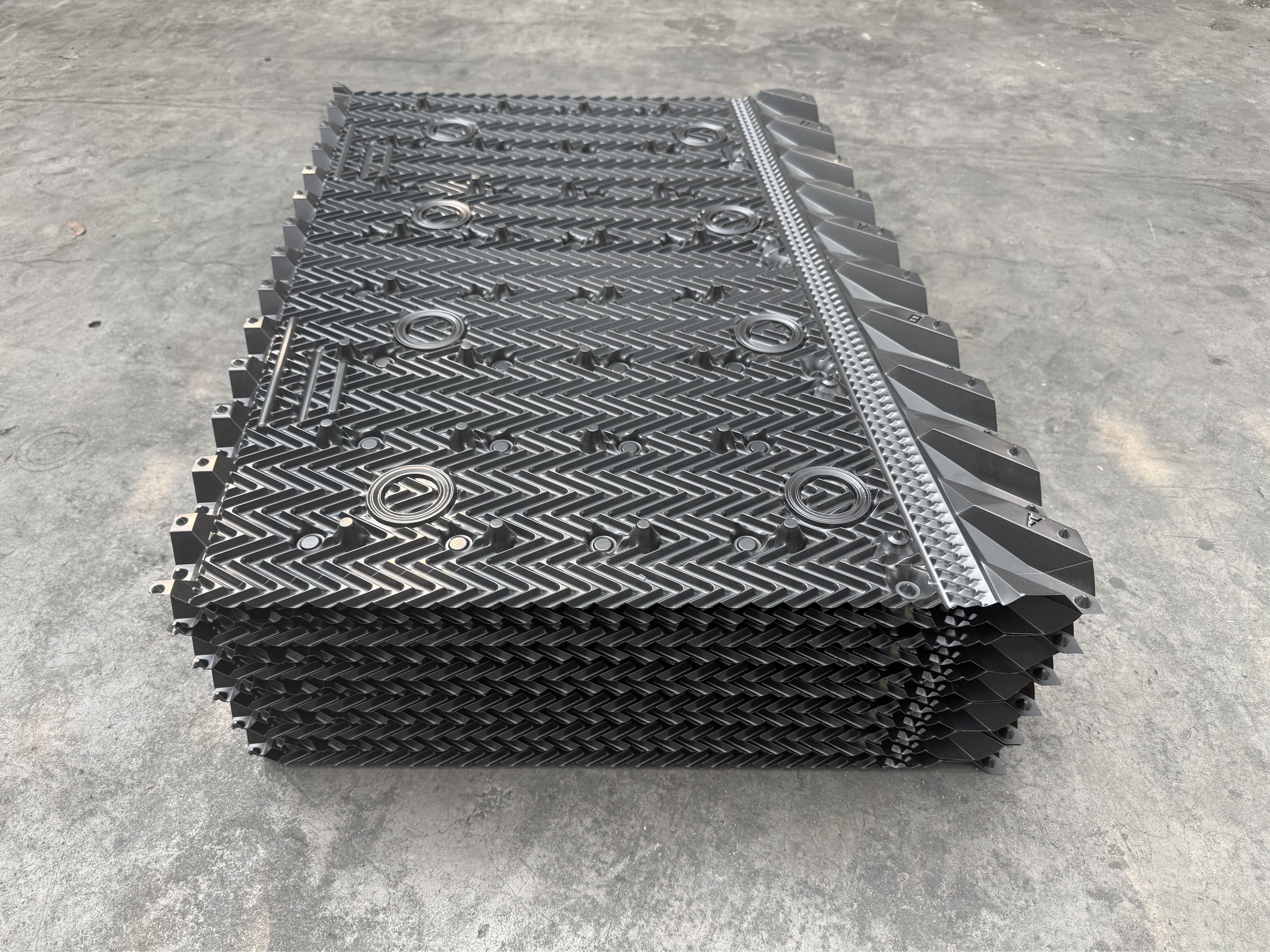
In a typical film fill cooling tower, water spreads into a thin film over the surface of the fill sheets. This creates a large contact area without requiring the tower to be physically larger.
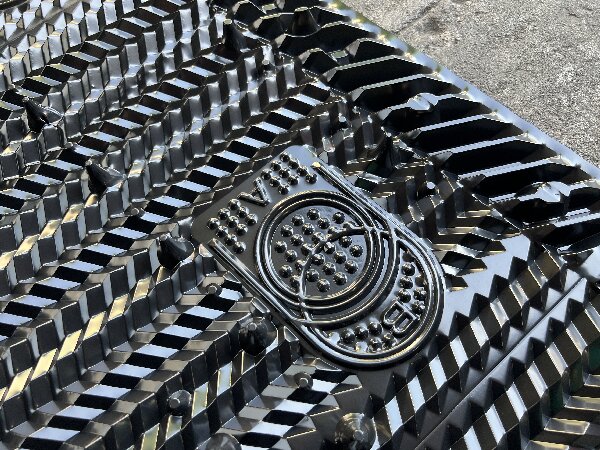
That is why the quality and design of the Cooling Tower Media can have a noticeable effect on cooling performance. The fill geometry matters, but so does the plastic material used to manufacture it.
Two cooling towers may use the same basic fill design but achieve different service lives because one operates at a much higher water temperature or has more aggressive water chemistry.
PVC Cooling Tower Fill: Where It Makes Sense
PVC has been widely used for cooling tower fill for many years. For conventional industrial and HVAC cooling towers operating within suitable temperature conditions, PVC remains a very practical choice.
One of the biggest advantages of PVC is its balance between cost, performance and availability. This is especially useful when a customer is looking for a straightforward cooling tower replacement without significantly changing the existing tower design.
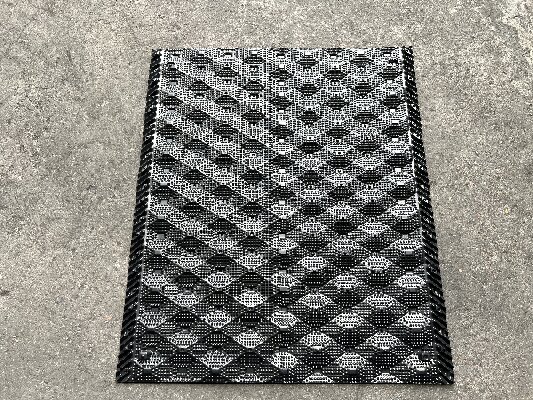
PVC can also be formed into different sheet patterns and thicknesses, allowing manufacturers to produce a wide range of Film fill and Corrugated fill designs.
Main Advantages of PVC Fill
- Good cost-to-performance ratio
- Widely available for industrial cooling towers
- Suitable for many standard film fill applications
- Good forming performance during manufacturing
- Available in different thicknesses and sheet designs
- Can be a practical choice for large-volume tower fill replacement projects
For many normal operating conditions, PVC is still the material I would consider first before automatically moving to a more expensive option.
When Should You Consider PVC Fill?
PVC is often a good fit for conventional counter-flow and cross-flow cooling towers where the circulating water temperature and chemical conditions are within the recommended operating range of the selected fill.
If you are replacing an existing PVC fill and the original material performed well for years, there is usually no reason to change the material simply because PP is available.
In other words, cooling fill selection should start with the operating conditions, not with the material name.
For standard industrial applications, you can review our PVC Cooling Tower Fill options and compare the available designs, thicknesses and dimensions with your existing tower fill.
PP Cooling Tower Fill: When Is It the Better Choice?
Polypropylene, commonly called PP, is often selected when the operating environment is more demanding.
Compared with standard PVC, PP generally offers better resistance to higher temperatures. This can become important in industrial cooling applications where the entering water temperature is higher than that found in typical HVAC systems.
PP is also attractive for applications where the chemical environment or operating conditions make material selection more critical.
However, choosing PP simply because it is a higher-temperature material is not always necessary. If the tower operates comfortably within the working range of PVC fill, the additional material cost may not provide a meaningful benefit.
Main Advantages of PP Fill
- Better suitability for higher-temperature applications
- Good resistance to many chemical environments
- Useful for demanding industrial cooling applications
- Can provide a longer service life when operating conditions exceed the practical range of standard PVC
- Suitable for various film fill and corrugated fill designs
If your cooling tower handles relatively hot process water or operates in a demanding industrial environment, PP may be worth the additional investment.
For these applications, see our PP Cooling Tower Fill product information before making the final material decision.
PVC vs PP Cooling Tower Fill: Practical Comparison
| Factor | PVC Cooling Tower Fill | PP Cooling Tower Fill |
|---|---|---|
| Typical cost | Usually more economical | Usually higher |
| Temperature capability | Suitable for many conventional applications | Better suited to higher-temperature applications |
| Chemical resistance | Good for many normal water-treatment conditions | Often preferred for more demanding conditions |
| Common applications | HVAC, industrial and general cooling towers | Industrial and higher-temperature applications |
| Film fill applications | Widely used | Widely used where operating conditions require it |
| Replacement projects | Excellent option when replacing existing PVC fill | Useful when upgrading material performance is necessary |
The Real Question: What Is Your Cooling Tower Operating Condition?
This is where many cooling tower fill purchases go wrong.
People sometimes compare PVC and PP only by price and material specifications. In reality, the first thing to check is the actual operating condition of the tower.
1. Check the Hot Water Temperature
Find out the actual water temperature entering the cooling tower, rather than relying only on the original design data.
If the operating temperature has increased because of production changes, a material that worked well ten years ago may no longer be the best option today.
2. Check the Water Chemistry
Look at pH, hardness, suspended solids, chlorides and the chemicals used for water treatment.
A fill material can have excellent mechanical strength but still suffer from premature deterioration if the chemical environment is not suitable.
3. Check Fouling and Scaling
If the old tower fill is covered with scale, mud, algae or biological growth, changing from PVC to PP alone will not solve the problem.
The new fill may have the same problem again if water treatment and filtration are not improved.
4. Check the Existing Fill Design
Material is only one part of the equation. The sheet thickness, flute geometry, spacing, block dimensions and water distribution pattern are also important.
For example, a highly efficient Corrugated fill design may not perform properly if the water distribution system is poorly matched to it.
PVC or PP: Which One Is Better for Film Fill Cooling Towers?
If the tower operates under conventional conditions, PVC is often the more economical and practical choice.
If the tower operates with higher water temperatures or more demanding process conditions, PP deserves closer consideration.
But there is an important point here: the best cooling tower fill is not necessarily the fill made from the more expensive material.
The best option is the material that provides sufficient temperature resistance, chemical compatibility, mechanical stability and service life for the actual tower.
What About Cooling Tower Fill Shape and Structure?
Material selection should not distract from another important issue: the structure of the fill itself.
Film fill is designed to spread water across a large surface area. Different flute patterns can influence water distribution, air resistance, heat transfer and fouling characteristics.
For this reason, when ordering replacement tower fill, it is better to provide the supplier with the original fill dimensions, sheet thickness, flute pattern, block size and cooling tower type whenever possible.
If you only say “I need PVC fill” or “I need PP fill,” the supplier may not have enough information to select the correct replacement.
Can You Replace PVC Fill with PP Fill?
In many projects, yes—but it should not be treated as a simple material swap.
Before changing from PVC to PP, check the existing fill support structure, block dimensions, sheet thickness, air-side pressure drop, water distribution and overall tower design.
The replacement fill should fit the tower mechanically and hydraulically. A material upgrade is useful only when the complete fill system still works correctly after the replacement.
When Should You Replace Cooling Tower Fill?
Material selection becomes especially important when planning a cooling tower replacement project.
Common signs that existing fill may need replacement include:
- Large areas of fill have collapsed or deformed
- Heavy scale or biological fouling cannot be removed effectively
- Water distribution through the fill has become uneven
- Cooling performance has gradually decreased
- Airflow resistance has increased significantly
- Plastic sheets have become brittle or damaged
- The existing fill is no longer suitable for the current operating temperature
Before ordering new cooling fill, it is worth finding out why the original fill failed. If the root cause was high temperature, chemical attack or severe fouling, simply installing the same product again may only postpone the problem.
How to Choose Between PVC and PP Cooling Tower Fill
For a quick engineering decision, I normally suggest starting with these five questions:
- What is the actual hot water temperature?
- What type of cooling tower is it—counter-flow or cross-flow?
- What is the circulating water quality and chemical treatment program?
- What type and size of fill is currently installed?
- Is the goal a like-for-like replacement or a performance upgrade?
Once these points are clear, the PVC vs PP decision becomes much easier.
Final Recommendation: PVC or PP?
For most conventional cooling tower applications, PVC cooling tower fill remains a cost-effective and proven solution.
For higher-temperature or more demanding industrial applications, PP cooling tower fill can offer a better safety margin and may provide better long-term value.
So, if someone asks me, “Which one is better, PVC or PP?” my answer would be: neither is universally better—the operating conditions decide.
And don't forget that the plastic material is only part of the selection. Fill geometry, sheet thickness, block size, water distribution and fouling conditions all affect the actual performance of a cooling tower.
Need Help Selecting the Right Cooling Tower Fill?
If you are planning a cooling tower fill replacement and are not sure whether PVC or PP is more suitable, send us the existing fill dimensions, cooling tower type, operating temperature and required quantity.
We can help compare the material and fill structure before you place an order, so you are not simply replacing the old fill with another product that may have the same limitations.
Request Cooling Tower Fill Information
Related terms: Cooling tower Fill, film fill cooling tower, Corrugated fill, tower fill, Cooling Tower Media, Film fill, cooling fill, cooling tower replacement.