Can Higher-Density Film Fill Really Improve Cooling Tower Performance
When a cooling tower is not performing as expected, one of the first things engineers often look at is the Cooling Tower Fill. And sooner or later, someone usually asks the same question:
"Would a higher-density film fill improve cooling performance?"
The short answer is: sometimes, but not always.
A higher-density fill can provide more heat transfer surface area in the same space, which sounds like an obvious advantage. But in real cooling tower operation, performance is not only about packing more surface area into the tower. Airflow, water quality, fouling risk, pressure drop and tower design all matter.
In fact, choosing the wrong high-density film fill cooling tower media can sometimes reduce performance instead of improving it.
What Does Higher-Density Film Fill Actually Mean?
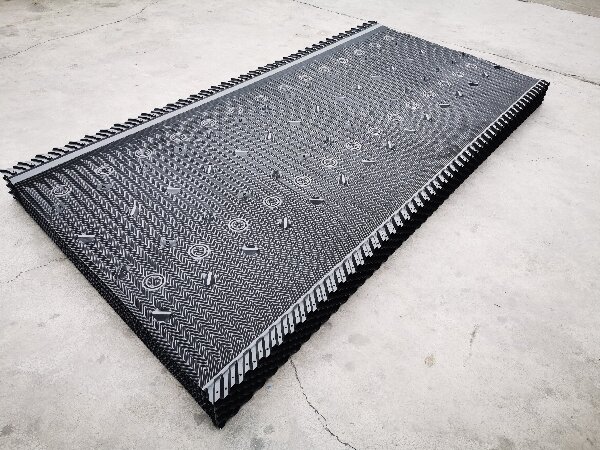
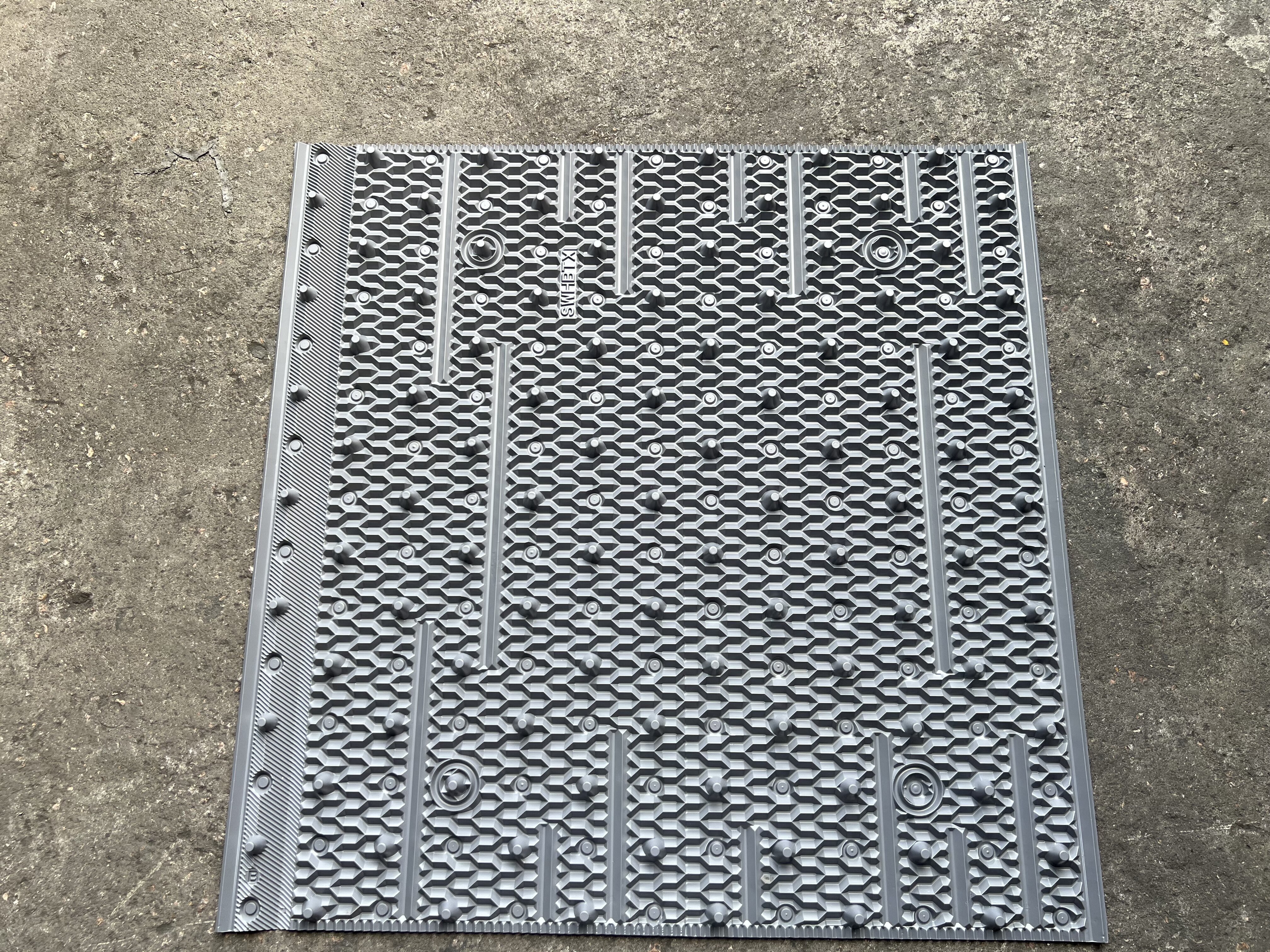
In most cases, higher-density Cooling Tower Media means that the corrugated sheets have a smaller flute spacing or a more compact structure.
This creates more contact surface between water and air within the same tower volume.
For example, compared with a wider flute spacing, a tighter Corrugated fill design can:
- Increase the effective heat transfer surface area
- Create a longer water flow path
- Improve water distribution across the fill surface
- Increase contact time between air and water
From a heat transfer perspective, this sounds excellent.
But cooling towers are not laboratory equipment. They operate with changing water quality, airborne dust, biological growth and sometimes less-than-perfect maintenance. That's where the real engineering decision begins.
Why Higher-Density Film Fill Can Improve Cooling Performance
When operating conditions are suitable, higher-density Film fill can improve cooling tower efficiency because it creates more surface area for evaporation.
The basic principle is simple: the more effectively water spreads into a thin film across the fill surface, the more opportunity there is for heat transfer.
1. More Heat Transfer Surface in the Same Tower Volume
A compact tower fill structure can provide a larger surface area without increasing the physical size of the cooling tower.
This can be particularly useful during cooling tower upgrades where operators want to increase capacity but do not have enough space to build a larger tower.
Replacing old splash fill or damaged low-efficiency media with properly selected high-performance Cooling Tower Fill may significantly improve thermal performance.
2. Better Water Film Formation
The purpose of film fill is to spread water into a thin film rather than allowing it to fall through the tower in large droplets.
A well-designed corrugated structure continuously redistributes the water as it flows downward.
When the geometry is properly matched with the tower design, a higher-density structure can improve the uniformity of water distribution and increase air-water contact.
3. Useful for Cooling Tower Retrofit Projects
Many older cooling towers were designed decades ago using fill technology that is no longer considered highly efficient.
During a cooling tower replacement project, upgrading the fill can sometimes be one of the most cost-effective ways to recover or improve cooling capacity.
However, the replacement fill should never be selected based only on density.
The flute geometry, material, operating temperature and water quality should all be evaluated together.
But Higher Density Also Creates Some Risks
This is the part that is often overlooked.
More surface area does not automatically mean better long-term performance.
As the fill structure becomes tighter, the available flow channels become smaller. That can increase the risk of blockage and airflow resistance.
1. Higher Fouling Risk
If the circulating water contains suspended solids, scale, algae or biological growth, a very tight fill structure can become clogged more easily.
Once fouling begins, the effective surface area is no longer working as intended.
Instead of improving heat transfer, deposits can block water passages and reduce airflow through the cooling fill.
This is why a high-density fill that performs well with clean water may not be the best choice for a dirty industrial water system.
2. Increased Air Pressure Drop
Air must pass through the fill as efficiently as possible.
A denser structure can create additional resistance to airflow. If the existing fan system cannot compensate for this pressure drop, airflow through the tower may decrease.
Less airflow means less evaporation, and eventually the expected performance improvement may disappear.
This is one reason why engineers should evaluate the complete tower system rather than selecting fill based on surface area alone.
3. Cleaning Can Become More Difficult
A tighter corrugated structure can be more difficult to clean once scale or biological fouling develops.
For facilities with inconsistent water treatment, a more open flute design may provide better long-term reliability.
In these situations, using an anti-fouling fill media design may be a more practical solution than simply choosing the highest-density fill available.
High Density vs Low Density Film Fill: Which One Is Better?
There is no universal answer.
The better choice depends on operating conditions.
| Operating Condition | Recommended Direction |
|---|---|
| Clean circulating water | Higher-density film fill may improve efficiency |
| Limited tower space | High-performance compact fill can be beneficial |
| Dirty industrial water | More open structure is often safer |
| High suspended solids | Anti-fouling or wider flute spacing is recommended |
| Cooling tower retrofit | Evaluate airflow and fan capacity before increasing density |
| High operating temperature | Material selection becomes equally important |
In other words, the best fill is not necessarily the one with the most surface area.
The best fill is the one that delivers stable heat transfer performance under your actual operating conditions.
The Importance of Corrugated Fill Geometry
When comparing Corrugated fill, density is only one part of the design.
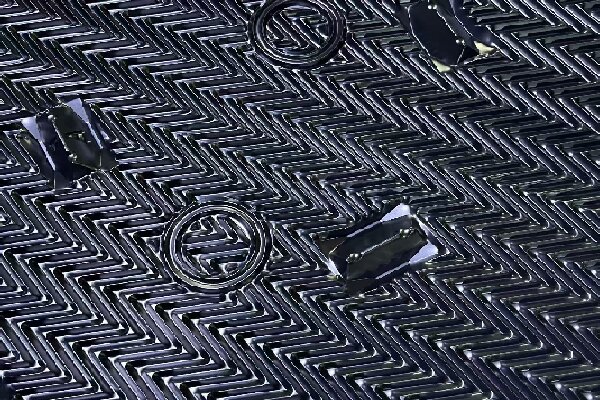
The shape of the corrugation also affects how water spreads and how air moves through the fill.
A properly engineered corrugated pattern should help:
- Redistribute water evenly
- Create thin water films
- Increase air-water contact
- Reduce dry spots
- Maintain stable airflow channels
For this reason, two products with similar sheet spacing may still perform differently if their corrugation geometry is different.
When selecting replacement media, it is worth looking at the complete design rather than comparing only thickness or flute density.
For industrial cooling applications, you can also compare different corrugated cooling tower fill structures based on water quality, airflow requirements and tower configuration.
Does High-Density Fill Work Better in Every Type of Cooling Tower?
No. The cooling tower configuration matters.
Counterflow Cooling Towers
In a counterflow tower, air moves upward while water flows downward through the fill.
Because airflow distribution is extremely important, increasing fill density without checking fan performance can create unexpected airflow resistance.
A properly designed film fill cooling tower system should balance heat transfer area with acceptable pressure drop.
Crossflow Cooling Towers
Crossflow towers have different airflow characteristics.
Water distribution and fill geometry must work together with the tower's air inlet design.
Simply replacing the existing media with a denser product without considering the original tower design may not deliver the expected results.
Industrial Cooling Towers
Industrial systems often face more challenging water conditions than HVAC cooling towers.
Scale, process contamination and suspended solids can quickly affect the performance of high-density media.
In these applications, reliability and resistance to fouling may sometimes be more valuable than maximum theoretical surface area.
What Should You Check Before Choosing Higher-Density Cooling Tower Fill?
Before upgrading to a denser Cooling Tower Media, I would normally recommend checking the following points.
Water Quality
Is the circulating water relatively clean?
If the system regularly experiences scale, algae or suspended solids, an extremely tight structure may create long-term maintenance problems.
Fan Capacity
Can the existing fan handle additional airflow resistance?
This is especially important during retrofit projects. A fill upgrade should not create a pressure drop that the existing mechanical system cannot overcome.
Operating Temperature
Material selection matters as much as structure.
PVC is commonly used for many cooling tower applications, while PP may be more suitable for higher temperature environments.
Existing Tower Dimensions
Measure the existing fill installation carefully.
During a cooling tower replacement, dimensions, support structure, module height and installation method should all be confirmed before manufacturing new fill blocks.
Maintenance Capability
Be realistic about how often the cooling tower is inspected and cleaned.
If maintenance intervals are long, choosing a slightly more open fill structure may provide more stable long-term performance.
When Does Higher-Density Film Fill Make the Most Sense?
From practical experience, higher-density Film fill is usually worth considering when:
- The circulating water quality is relatively good
- The cooling tower has limited available space
- The project requires increased thermal capacity
- The fan system can handle the pressure drop
- Regular water treatment and maintenance are available
In these situations, a properly designed high-efficiency fill can help operators get more cooling performance from the same tower footprint.
When Is a More Open Fill Structure the Better Choice?
A lower-density or wider flute structure may be the smarter choice when:
- The water contains high suspended solids
- Scale formation is common
- Biological fouling is difficult to control
- Maintenance is infrequent
- Stable airflow is more important than maximum surface area
This is a good example of why cooling tower design should focus on total operating performance rather than chasing a single specification.
A Practical Approach for Cooling Tower Replacement Projects
If you are planning a cooling tower replacement or fill retrofit, avoid selecting media based only on a product catalog description.
A better approach is to compare:
- Existing cooling tower type
- Fill dimensions
- Water quality
- Operating temperature
- Airflow capacity
- Current cooling performance
- Fouling history
- Required cooling capacity
For heavy-duty industrial applications, selecting the right industrial cooling tower fill based on actual operating conditions is usually more effective than simply choosing the densest product available.
Final Thoughts: More Surface Area Is Not Always Better
Higher-density film fill can absolutely improve cooling tower performance, but only when the rest of the system supports it.
More surface area can improve heat transfer, but tighter passages can also increase fouling risk and airflow resistance.
The best approach is to balance efficiency with long-term operating reliability.
If the water is clean and the tower needs additional capacity, high-performance dense Cooling Tower Fill may be an excellent upgrade.
But if the system struggles with scale, suspended solids or biological fouling, a more open Corrugated fill design may deliver better performance over the long run.
That is why experienced engineers usually don't ask, "Which fill has the highest density?"
They ask:
"Which fill design will continue performing well in this particular cooling tower six months or two years from now?"
Need Help Selecting the Right Cooling Tower Fill?
If you are planning a cooling tower retrofit, replacing damaged fill, or trying to improve cooling capacity, the right selection depends on more than just fill density.
Share your cooling tower type, fill dimensions, operating temperature and water conditions, and we can help evaluate a suitable film fill structure for your application.
Contact us to discuss your cooling tower fill requirements and replacement project.
```