Cooling Tower Fill Procurement Checklist: 10 Technical Details to Confirm Before Placing an Order
Buying Cooling Tower Fill is not simply a matter of checking the price per cubic meter and placing an order. If the wrong fill is selected, you may run into poor water distribution, higher pressure drop, premature fouling, deformation, or even a noticeable loss of cooling capacity.
For engineers, cooling tower contractors, distributors, and maintenance teams, the better approach is to confirm a few technical details before the purchase order is released. This Cooling Tower Fill procurement checklist covers the points that are easy to overlook but can make a big difference after installation.
If you are purchasing fill for an industrial application, you can also review our Industrial cooling tower fill specifications before comparing different suppliers.
1. Confirm the Cooling Tower Type First
The first question should be simple: what type of cooling tower are you working with?
Counter-flow and cross-flow cooling towers use different air and water flow arrangements, so the fill geometry and installation method are not always interchangeable.
Counter-Flow Cooling Towers
In a counter-flow tower, air travels upward while water flows downward through the fill. The fill needs to provide a large contact area while maintaining reasonable airflow resistance.
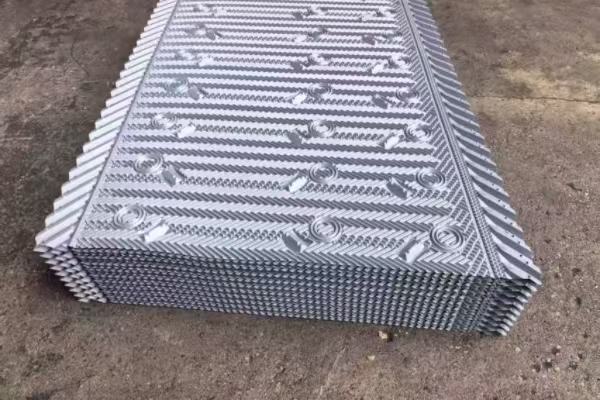
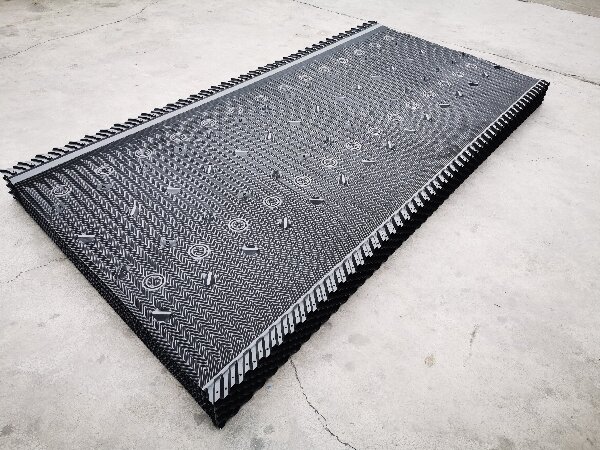
For this application, film fill cooling tower designs are widely used because the water spreads into thin films over the surface of the sheets, increasing contact between air and water.
Cross-Flow Cooling Towers
In a cross-flow tower, air moves horizontally through the fill while water travels vertically. The fill arrangement and sheet configuration are therefore different from a typical counter-flow design.
Before ordering, always confirm the original tower design rather than assuming that a fill block from another cooling tower will fit.
2. Check the Fill Dimensions and Block Size
One of the most common procurement mistakes is ordering by description only. Terms such as tower fill, film fill, or corrugated fill do not tell you enough about the actual product.
Ask the supplier to confirm:
- Sheet width and height
- Overall fill block dimensions
- Sheet thickness
- Number of sheets per block
- Flute or corrugation geometry
- Installation orientation
- Required quantity and total fill volume
If the replacement fill is going into an existing tower, it is better to measure the old fill and available installation space before purchasing. A small dimensional difference can create unnecessary cutting and installation work on site.
3. Confirm the Fill Material: PVC or PP?
Material selection is one of the most important parts of the procurement process. PVC and PP are both common materials for cooling tower media, but they are not automatically suitable for every operating condition.
PVC Cooling Tower Fill
PVC is widely used for industrial and commercial cooling tower applications because it offers a practical combination of cost, rigidity, chemical resistance, and ease of forming.
For standard operating conditions, PVC cooling tower fill is often a sensible starting point when evaluating replacement options.
PP Cooling Tower Fill
PP can be considered when the operating temperature or chemical environment makes it a better fit than standard PVC. However, the actual operating temperature, water chemistry, and tower design should be checked before making the final decision.
Don't choose the material simply because one supplier says it is "better." Ask for the recommended operating range and compare it with your actual tower conditions.
4. Confirm the Operating Water Temperature
Temperature is easy to overlook because many cooling tower fill products look almost identical. In reality, temperature can have a major effect on the long-term performance of the fill.
Before placing an order, provide the supplier with at least:
- Hot water inlet temperature
- Cold water outlet temperature
- Normal operating temperature
- Possible peak temperature
This is especially important for industrial applications where process conditions can change throughout the year.
A fill that works well under normal conditions may deform or lose mechanical stability if it is continuously exposed to temperatures beyond its suitable range.
5. Check Water Quality and Fouling Risk
Here is a practical point that is sometimes missed during procurement: cooling performance is not the only thing you should consider. The fill also has to survive the water quality in your tower.
If the circulating water contains a high level of suspended solids, biological growth, oil contamination, or mineral deposits, conventional fine-pitch film fill may become difficult to maintain.
In those conditions, ask whether an anti-fouling fill design or a wider-channel configuration would be more appropriate.
The right choice depends on the actual water quality. A slightly different fill structure can sometimes make cleaning and long-term operation much easier.
6. Check the Fill Type and Surface Geometry
Not all Cooling Tower Media has the same geometry. The shape of the sheets determines how water spreads, how much contact area is available, and how easily air can pass through the fill.
Common designs include:
- Film fill
- Corrugated fill
- Grid or splash-type fill
- Anti-fouling fill
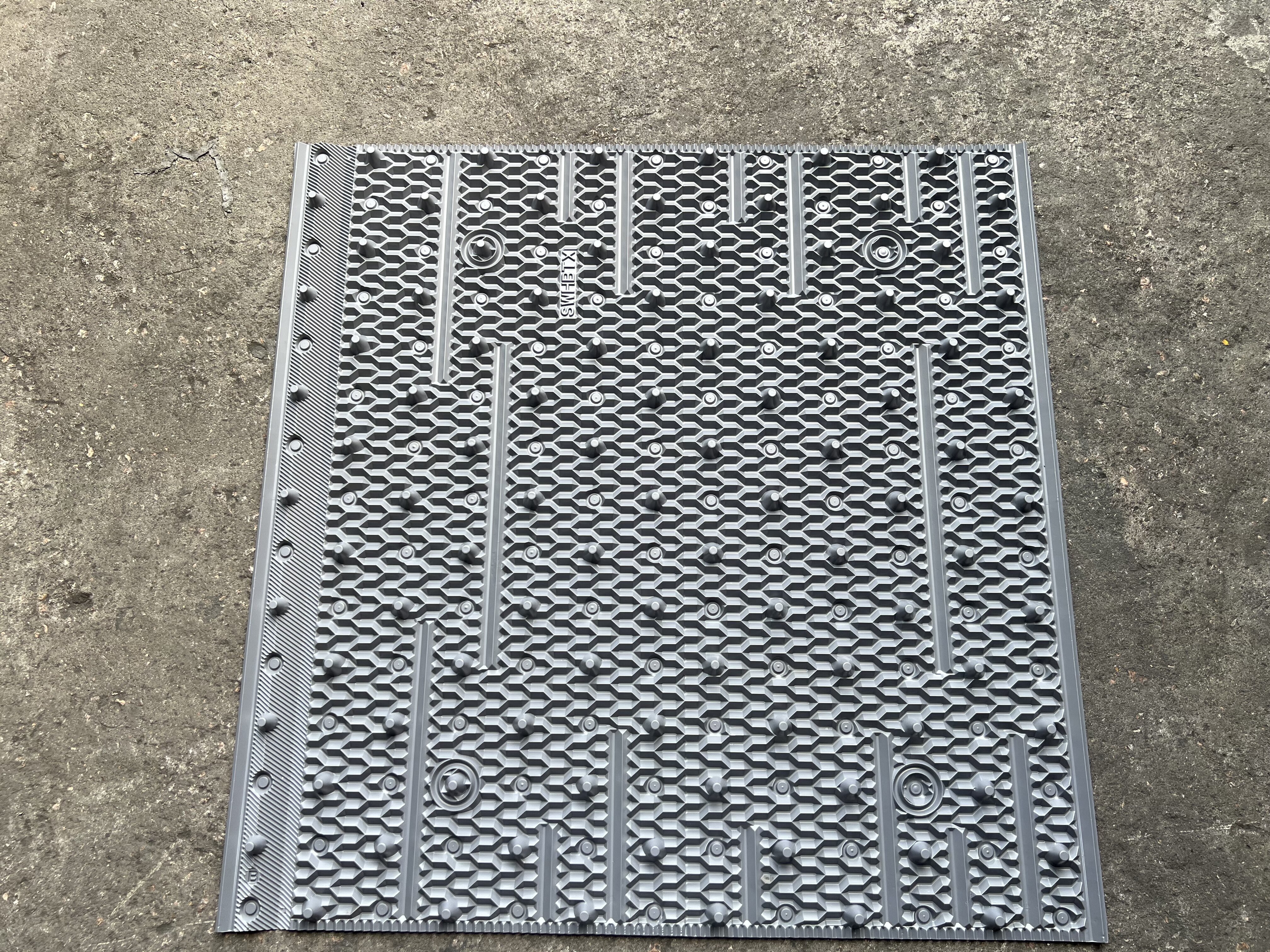
Corrugated fill is commonly designed with formed channels that encourage water distribution and air-water contact. The actual pitch, height, angle, and sheet configuration should be confirmed rather than relying only on the product name.
Why Fill Geometry Matters
A fill with a very large contact area may provide good thermal performance under clean-water conditions, but it may also be more sensitive to fouling. On the other hand, a more open structure can be easier to maintain in dirty-water applications but may have different thermal characteristics.
There is no single "best" fill geometry for every cooling tower. The operating conditions should drive the decision.
7. Confirm Pressure Drop and Airflow Requirements
Cooling tower fill should not be evaluated only by surface area. Airflow resistance matters as well.
If the fill creates excessive pressure drop, the fan may need to work harder to maintain the required airflow. That can affect fan power consumption and overall tower operation.
When comparing different fill designs, ask suppliers for available technical data related to airflow, pressure drop, and thermal performance. Ideally, compare products under similar operating conditions rather than comparing isolated numbers.
8. Check Whether the Fill Is Suitable for Replacement Work
If this is a cooling tower replacement project, don't assume that the new fill should simply copy the old fill exactly.
The original fill may have been selected many years ago, while operating conditions, water treatment, production load, or maintenance requirements may have changed.
Before replacing the fill, check:
- Why the original fill failed
- Whether the tower has suffered from fouling
- Whether water distribution is still uniform
- Whether operating temperature has changed
- Whether the fan and airflow conditions are unchanged
- Whether the original fill dimensions are still appropriate
This is where an experienced supplier can be useful. Sometimes the best replacement is not simply an identical copy of the old media.
9. Confirm Manufacturing Tolerance and Batch Consistency
For a small replacement project, one batch of fill may be enough. For a large industrial tower or multiple towers, consistency becomes much more important.
Ask the manufacturer about sheet thickness tolerance, block dimensions, forming consistency, welding or assembly quality, and packaging.
It is also worth checking whether the supplier can maintain the same specification for repeat orders. This becomes particularly important for distributors and cooling tower service companies that may need the same fill specification for several projects.
10. Ask for Samples or Technical Confirmation Before Ordering
If you are not completely sure whether a particular fill is suitable, don't guess based on a product photo.
Ask the supplier to confirm the technical specification and, where practical, provide a sample. A physical sample allows you to check sheet thickness, dimensions, rigidity, surface pattern, and installation compatibility.
For larger projects, you can also provide the supplier with drawings, photos of the existing fill, tower dimensions, or operating data. This usually gives you a much more useful answer than simply asking, "What is your best cooling tower fill?"
What Should You Send to a Cooling Tower Fill Supplier?
If you want a faster and more accurate quotation, prepare the following information before contacting suppliers:
- Cooling tower type: counter-flow or cross-flow
- Required fill dimensions
- Total fill volume or estimated quantity
- Hot and cold water temperatures
- Circulating water quality
- Existing fill type and material
- Application and industry
- Photos of the existing fill, if available
- Required delivery location
- Any special chemical, temperature, or fouling requirements
The more complete the information, the easier it is for a manufacturer to recommend a suitable Cooling Fill rather than simply sending you a standard price list.
A Practical Procurement Rule: Don't Compare Fill by Price Alone
When purchasing cooling tower fill, the cheapest quotation is not necessarily the lowest-cost option.
Think about the complete operating cycle. If a cheaper fill has a shorter service life, becomes fouled more quickly, creates higher airflow resistance, or requires more frequent replacement, the initial saving can disappear very quickly.
A better comparison is based on material + geometry + thermal performance + pressure drop + service life + installation requirements + total cost.
This approach is particularly useful for industrial cooling towers, where an unexpected reduction in cooling capacity can have a much greater cost than the fill itself.
Cooling Tower Fill Procurement Checklist
Before placing your next order, quickly run through these ten questions:
- Is the fill designed for the correct cooling tower type?
- Are the dimensions and block configuration correct?
- Is the selected material suitable for the operating temperature?
- Have the water chemistry and fouling risks been considered?
- Is the fill geometry suitable for the required cooling duty?
- Has airflow resistance or pressure drop been considered?
- Is the product suitable for the existing tower structure?
- Can the manufacturer maintain consistent quality between batches?
- Can the supplier provide samples or technical confirmation?
- Have you compared total operating cost instead of purchase price alone?
Final Thoughts
Choosing the right Film Fill or tower fill does not have to be complicated. The key is to start with the actual cooling tower and operating conditions, then work backward to the appropriate material, geometry, size, and fill configuration.
If you are replacing existing media, have photos or dimensions available, and know the operating temperatures, those details can make the selection process much easier.
For industrial projects, you can review our Industrial cooling tower fill information. If material selection is your main concern, our PVC cooling tower fill page provides a more focused reference.
Need Help Selecting Cooling Tower Fill?
If you are preparing a new cooling tower project, replacing old fill, or comparing suppliers, send us your fill dimensions, cooling tower type, operating temperature, quantity, and application details.
We can check the basic requirements with you before you place the order, helping you avoid buying fill that looks suitable on paper but does not match the actual tower.