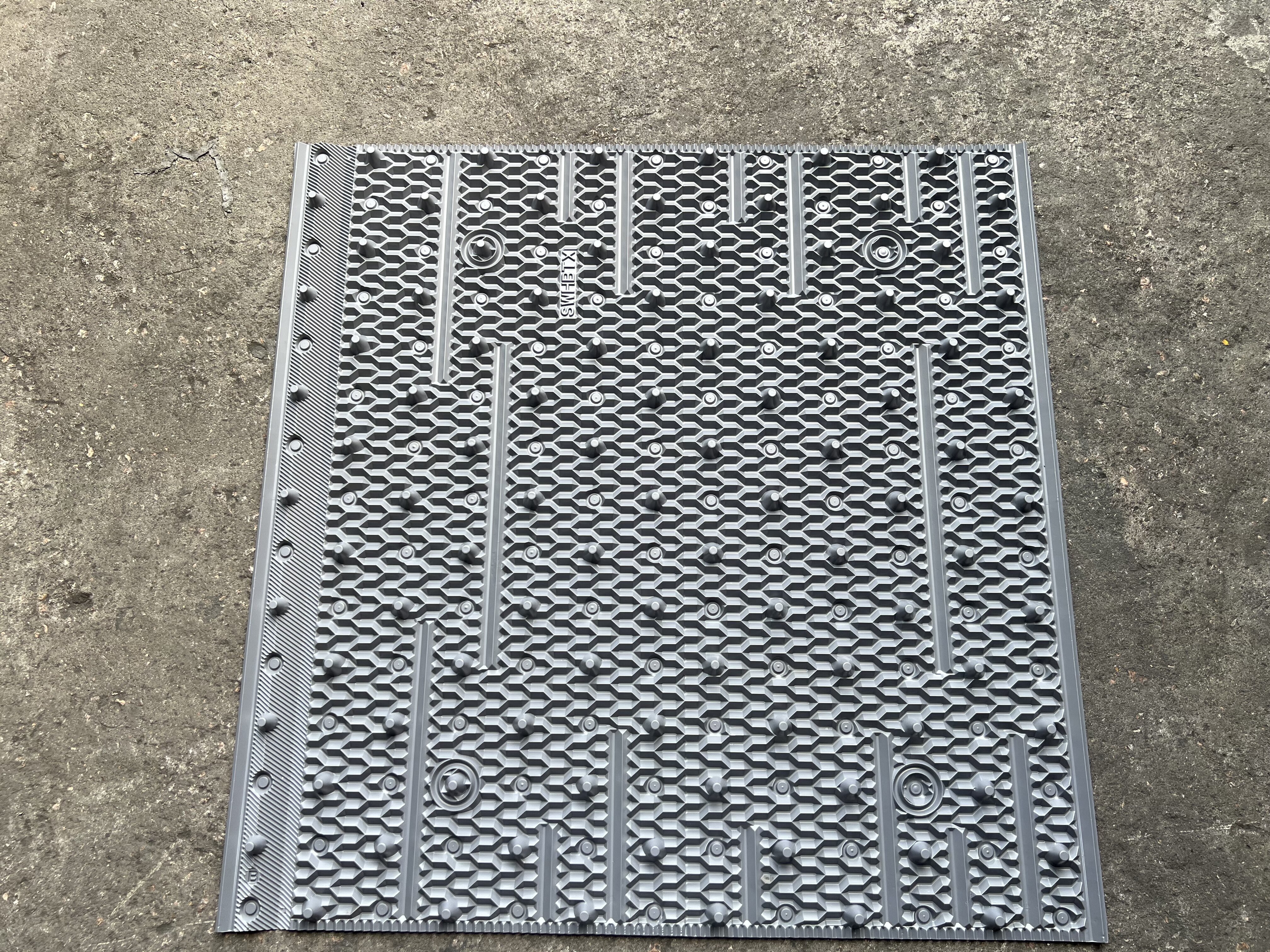
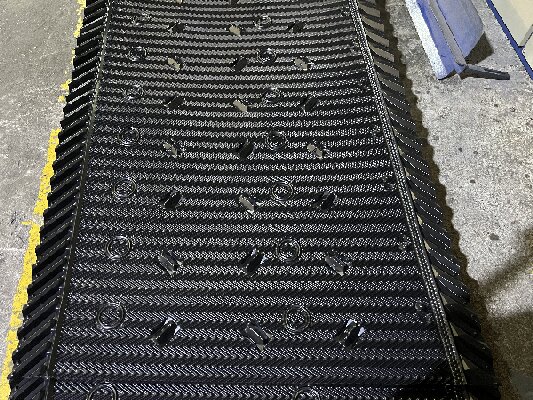
Chemical Resistance of PVC Cooling Tower Fill: What Engineers Should Know
Chemical Resistance of PVC Cooling Tower Fill: What Engineers Should Know
When engineers choose Cooling tower Fill, chemical resistance is sometimes overlooked. The first questions are often about heat transfer area, flute design, water loading, or pressure drop. Those are important, but the cooling water itself can be just as important.
A film fill cooling tower can operate reliably for years when the water chemistry is well controlled. However, acidic or alkaline water, oxidizing chemicals, oil contamination, and certain industrial process chemicals can gradually affect the fill material. In some applications, this can lead to brittleness, deformation, cracking, or a shorter service life.
So, before selecting a tower fill, it is worth asking a simple question: What chemicals will the fill actually be exposed to?
Why Chemical Resistance Matters in Cooling Tower Fill
Cooling tower fill is continuously exposed to circulating water, air, heat, and whatever is present in the water system. Unlike a component that only contacts water occasionally, film fill provides a large surface area and remains in the tower throughout normal operation.
This is one reason PVC is widely used for film fill cooling tower applications. PVC offers a useful combination of chemical resistance, mechanical stability, processability, and cost. But “PVC is chemically resistant” does not mean that every PVC fill is suitable for every chemical environment.
The actual service conditions matter. Water temperature, chemical concentration, exposure time, material formulation, and the presence of other contaminants can all affect long-term performance.
How PVC Performs in Typical Cooling Tower Water
For many conventional cooling tower systems, PVC is a practical choice for Cooling Tower Media. It is commonly used in industrial cooling systems, HVAC towers, process cooling, and replacement projects.
PVC generally performs well in many water environments, particularly when the cooling water is properly treated. This makes PVC film fill a common choice for both new towers and cooling tower replacement projects.
However, engineers should not select fill material based only on the name of the chemical. Concentration and temperature can change the result significantly.
1. Acidic and alkaline conditions
Cooling water chemistry can move outside normal operating conditions because of poor dosing, process contamination, or changes in make-up water quality. Strongly acidic or strongly alkaline conditions can place additional stress on plastic components.
For this reason, it is better to evaluate the actual operating pH range instead of simply asking whether PVC is “acid resistant” or “alkali resistant.” A short-term exposure and continuous exposure are also two different situations.
2. Oxidizing chemicals
Chlorine-based chemicals and other oxidizing agents are commonly used for cooling water treatment. The treatment program needs to be controlled carefully because excessive chemical concentration can create a much more aggressive environment than the fill was designed for.
This is especially important in systems where operators occasionally apply shock dosing. A material that performs well under normal treatment conditions may experience a very different environment during repeated high-concentration chemical exposure.
3. Oils and process contamination
Industrial cooling towers sometimes serve processes where oil, hydrocarbons, solvents, or other contaminants can enter the circulating water. In these cases, chemical compatibility should be checked before choosing the fill.
Oil contamination can also create a separate problem: even when the plastic itself remains intact, oil can change the way water spreads across the film fill surface and may contribute to fouling or reduced heat transfer.
PVC vs. PP Cooling Tower Fill: Is PP More Chemical Resistant?
When chemical conditions become more demanding, engineers often consider polypropylene, or PP, instead of PVC.
PP cooling tower fill can offer advantages in certain higher-temperature or chemically demanding applications. However, this does not mean PP is automatically the right choice for every project. The best material depends on the actual water chemistry, operating temperature, fill design, and mechanical requirements.
For a more detailed comparison, you can review our PVC Cooling Tower Fill and compare it with PP Cooling Tower Fill.
When PVC is usually a practical choice
- Conventional industrial cooling water systems
- HVAC and commercial cooling towers
- Many counterflow and crossflow cooling towers
- Projects where cost and heat-transfer performance need to be balanced
- Cooling tower replacement projects using existing PVC fill designs
When engineers may investigate PP
- Higher operating temperatures
- More demanding chemical environments
- Applications where PP's material characteristics provide an advantage
- Projects requiring a different material from the original PVC fill
The important point is that material selection should be based on the complete operating environment rather than one property alone.
Temperature Changes Chemical Resistance
One thing I always recommend checking is operating temperature.
A chemical that causes little trouble at a relatively low temperature may become more aggressive as temperature increases. At the same time, higher temperature can affect the mechanical properties of thermoplastic materials.
This is why chemical compatibility data should be considered together with the actual water temperature. If the cooling tower is handling hot process water, do not evaluate the fill material using room-temperature conditions alone.
Does Chemical Exposure Always Mean You Need to Replace the Fill?
Not necessarily.
If a cooling tower has experienced abnormal water chemistry, the first step is to understand what happened. Check the water treatment records, pH, chemical concentration, temperature, and the duration of the exposure.
Then inspect the fill itself.
Look for these warning signs
- Unexpected cracking or brittleness
- Deformation of the fill sheets
- Changes in sheet flexibility
- Severe discoloration associated with chemical exposure
- Loss of structural integrity
- Heavy deposits combined with damaged surfaces
- Reduced water distribution through the fill pack
Remember that chemical damage is not always obvious from the outside. A cooling tower may still be operating while the fill is gradually losing its original mechanical properties.
Chemical Resistance Is Only One Part of Fill Selection
Choosing the right Corrugated fill requires more than checking chemical compatibility. Engineers also need to consider water quality, suspended solids, biological growth, temperature, airflow, water loading, flute geometry, and pressure drop.
For example, a fill with excellent chemical resistance may still be a poor choice if the cooling water contains large amounts of suspended solids and the fill passages are too narrow for the application.
Likewise, increasing surface area does not automatically mean better cooling. If the design creates excessive pressure drop or becomes difficult to clean, the overall tower performance may suffer.
What Engineers Should Check Before Selecting PVC Fill
Before ordering replacement cooing fill or designing a new cooling tower fill package, I would normally collect the following information:
- Water pH range: Record normal and abnormal operating conditions.
- Water temperature: Check both normal operating temperature and maximum temperature.
- Chemical treatment: Identify biocides, oxidants, scale inhibitors, and other chemicals used in the system.
- Chemical concentration: Do not evaluate compatibility from chemical names alone.
- Contamination: Check whether oil, solvents, process chemicals, or other contaminants can enter the water.
- Existing fill design: Record sheet dimensions, pitch, flute design, and fill arrangement.
- Cooling tower type: Confirm whether the tower is counterflow or crossflow.
- Replacement conditions: Check whether the new fill must fit an existing support structure.
This information gives the fill manufacturer a much better basis for recommending a material and design.
Why Fill Design Still Matters After Choosing the Material
Two products can both be made from PVC and still behave differently in a cooling tower. Sheet thickness, corrugation pattern, pitch, bonding method, surface characteristics, and manufacturing quality all influence the final product.
For example, the correct fill pitch needs to balance heat-transfer surface area with resistance to fouling and airflow. The fill also needs enough mechanical strength to remain stable during installation, operation, cleaning, and long-term exposure.
That is why I would not recommend selecting a tower fill only by saying “PVC is suitable.” The material is only the starting point. The complete fill design needs to match the tower and its operating conditions.
Chemical Compatibility and Cooling Tower Replacement
When replacing old fill, it is tempting to simply copy the dimensions of the existing fill. Sometimes that works, but it can also repeat an old material-selection problem.
If the original fill failed earlier than expected, find out why before ordering the replacement. If chemical exposure was involved, changing only the dimensions will not solve the underlying problem.
A good cooling tower replacement assessment should consider both the existing fill design and the current operating environment. Water chemistry may have changed since the original tower was installed, especially in industrial plants where the cooling process has been modified over time.
A Practical Rule for PVC Cooling Tower Fill Selection
Here is the simple way to look at it: PVC is a strong and practical material for many cooling tower applications, but chemical compatibility must always be checked against the actual operating conditions.
Do not focus only on whether a chemical is compatible with PVC in general. Look at concentration, temperature, exposure time, water treatment practices, and the complete cooling tower environment.
For standard industrial and HVAC applications, properly designed PVC film fill can provide a good balance between heat-transfer performance, durability, and cost. For more demanding conditions, PP and other material options may deserve further evaluation.
Need to Match the Fill Material to Your Cooling Tower?
If you are selecting new fill or planning a cooling tower replacement, the original fill dimensions, cooling tower type, water temperature, water chemistry, and application are all useful information to have before making a decision.
We manufacture cooling tower fill for industrial and HVAC applications and can work with different dimensions, flute designs, materials, and packing requirements according to the project.
Contact us for cooling tower fill specifications, replacement projects, or OEM requirements.