UV Exposure and Aging: How Long Does Cooling Tower Fill Last
UV Exposure and Aging: How Long Does Cooling Tower Fill Last?
Cooling tower fill does not usually fail overnight. In most projects, the aging process is gradual. The fill is exposed to sunlight, hot water, chemicals, airflow, dirt, and repeated wet-dry cycles for years. Eventually, the sheets can become brittle, deformed, cracked, or difficult to clean.
So, how long does Cooling tower Fill actually last? There is no single number that applies to every tower. A cooling tower operating indoors with controlled water chemistry can have a very different service life from an outdoor tower exposed to strong sunlight and high temperatures.
UV exposure is one of the factors that is often overlooked when engineers are checking the condition of film fill cooling tower systems. In this article, we will look at how UV radiation affects fill, what signs indicate aging, and when a cooling tower replacement makes more sense than continuing to repair the existing fill.
Why Does UV Exposure Matter for Cooling Tower Fill?
Most cooling tower fill is made from thermoplastic materials such as PVC or PP. These materials are widely used because they are lightweight, easy to form, and suitable for large heat-transfer surfaces.
However, long-term exposure to ultraviolet radiation can gradually change the properties of plastic. This is especially important when parts of the fill are exposed to direct sunlight or when the tower has an open structure that allows UV light to reach the fill pack.
UV degradation does not normally mean that the fill suddenly stops working. Instead, the material can gradually lose flexibility and become more brittle. After several years of exposure, even a fill pack that still looks acceptable from a distance may become much easier to damage during cleaning or maintenance.
UV Exposure Is Different From Normal Thermal Aging
Heat and UV radiation are two different aging factors. High operating temperatures can accelerate material aging, while UV radiation can affect the polymer structure at the exposed surface.
In real cooling tower applications, these factors often work together. An outdoor tower may have high water temperatures during operation while the upper portions of the fill are exposed to sunlight. That combination can make material selection more important than simply looking at the initial price of the fill.
How Long Does Cooling Tower Fill Usually Last?
There is no universal replacement interval for tower fill. Depending on the material, operating conditions, water quality, UV exposure, temperature, cleaning method, and tower design, the useful service life can vary considerably.
As a practical engineering approach, many cooling tower operators start paying closer attention to fill condition after several years of continuous operation rather than waiting for a fixed replacement date.
For some installations, fill can remain usable for more than 10 years. For heavily loaded industrial towers with poor water quality, aggressive cleaning, high temperatures, or strong environmental exposure, replacement may be required much earlier.
The important point is this: age alone should not determine whether cooling tower fill needs to be replaced. The physical condition and cooling performance of the fill are much more useful indicators.
What Happens to Film Fill as It Ages?
When engineers inspect an old film fill cooling tower, several signs can indicate that the material is approaching the end of its useful life.
1. The Sheets Become Brittle
This is one of the easiest problems to notice during maintenance. Older fill sheets may break or crack much more easily when workers handle them.
If a sheet that previously had some flexibility becomes hard and brittle, it is worth checking whether UV exposure, thermal aging, chemical exposure, or a combination of these factors is responsible.
2. Cracks Appear Around the Corrugations
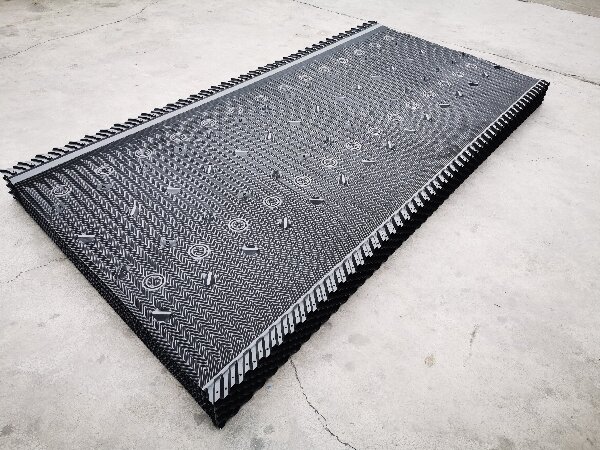
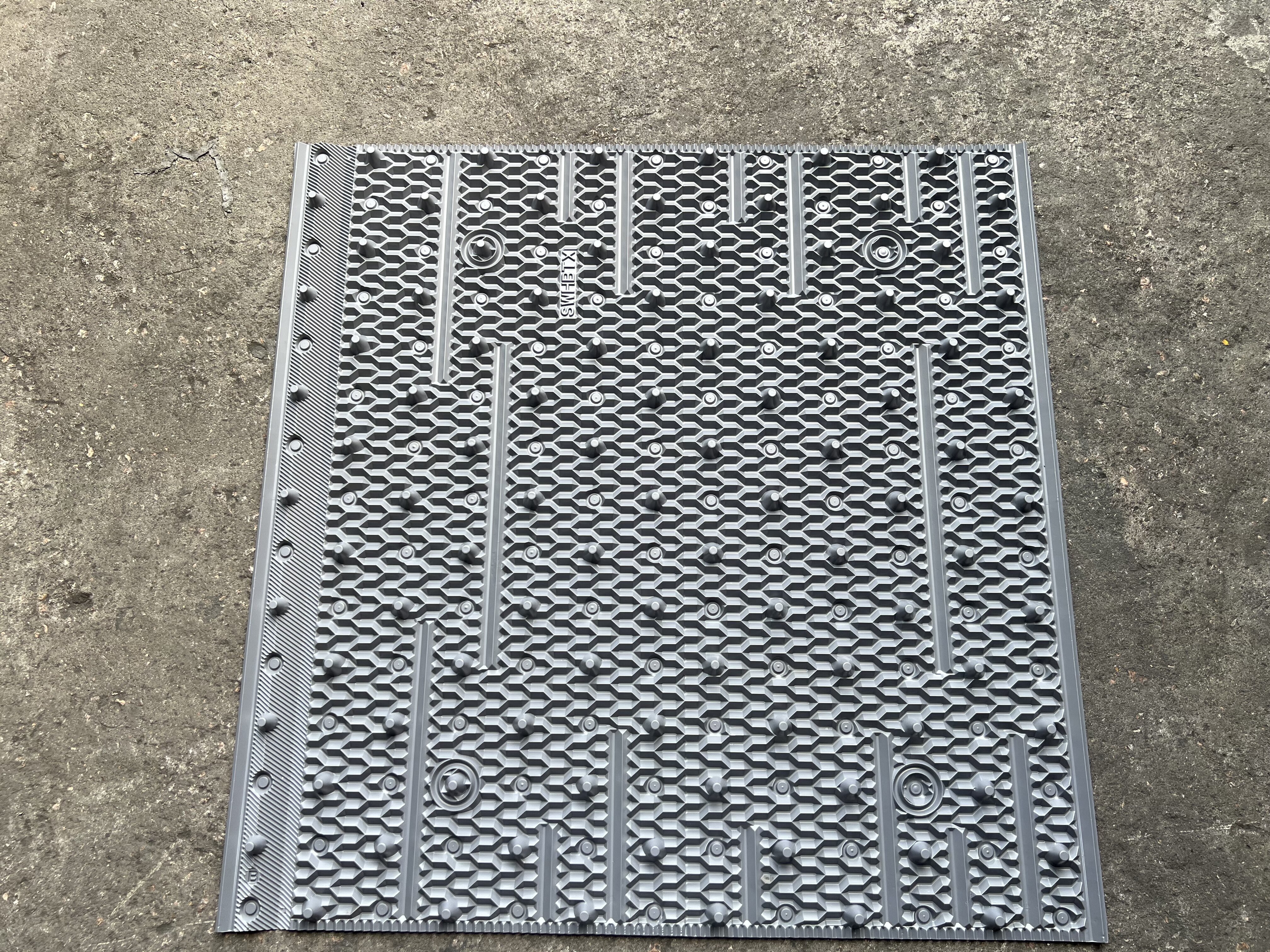
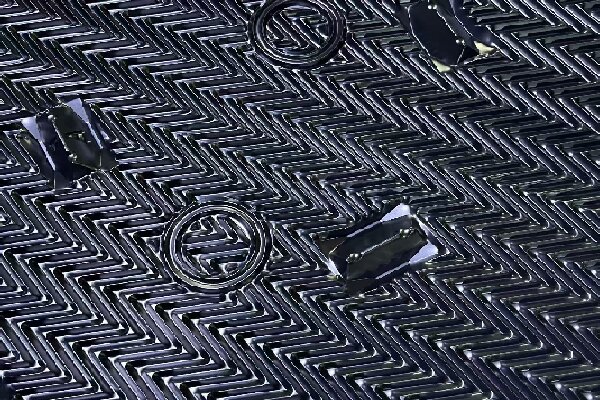
Corrugated fill has many formed surfaces designed to increase water distribution and contact between air and water. These areas can become vulnerable as the material ages.
Small cracks may initially have little effect on cooling performance. But once cracking becomes widespread, sections can lose their original shape and mechanical strength.
3. The Fill Deforms or Collapses
Heat, water weight, poor support, and material aging can all contribute to deformation. Once the original geometry of the fill changes, airflow and water distribution may also change.
This is particularly important for high-performance Cooling Tower Media, because the spacing and surface structure are part of the overall heat-transfer design.
4. The Fill Becomes Difficult to Clean
Old fill can become more fragile after years of service. High-pressure cleaning that was acceptable when the fill was new may damage aged sheets.
If operators have to reduce cleaning pressure because the fill is breaking apart, that is a useful warning sign that the material condition should be reviewed.
UV Resistant Cooling Tower Fill: When Does It Make Sense?
For towers with significant sunlight exposure, UV resistance should be considered during the initial material selection rather than treated as an afterthought.
UV-resistant materials or formulations can help slow the effects of long-term ultraviolet exposure. This does not mean the fill will never age. It means the material is designed with long-term environmental exposure in mind.
For outdoor installations, especially where the fill may receive direct sunlight for long periods, choosing a suitable UV resistant fill media can be part of a longer-term maintenance strategy.
Our UV Resistant Fill Media is designed for cooling tower applications where long-term environmental exposure is an important consideration.
PVC vs PP: Which Material Handles Long-Term Exposure Better?
There is no simple answer that one material is always better. PVC and PP are both widely used for cooling tower fill, but the right choice depends on the operating environment.
PVC film fill is commonly used because it offers a good balance of forming characteristics, cooling performance, cost, and availability. It is widely used in both commercial and industrial cooling tower applications.
PP cooling tower fill can be considered when the application requires different temperature or chemical-resistance characteristics. The actual operating temperature and water chemistry should be checked before selecting the material.
In other words, don't select fill based only on whether the material is PVC or PP. Look at the complete operating condition: water temperature, ambient temperature, sunlight, chemicals, biological growth, cleaning method, and expected service life.
Does Sunlight Affect All Cooling Tower Fill in the Same Way?
No. The amount of UV exposure can be very different from one tower to another.
For example, a cooling tower installed inside a building or under a covered structure may have very limited direct UV exposure. An outdoor field-erected tower, on the other hand, may be exposed to sunlight throughout the year.
Even within the same tower, different areas may age at different rates. The upper and outer sections can experience more environmental exposure than fill located deeper inside the pack.
This is why an inspection should not focus on just one small area. If replacement is being considered, it is better to inspect representative sections of the fill pack and compare their condition.
Other Factors That Can Shorten Cooling Tower Fill Life
UV exposure is only one part of the picture. In many industrial cooling towers, other factors can have an even greater effect on fill life.
Water Quality
High levels of suspended solids, hardness, biological growth, or other contaminants can cause fouling and scaling. Once deposits build up on the fill surface, airflow and water distribution can be affected.
Operating Temperature
Continuous operation at elevated temperatures can accelerate material aging. Always compare the actual operating temperature with the material's recommended working range.
Chemical Exposure
Water treatment chemicals are necessary for many cooling systems, but excessive concentrations or unsuitable chemical combinations can affect materials over time.
Cleaning Method
Mechanical cleaning and high-pressure water cleaning can damage aged fill. The older the material becomes, the more important it is to use a cleaning method appropriate for its condition.
Airborne Dirt and Industrial Pollution
Towers located near factories, construction areas, dusty roads, or other sources of airborne contamination may experience faster fouling. This does not necessarily mean the fill material is poor; the operating environment itself can be demanding.
How to Tell If You Need Cooling Tower Fill Replacement
Instead of replacing fill simply because it has reached a certain age, check several conditions together.
- Are the fill sheets becoming brittle?
- Are there visible cracks or broken sections?
- Has the fill changed shape?
- Is fouling becoming increasingly difficult to remove?
- Has cooling performance gradually decreased?
- Has the tower's approach temperature increased?
- Is the pressure drop higher than expected?
- Does the fill collapse or move when water and airflow increase?
If several of these conditions appear at the same time, it may be more economical to consider a complete fill replacement rather than continuing to repair individual sections.
Why Fill Geometry Matters During Replacement
Replacing old fill is not simply a matter of buying plastic sheets with the same general appearance.
The flute design, sheet spacing, thickness, block dimensions, water distribution pattern, airflow direction, and installation method all affect the final result.
For example, a Corrugated fill designed for a specific tower should not automatically be replaced with another design simply because the overall dimensions look similar.
When planning a cooling tower replacement, it is better to check the original fill dimensions and installation arrangement first. If drawings are unavailable, measurements from the existing fill pack can often provide useful information for developing a replacement solution.
For industrial applications, our Industrial Cooling Tower Fill can be customized according to project dimensions, fill design, operating conditions, and installation requirements.
A Practical Inspection Method for Older Cooling Tower Fill
If you are inspecting a tower that has been operating for many years, you don't necessarily need complicated equipment to start.
Step 1: Check the Overall Appearance
Look for discoloration, deformation, cracks, broken sheets, missing sections, and heavy deposits.
Step 2: Check the Material Condition
During a controlled maintenance shutdown, carefully inspect whether the sheets still have reasonable flexibility and mechanical strength.
Step 3: Check Water and Airflow Distribution
Uneven water distribution can cause some parts of the fill to operate under very different conditions from others. Check whether dry areas, excessive water channels, or blocked sections are present.
Step 4: Compare Cooling Performance
Look at historical operating data whenever possible. Changes in approach temperature, entering and leaving water temperature, airflow, and pressure drop can help determine whether fill condition is affecting tower performance.
Step 5: Decide Between Cleaning and Replacement
If the material itself remains structurally sound, cleaning may restore performance. If the fill has become brittle, cracked, collapsed, or severely deformed, replacement is usually a more practical long-term solution.
How to Extend the Service Life of Cooling Tower Fill
Good maintenance cannot stop UV aging completely, but it can prevent many other problems from shortening the useful life of the fill.
- Keep cooling water chemistry under control.
- Monitor suspended solids and biological growth.
- Clean the fill using a suitable method and pressure.
- Inspect the fill regularly instead of waiting for a major performance loss.
- Protect exposed fill from unnecessary direct sunlight where practical.
- Use a material suitable for the actual operating temperature and chemical environment.
- Check water distribution before assuming the fill itself is the problem.
These basic steps are often more valuable than simply replacing fill on a fixed schedule.
Final Thoughts: Don't Judge Fill Life by Age Alone
So, how long does cooling tower fill last? The honest answer is that service life depends heavily on the application.
UV exposure can gradually make plastic fill more brittle, but sunlight is only one part of the aging process. Water quality, operating temperature, chemicals, fouling, cleaning practices, airflow, and mechanical support can all influence how long the fill remains effective.
If an older tower is still performing well and the fill remains structurally sound, there may be no reason to replace it simply because it has reached a certain age. But if you are seeing cracking, brittleness, deformation, heavy fouling, or declining cooling performance, it is time to look more closely at the fill condition.
For a new project or a cooling tower replacement, material selection should be based on the actual environment rather than price alone. The right Cooling Tower Media should match the tower design, water conditions, temperature, airflow, and expected operating life.
Need Help Selecting Replacement Cooling Tower Fill?
If you are replacing old fill or developing a new cooling tower project, you can send us the existing fill dimensions, drawings, photos, operating conditions, or application details. We can help review the fill design and discuss suitable PVC or PP options for the project.
Contact us for cooling tower fill and replacement fill solutions.