Cooling Tower Approach Temperature: How Fill Performance Affects It
When a cooling tower is not reaching the expected cold-water temperature, people often look first at the fan, water flow, or ambient conditions. But there is another part that deserves a closer look: the Cooling Tower Fill.
In many real projects, the difference between a healthy tower and an underperforming tower can be surprisingly small on paper but very noticeable in operation. A few degrees of extra approach temperature may indicate that the fill is no longer providing the water-air contact that the tower was designed for.
So, what exactly is cooling tower approach temperature, and how does film fill inside a film fill cooling tower affect it? Let's look at it from a practical engineering point of view.
What Is Cooling Tower Approach Temperature?
Cooling tower approach temperature is the difference between the cold-water temperature leaving the tower and the entering wet-bulb temperature of the surrounding air.
The basic calculation is:
Approach = Cold Water Temperature − Entering Wet-Bulb Temperature
For example, if the entering wet-bulb temperature is 27°C and the cold-water temperature leaving the tower is 32°C, the approach is 5°C.
A lower approach generally means the tower is getting closer to the wet-bulb temperature. However, it is important not to look at approach alone. Airflow, water loading, ambient conditions, tower design, fill characteristics and operating conditions all affect the final result.
Why Does Cooling Tower Fill Affect Approach Temperature?
The job of tower fill is not simply to “hold water” inside the tower. Its main purpose is to increase the contact between water and air.
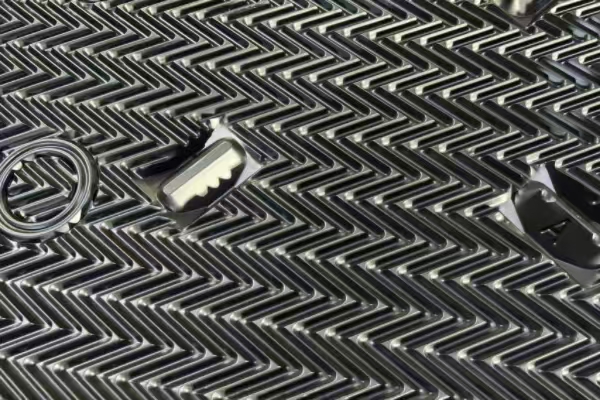
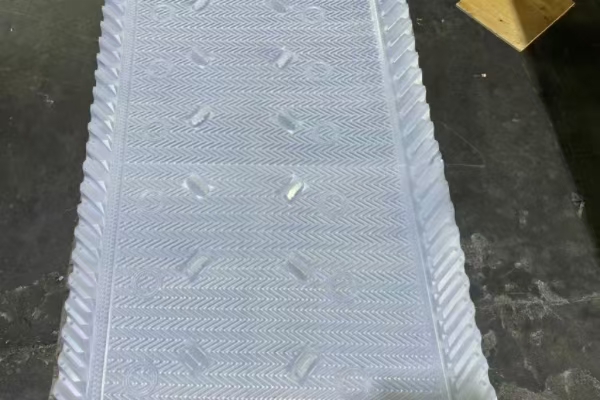
When hot water enters a film fill cooling tower, the fill spreads the water into thin films over a large surface area. Air passes through or across these wet surfaces, allowing heat and a portion of the water to transfer into the air.
Good Cooling Tower Media should create a useful balance between:
- Water distribution
- Air-water contact area
- Contact time
- Airflow resistance
- Water film formation
- Resistance to fouling and deformation
If the fill cannot maintain these conditions, the tower may lose cooling performance even when the fan and pump are operating normally.
Four Fill Performance Factors That Can Change Approach
1. Effective Surface Area
More surface area is not automatically better. What matters is the effective wet surface area that can actually be used by the water and air.
A well-designed Corrugated Fill creates channels and contact surfaces that help distribute water while allowing air to move through the fill pack. If the surface is not properly wetted, part of the theoretical area contributes very little to actual heat transfer.
This is why simply choosing a higher-density tower fill without checking the hydraulic and air-side conditions can sometimes produce disappointing results.
2. Water Distribution
Even high-performance Film Fill cannot compensate for poor water distribution.
If some areas of the fill receive too much water while other areas remain relatively dry, the available surface area is not being used evenly. You may have a large fill volume, but the actual heat transfer performance can still be poor.
When investigating a high approach temperature, check the spray nozzles, distribution pipes, water loading and fill condition before assuming that the fill design itself is the only problem.
3. Airflow and Pressure Drop
There is always a balance between increasing contact area and allowing air to pass through the fill.
A very restrictive fill can provide a large contact surface but also increase air pressure drop. If the fan cannot provide enough airflow, the additional surface area may not deliver the expected cooling improvement.
In practical cooling tower design, the target should not be “maximum surface area at any cost.” It should be a reasonable combination of heat transfer performance and airflow resistance.
4. Fouling and Aging
This is one of the most common reasons an existing tower gradually develops a higher approach.
Scale, dirt, algae, suspended solids and biological growth can block fill channels. Once the passages become restricted, water distribution changes and airflow can also become more difficult.
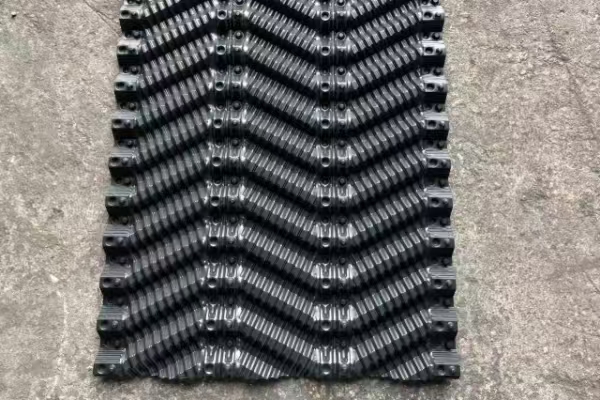
Over time, PVC Cooling Fill can also become brittle, distorted or damaged depending on water chemistry, temperature, UV exposure and operating conditions.
In these situations, cleaning may recover part of the original performance. But when the fill has become badly deformed, blocked or brittle, cooling tower replacement may be more practical than trying to restore it.
Does Higher-Density Film Fill Always Give a Lower Approach?
Not necessarily.
This is a common misunderstanding when selecting tower fill. A fill with more surface area per unit volume can potentially improve heat transfer, but only when the tower has suitable water distribution, airflow and operating conditions.
For example, changing the fill without checking the fan capacity may increase air-side resistance. Similarly, installing a very tight flute pattern in water containing a high amount of suspended solids can increase the risk of fouling.
In other words, fill selection should be based on the complete cooling tower operating condition rather than one specification on a product datasheet.
Counterflow and Crossflow Towers: Does Fill Performance Work Differently?
Yes. The airflow and water-flow arrangement is different, so the fill needs to match the tower configuration.
Counterflow Cooling Towers
In a counterflow tower, water travels downward while air travels upward through the fill. The fill needs to maintain good water distribution and provide sufficient contact between the two streams.
For replacement projects, it is important to check the original fill dimensions, flute geometry, thickness, water loading and available height before selecting a replacement.
For projects involving counterflow equipment, you can see our Counter Flow Fill Media for a typical product application.
Crossflow Cooling Towers
In a crossflow tower, air generally moves horizontally through the fill while water flows vertically downward. This makes the fill structure and air passage design particularly important.
Existing crossflow towers may also have different fill block dimensions depending on the original tower manufacturer, so replacement fill should be checked against the actual tower before ordering.
How to Tell Whether the Fill Is Causing a High Approach
Before replacing the fill, I would normally compare the current operating condition with the tower's original design data.
Check these items first:
- Entering and leaving water temperature
- Entering wet-bulb temperature
- Water circulation rate
- Fan airflow and fan condition
- Spray nozzle condition
- Fill fouling or blockage
- Fill deformation or breakage
- Water chemistry and scale formation
- Air pressure drop across the fill
If the tower used to achieve a certain approach under similar operating conditions but now requires several degrees more, the fill condition should definitely be included in the investigation.
When Should You Consider Cooling Tower Fill Replacement?
Not every performance problem requires new fill. Sometimes cleaning and correcting water distribution is enough.
However, replacement becomes worth considering when you see several of the following conditions:
- Large areas of the fill are blocked with scale or dirt.
- Fill sheets have become brittle or cracked.
- Fill packs are badly deformed.
- Water channels are blocked or unevenly distributed.
- Cooling performance remains poor after cleaning.
- The original fill design is no longer suitable for the current operating load.
- The existing fill has been in service for many years and replacement parts are difficult to obtain.
For industrial applications, the replacement should also consider the actual tower dimensions rather than simply ordering a standard size.
What Should You Check When Selecting Replacement Cooling Tower Fill?
For a replacement project, I would recommend collecting the following information before asking a manufacturer for a quotation:
- Cooling tower type: counterflow or crossflow
- Original fill dimensions
- Fill height
- Sheet thickness
- Flute or corrugation design
- Water flow rate
- Design hot-water and cold-water temperatures
- Entering wet-bulb temperature
- Water quality and fouling conditions
- Operating temperature
- Available fill installation space
This information allows the manufacturer to recommend a suitable Cooling Tower Fill instead of simply matching the old product by appearance.
Why PVC and PP Fill Are Commonly Used
Material selection also matters when approach temperature needs to remain stable over the long term.
PVC fill is widely used in many industrial cooling tower applications because it provides a practical combination of formability, cost and chemical resistance. PP fill can be considered for applications where higher temperature resistance or specific chemical conditions make it more suitable.
The correct choice depends on water temperature, chemical conditions, UV exposure, fouling risk and the tower's operating environment.
A Practical Way to Improve Cooling Tower Approach
If the approach temperature has gradually increased, I would not start by immediately changing the fill design.
First, compare the current operating data with the original design condition. Then check water distribution, fan performance and fill fouling. If the fill itself is damaged, heavily scaled or no longer suitable for the operating load, replacement becomes much easier to justify.
For industrial projects where the fill needs to be replaced or upgraded, our Industrial Cooling Tower Fill can be considered for different tower configurations and replacement applications.
Final Thoughts
Cooling tower approach temperature is not controlled by the fill alone, but fill performance is an important part of the overall cooling equation.
A good film fill cooling tower needs more than a large theoretical surface area. The fill must work together with water distribution, airflow, tower design and operating conditions. When these factors are properly balanced, the tower has a much better chance of maintaining stable cooling performance.
So, if your cooling tower approach is getting worse, don't immediately assume that the fan or pump is the problem. Take a close look inside the tower. The condition and design of the tower fill may tell you quite a lot.
Need Help Selecting Cooling Tower Fill?
If you are planning a cooling tower fill replacement, upgrading an existing tower, or checking whether a different fill design is suitable for your project, you can send us your tower dimensions, water flow, operating temperatures and existing fill information.
We can help check the suitable fill type, dimensions and material for your application.
```