Why PVC Is Commonly Used for Film Fill in Cooling Towers
Why PVC Is Commonly Used for Film Fill in Cooling Towers
When people compare different types of Cooling Tower Fill, one question comes up quite often: why is PVC used so widely for film fill? The short answer is that PVC offers a practical combination of heat-transfer performance, chemical resistance, processability, and cost.
For many industrial cooling towers, the goal is not simply to find the material with the highest theoretical performance. The fill also needs to survive continuous contact with water, handle the operating temperature, maintain its shape, and remain economical to replace. This is where PVC has become a common choice for film fill cooling tower applications.
What Makes PVC Suitable for Cooling Tower Fill?
Film fill works by spreading water over a large surface area while air passes through the fill pack. The larger and more consistent the water-air contact area, the more opportunity the system has to transfer heat.
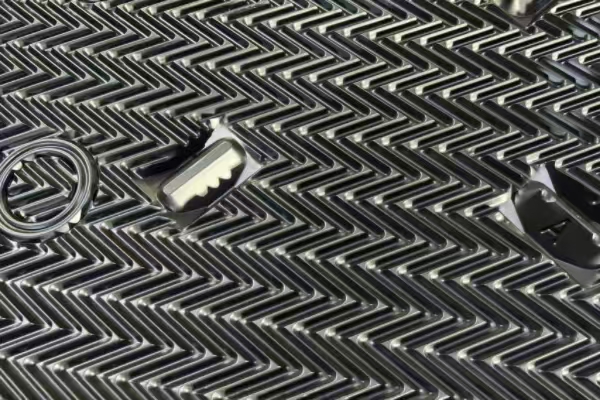
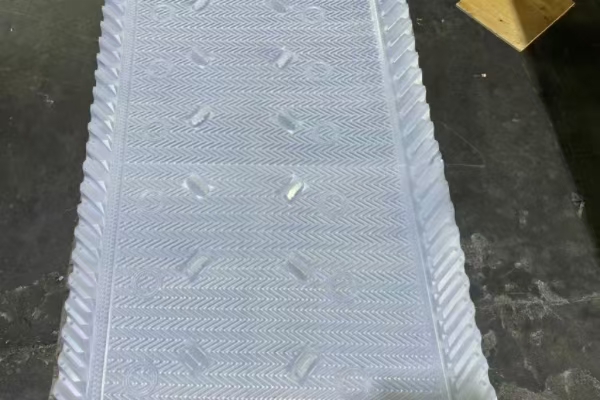
PVC can be formed into thin, corrugated sheets with closely controlled flute patterns. These sheets are assembled into a fill pack, creating many small passages for water and air. This is the basic principle behind many modern Corrugated Fill designs.
1. Good Surface Area for Heat Transfer
A properly designed PVC film fill provides a large effective surface area without requiring an excessively large fill volume. As water flows down the corrugated sheets, it forms a thin film instead of simply falling through the tower.
This repeated contact between water and air is what makes film fill different from traditional splash-type tower fill. For a well-designed cooling system, the structure of the fill is just as important as the material itself.
2. Lightweight and Easy to Form
PVC is relatively lightweight and can be thermoformed into different corrugated patterns. This gives manufacturers flexibility when producing tower fill for different tower designs, widths, pitches, and operating conditions.
It also makes PVC fill packs easier to handle during installation and cooling tower replacement work, especially when technicians need to remove old fill and install new media inside an existing tower.
Why PVC Is Often Chosen Over Other Materials
There is no single fill material that is suitable for every cooling tower. PP, PVC, and other materials each have their own operating ranges and advantages.
For many standard industrial and HVAC applications, PVC provides a useful balance between material cost, rigidity, chemical resistance, and manufacturing consistency. This is one reason PVC remains widely used for Cooling Tower Media and film fill.
However, material selection should always be based on the actual operating conditions. Water temperature, water chemistry, suspended solids, biological growth, airflow, and the possibility of oil contamination can all affect the service life of the fill.
PVC Film Fill and Cooling Tower Fouling
One point that is sometimes overlooked is that good PVC material cannot compensate for poor water quality. Scale, algae, dirt, and other deposits can gradually block the passages inside the fill pack.
Once the passages become restricted, airflow and water distribution can change. The result may be higher pressure drop and reduced cooling performance. In this situation, cleaning and water-treatment control are just as important as choosing the right Film Fill.
For applications with a higher risk of fouling, specialized fill designs can also be considered instead of using a standard film fill configuration.
When Should You Consider PVC Film Fill?
PVC film fill is commonly used in HVAC systems, industrial process cooling, power-related applications, manufacturing facilities, refrigeration systems, and many other installations where efficient water-to-air heat transfer is required.
If an existing cooling tower has damaged, brittle, heavily scaled, or deformed fill, replacing the old media with a properly selected PVC fill can be part of a wider tower refurbishment project. The replacement should match the tower dimensions and consider the original water and airflow conditions rather than simply copying the appearance of the old fill.
Choosing the Right PVC Cooling Tower Fill
When selecting Cooling Tower Fill, I would not recommend looking at material alone. Check the fill pitch, flute design, sheet thickness, dimensions, operating temperature, water quality, and tower configuration together.
For general industrial applications, you can learn more about our PVC Cooling Tower Fill and compare its construction with the requirements of your existing tower.
For heavier-duty industrial projects, our Industrial PVC Fill is another option to consider when selecting replacement or new tower fill media.
Final Thoughts
PVC has become a common material for film fill because it can be manufactured into efficient corrugated structures while offering a practical combination of performance, durability, and cost. But the best cooing fill is not simply the one made from the most popular material. The fill geometry, water quality, airflow, temperature, and cooling tower design all need to work together.
When these factors are properly matched, PVC film fill can provide stable water-air contact and reliable cooling performance over long periods of operation.
Customized Cooling Tower Fill
Our team supports OEM production based on customer drawings, dimensions, tower configuration, and application requirements. Different widths, lengths, materials, corrugation designs, and packaging solutions can be developed according to the project. Based in Shenzhen, China, we have many years of experience manufacturing cooling tower fill and supplying reliable Cooling Tower Media to customers in different markets.
Contact us for more information about cooling tower fill and replacement media.