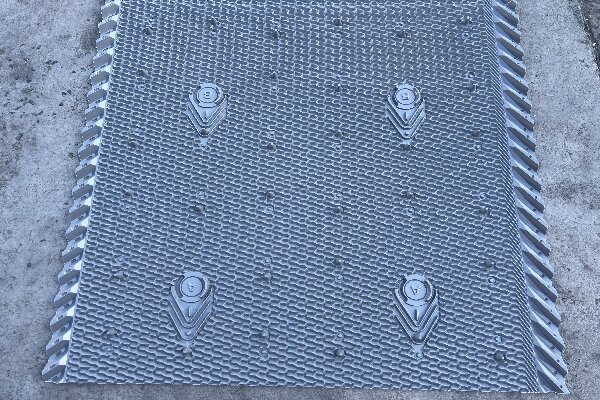
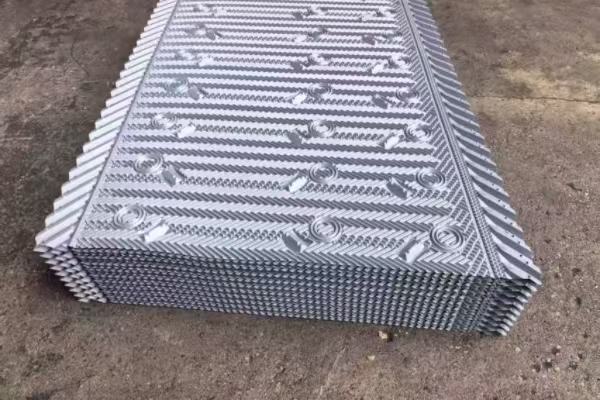
Cooling Tower Fill Fouling: How Scale, Algae and Dirt Reduce Cooling Performance
If a cooling tower has been running for several years and the cooling performance is gradually getting worse, the fill itself may not be the first thing you should blame. In many cases, the real problem is fouling.
Scale, algae, dirt, sludge and other deposits can gradually build up on the surface and inside the channels of Cooling Tower Fill. At first, the change may be difficult to notice. Water still flows, the fan still runs, and the tower still looks normal from the outside. But over time, the fill can lose its ability to provide efficient air-water contact.
This is one of the reasons why an older film fill cooling tower may not perform as well as it did when it was new. Before deciding on a complete cooling tower replacement, it is worth understanding what is happening inside the fill.
What Is Cooling Tower Fill Fouling?
Cooling tower fill fouling is the accumulation of unwanted material on or inside the fill. Depending on the water quality and operating environment, this can include mineral scale, biological growth, dirt, suspended solids, sludge and sometimes oil or process contamination.
The fill is designed to spread water over a large surface area while allowing air to pass through. When deposits cover that surface or block the channels, the original design conditions start to change.
Think of it like this: a clean fill gives water plenty of room to spread into thin films and meet the moving air. A fouled fill gives both water and air less usable space.
Why Does Scale Build Up on Cooling Tower Fill?
Scale is one of the most common problems found in cooling tower media. It usually comes from dissolved minerals in the circulating water that become concentrated as water evaporates.
Calcium carbonate and other mineral deposits can gradually form on the fill surface. If water treatment is not properly controlled, the deposits may become thicker over time.
What Happens When Scale Gets Worse?
As scale builds up, several things can happen:
- The effective heat transfer surface becomes smaller.
- Water distribution becomes less uniform.
- Airflow passages become partially restricted.
- Pressure drop through the fill can increase.
- Some areas of the tower may receive too much water while others receive too little.
This is why a cooling tower can gradually lose capacity without having an obvious mechanical failure.
How Algae and Biological Growth Affect Tower Fill
Algae and biological growth are another common concern, particularly when sunlight, warm water and nutrients are present.
Once biological growth starts developing on the fill, it can trap dirt and other suspended material. What starts as a relatively thin layer can eventually become a much more serious blockage.
For an open cooling tower, the problem can be especially noticeable around areas where sunlight reaches the water or fill. Poor water treatment and inadequate cleaning can make the situation worse.
Why Biological Fouling Is More Than a Cleaning Problem
It is tempting to think of algae simply as something that makes the fill look dirty. The bigger issue is what happens to the water and airflow paths underneath it.
When channels become partially blocked, water may stop spreading evenly across the fill. Instead of forming a consistent water film, some areas can develop heavy flow while other areas become relatively dry.
That means the tower may still have the same amount of fill installed, but the Cooling Tower Media is no longer working under the conditions it was designed for.
Dirt, Dust and Suspended Solids Can Block Fill Channels
Mineral scale and algae are not the only causes of fouling. Dirt and suspended solids can also become trapped inside the fill.
This can be particularly important for cooling towers operating in dusty industrial environments, manufacturing plants, power facilities, and locations where the circulating water contains a relatively high level of suspended solids.
A fine-channel Film fill can provide excellent air-water contact when it is clean, but a heavily contaminated water system may require a different approach to fill selection and water treatment.
How Fouling Reduces Cooling Tower Performance
The effect of fouling is not limited to one part of the cooling tower. It can affect several operating parameters at the same time.
1. Less Effective Air-Water Contact
The basic job of the fill is to maximize contact between air and water. Deposits reduce the usable surface available for this process.
When the water cannot spread properly, the tower loses part of the benefit of its original fill design.
2. Higher Airflow Resistance
As deposits narrow the passages between fill sheets, air has more difficulty moving through the fill.
This can increase pressure drop and may affect fan operation. In some systems, the fan may need to work harder to maintain the required airflow.
3. Uneven Water Distribution
Fouled channels can change the way water travels through the fill. Instead of a relatively uniform distribution, water may find the easiest available path.
This creates another problem: some sections of the fill may become overloaded with water while other sections are underused.
4. Reduced Cooling Capacity
Eventually, the combined effect of poor water distribution, reduced surface area and restricted airflow can result in higher cold-water temperatures.
If the process requires a specific cooling-water temperature, even a relatively small loss in tower performance can become important.
How Can You Tell If Your Cooling Tower Fill Is Fouled?
You do not always need sophisticated equipment to identify the early signs. A few operating changes are worth paying attention to.
- Cold-water temperature is higher than normal.
- The tower requires more fan power or airflow.
- Pressure drop appears to be increasing.
- Water distribution looks uneven.
- Visible scale or deposits appear on the fill.
- Algae or biological growth is visible.
- Fill channels appear partially blocked.
- Cleaning intervals are becoming shorter.
Of course, these symptoms can also have other causes. A problem with the fan, spray nozzles, water flow, heat load or water treatment system can produce similar results. That is why it is better to inspect the complete tower before deciding that the fill needs to be replaced.
Should You Clean the Fill or Replace It?
This is probably the most practical question for anyone responsible for an existing cooling tower.
If the fill is still mechanically sound and the fouling is relatively light, cleaning may restore much of its original performance. But if the fill has become badly blocked, brittle, deformed or damaged, cleaning may no longer be the most economical option.
Cleaning May Be Worth Considering When:
- Deposits are relatively light.
- The fill sheets are still mechanically strong.
- There is no significant deformation.
- The original fill configuration is still suitable for the tower.
- The water treatment problem can be corrected.
Replacement May Make More Sense When:
- Fill channels are heavily blocked.
- The sheets have become brittle or damaged.
- Large areas have collapsed or deformed.
- Cleaning no longer restores acceptable performance.
- The existing fill is no longer suitable for the current water quality.
- The tower is already due for a major refurbishment.
For industrial applications, it can be useful to compare the cost of repeated cleaning and lost cooling capacity against the cost of installing new Anti Fouling Fill Media.
Can the Right Fill Reduce Fouling Problems?
It can help, but it is important to be realistic. No fill can completely eliminate fouling if the circulating water is poorly managed.
What the fill design can do is make the system more tolerant of the actual operating environment.
For example, an application with a higher suspended-solids load may require a more open fill configuration than a clean-water application. In other cases, an anti-fouling design may be considered to make cleaning easier and reduce the chance of severe blockage.
The key is to select the fill based on the water quality and tower operating conditions rather than simply choosing the product with the highest advertised surface area.
Film Fill vs. Fouling: Is More Surface Area Always Better?
This is an important point when comparing different tower fill products.
A high-performance film fill is designed to create a large amount of air-water contact in a relatively compact space. Under suitable water conditions, this can provide excellent thermal performance.
But if the water contains a high concentration of suspended solids or has a strong fouling tendency, a very fine channel structure may require more attention to water treatment and maintenance.
So when someone tells you that one fill has a higher surface area than another, the next question should be: under what operating conditions?
Cooling tower design is always a balance between thermal performance, airflow, water quality, maintenance and service life.
How Water Treatment Protects Cooling Tower Fill
Even the best Corrugated fill will eventually suffer if the circulating water is not properly controlled.
A good maintenance program should pay attention to scale control, biological control, suspended solids and overall water chemistry.
Regular inspection also matters. It is much easier to deal with a thin deposit than a heavily blocked fill pack that has been ignored for several years.
In other words, fill maintenance should not start when the tower has already lost a significant amount of cooling capacity.
Industrial Cooling Tower Fill: What Should You Consider?
Industrial cooling towers can operate under very different conditions from HVAC systems. Process temperatures, water quality, operating hours and contamination levels may all be more demanding.
For this reason, replacement fill should be selected according to the actual application rather than using a generic specification.
If you are working on a factory, power plant, chemical process, manufacturing facility or another heavy-duty application, you can review our Industrial Cooling Tower Fill range as a starting point.
When requesting a quotation, it is useful to provide the supplier with the cooling tower type, fill dimensions, operating temperatures, water quality, required quantity and photos of the existing fill.
What About Cooling Tower Replacement Projects?
If fouling has been occurring repeatedly, replacing the fill without fixing the underlying problem may only give you a temporary solution.
Before a cooling tower replacement or major fill replacement project, ask why the existing fill failed in the first place.
Was the water treatment insufficient? Were the original channels too small for the water quality? Was the tower exposed to excessive dust? Did algae develop because of sunlight and poor biological control?
Answering these questions can help you choose a better replacement rather than simply installing the same type of fill again.
A Simple Inspection Approach for Existing Tower Fill
If you are troubleshooting an older tower, start with a simple inspection instead of immediately ordering new fill.
- Check the cold-water temperature against normal operating conditions.
- Inspect water distribution across the fill.
- Look for visible scale, algae and sludge.
- Check whether fill channels are blocked.
- Inspect the fill for deformation or brittleness.
- Check spray nozzles and water distribution equipment.
- Review recent water-treatment records.
- Compare current fan and airflow conditions with historical data.
- Estimate whether cleaning can realistically restore performance.
- If necessary, compare cleaning costs with a complete fill replacement.
Final Takeaway
Cooling tower fill fouling usually happens gradually. That is what makes it easy to overlook.
A little scale here, some algae there, a few blocked channels — none of these may seem serious on their own. But after months or years, the combined effect can reduce water distribution, restrict airflow and lower the effective cooling performance of the tower.
The good news is that not every fouled tower needs a complete replacement. Sometimes proper cleaning and improved water treatment are enough. When the fill is badly damaged or the original design is no longer suitable, replacement may be the better long-term option.
The important thing is to diagnose the cause before choosing the solution. That is usually the difference between simply replacing Cooling Tower Fill and actually improving the performance of the cooling tower.
Need Help Choosing Replacement Cooling Tower Fill?
If your existing fill is heavily fouled, damaged, or no longer providing the cooling performance you need, send us the fill dimensions, cooling tower type, operating temperature, quantity and a few photos of the existing media.
We can help you check whether the existing fill should be replaced and which type of cooling tower media is more suitable for your operating conditions.
Contact Us for Cooling Tower Fill Replacement & Technical Support