How to Tell If Your Cooling Tower Fill Needs Cleaning or Complete Replacement
How to Tell If Your Cooling Tower Fill Needs Cleaning or Complete Replacement
Cooling tower fill does not usually fail overnight. In most cases, the problem starts small: a few blocked passages, some scale on the surface, algae growth, or a section of fill that has become brittle. The cooling tower may continue running, so it is easy to assume everything is fine.
The real problem is that damaged or fouled Cooling Tower Fill can gradually reduce heat transfer, increase water distribution problems, and make the tower work harder than it should. When performance drops, one of the first questions engineers ask is simple: Should we clean the existing fill, or is it time for a complete cooling tower replacement?
The answer depends on what is actually happening inside the tower. Here is a practical way to inspect your Film Fill, identify the warning signs, and decide what to do next.
What Does Cooling Tower Fill Actually Do?
Before deciding whether fill needs cleaning or replacement, it helps to understand its job. Cooling tower fill increases the contact area between hot circulating water and air. Water spreads across the fill surface while air passes through it, allowing heat to move from the water into the air.
This is why film fill cooling tower systems depend so heavily on the condition of their fill. If the passages become blocked or the surface becomes damaged, water and air can no longer move through the fill as designed.
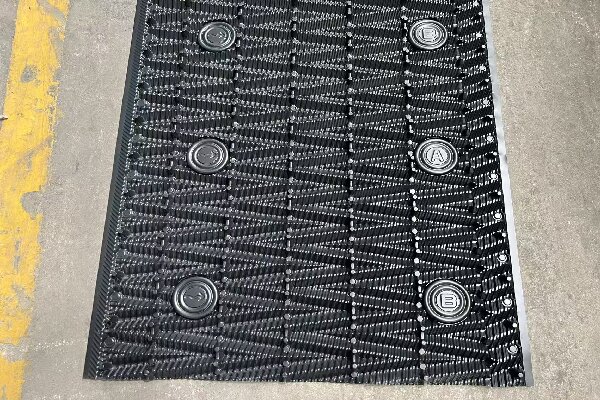
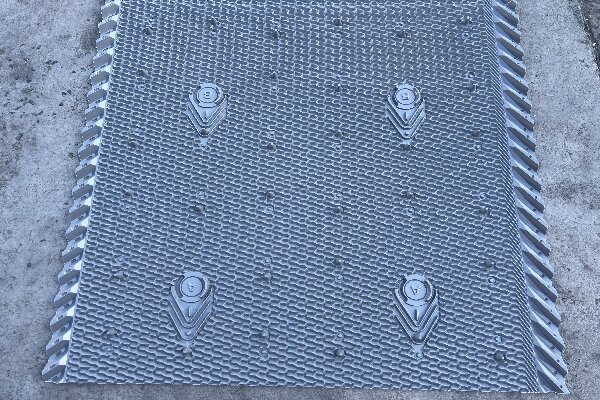
Modern Cooling Tower Media can be made from PVC, PP, or other materials depending on operating temperature, water quality, chemical conditions, and tower design. Film fill and Corrugated Fill are commonly used where a large effective surface area is required in a relatively compact volume.
First Sign: Cooling Performance Is Getting Worse
One of the easiest warning signs is a gradual loss of cooling performance. If the tower used to achieve the required cold-water temperature but now struggles under similar operating conditions, the fill should be one of the items on your inspection list.
Look at the following operating data:
- Hot water temperature entering the tower
- Cold water temperature leaving the tower
- Water flow rate
- Ambient wet-bulb temperature
- Airflow and fan operating condition
- Pressure drop through the tower
A reduction in cooling performance does not automatically mean the fill is bad. Fans, nozzles, water flow, air inlet conditions, and operating load can all affect tower performance. But if these factors are normal and the cooling range continues to deteriorate, the condition of the tower fill deserves a closer look.
When Cleaning May Be Enough
Not every dirty fill needs to be replaced. In many industrial cooling towers, deposits can build up gradually without causing permanent damage to the fill material.
1. Light Scale Deposits
A thin layer of mineral scale can reduce the effective wetting area of the fill, but if the plastic structure itself is still strong and the passages remain open, professional cleaning may restore much of the original performance.
2. Algae or Biological Growth
Algae and biological deposits are common when light reaches wet areas and water treatment is not properly controlled. If the growth is mainly on the surface and the fill has not become deformed, cleaning and correcting the water treatment program may be enough.
3. Dirt and Suspended Solids
Dust, sediment, fibers, and other suspended solids can accumulate between fill sheets. If the blockage is limited and the fill is mechanically sound, cleaning is usually worth trying before considering replacement.
In other words, if the problem is mainly deposit-related rather than material-related, cleaning may be the more economical option.
When Cooling Tower Fill Should Be Replaced
There comes a point when cleaning is no longer the right answer. If the structure of the fill has deteriorated, cleaning will not bring it back to its original condition.
1. Fill Sheets Are Cracked or Broken
Cracks, broken edges, missing sections, and collapsed sheets are strong indicators that the tower fill has suffered physical damage. Damaged sheets can change the air and water distribution pattern and may create areas where water bypasses the intended heat-transfer surface.
2. The Fill Has Become Brittle
Plastic fill can become brittle after long-term exposure to heat, chemicals, oxidation, or unsuitable operating conditions. A simple visual inspection may not always reveal the problem. During maintenance, gently checking representative sections can help identify material deterioration.
3. Permanent Deformation
If the fill has warped, sagged, collapsed, or lost its original channel structure, replacement is normally a better option than cleaning. The fill geometry is part of the cooling design, so changing that geometry can directly affect airflow and water distribution.
4. Severe Fouling Cannot Be Removed
Heavy mineral deposits can become extremely difficult to remove. Aggressive cleaning may damage the fill even further. If the passages are heavily blocked and the original surface structure cannot be recovered, installing new fill may provide a more predictable result.
5. Repeated Cleaning Does Not Restore Performance
This is one of the most useful practical indicators. If the tower has already been cleaned but cooling performance continues to decline, it is worth looking beyond surface fouling. The fill may have reached the end of its service life.
Cleaning vs. Replacement: A Simple Inspection Guide
| Condition of Cooling Tower Fill | Recommended Action |
|---|---|
| Light dirt or sediment | Clean and inspect |
| Moderate algae growth | Clean and improve water treatment |
| Light mineral scale | Clean if the fill structure is still sound |
| Severely blocked passages | Inspect carefully; replacement may be more economical |
| Cracked or broken fill sheets | Replace damaged fill |
| Severe deformation or collapse | Complete fill replacement recommended |
| Brittle or degraded plastic | Consider replacement |
| Repeated cleaning with poor cooling performance | Investigate complete replacement |
How to Inspect Film Fill Before Making a Decision
If you are planning maintenance, do not judge the entire tower from one small section. Film fill can have different conditions at the top, middle, and bottom of the fill pack.
During inspection, check several areas for:
- Scale thickness
- Algae and biological deposits
- Blocked air passages
- Broken or cracked sheets
- Permanent deformation
- Material brittleness
- Discoloration or chemical attack
- Loose or collapsed fill blocks
It is also useful to compare the current operating data with historical records. A cooling tower that has gradually lost performance over several years may be telling you more than a simple visual inspection can.
Water Quality Is Often the Real Reason Fill Fails
When a customer says, "Our cooling tower fill only lasted a few years," the next question should be: What happened to the circulating water?
Scale, suspended solids, biological growth, and chemical imbalance can all shorten fill service life. Replacing the fill without addressing the underlying water problem may simply repeat the same cycle.
For towers operating with difficult water conditions, selecting the right Cooling Tower Media can also make a difference. A fill design with better fouling resistance may be more suitable than using a standard film fill in an application where deposits are a constant problem.
If fouling is a recurring problem, take a look at our Anti-Fouling Fill Media for applications where maintaining open passages is particularly important.
What to Consider When Planning Cooling Tower Replacement
If inspection confirms that the existing fill has reached the end of its useful life, do not simply order the same-looking product and assume it will perform the same way.
Check the Existing Fill Dimensions
Measure the fill sheet size, block dimensions, thickness, spacing, and installation arrangement. Small dimensional differences can affect installation and water distribution.
Confirm Counterflow or Crossflow Design
The replacement fill must match the tower configuration. Counterflow fill media and crossflow fill media are designed for different airflow and water-flow arrangements. Using the wrong configuration can create installation and performance problems.
Choose the Right Material
PVC is widely used for many industrial cooling tower applications, while PP can be preferred in applications requiring different temperature or chemical resistance characteristics. The correct material should be selected according to the actual operating conditions rather than price alone.
Do Not Ignore the Original Cooling Load
A replacement project is also a good opportunity to check whether the existing fill volume and configuration are still suitable for the current cooling load. Industrial processes often change over time, and a tower that was correctly sized ten years ago may now be operating under different conditions.
For industrial applications requiring a new or replacement fill solution, you can review our Industrial Cooling Tower Fill options for different cooling tower applications.
Can Dirty Cooling Tower Fill Be Reused?
Sometimes yes, but only if the fill remains structurally sound.
If the material is still strong, the sheets are not badly deformed, and most passages can be restored through suitable cleaning, reuse may make economic sense. But if the fill is brittle, cracked, heavily deformed, or permanently blocked, putting it back into service may simply delay the replacement that is already needed.
For older towers, the cost of repeated cleaning, downtime, labor, and lost cooling performance should also be included in the calculation. The cheapest short-term option is not always the cheapest option over the next few years.
Cleaning or Complete Replacement? Use This Practical Rule
A simple way to think about it is:
- If the fill is dirty but structurally healthy: clean it.
- If the fill is damaged but only in isolated areas: consider partial replacement.
- If the fill is brittle, collapsed, severely fouled, or permanently deformed: plan for replacement.
- If cleaning has been repeated but cooling performance remains poor: investigate a complete fill replacement.
This approach avoids replacing good fill unnecessarily while also preventing you from spending money and maintenance time trying to rescue fill that has already reached the end of its service life.
Final Thoughts
Cooling tower fill is one of those components that is easy to ignore because it sits inside the tower. But its condition has a direct influence on heat transfer, airflow, water distribution, and overall tower performance.
When cooling performance starts to fall, do not immediately assume that the whole tower needs to be replaced. First determine whether you are dealing with removable fouling or permanent material damage. A good inspection can often save unnecessary costs.
On the other hand, if the Film Fill is cracked, brittle, collapsed, badly deformed, or permanently blocked, continued cleaning may not solve the underlying problem. In that situation, a properly selected cooling tower replacement fill can be a much more reliable long-term solution.
Need Help Choosing Replacement Cooling Tower Fill?
If you are not sure whether your existing fill should be cleaned, partially replaced, or completely replaced, send us the tower type, existing fill dimensions, material, operating temperature, and photos of the current fill. These details are usually enough to make the initial assessment much easier.
Contact us for a cooling tower fill quotation and tell us your tower requirements. We can help you check the suitable fill type, material, size, and replacement arrangement before you place an order.