How Poor Water Distribution Damages Cooling Tower Fill Performance
How Poor Water Distribution Damages Cooling Tower Fill Performance
When a cooling tower starts losing performance, the first thing people often check is the Cooling tower Fill. Is it dirty? Is it damaged? Has it reached the end of its service life?
Those are good questions, but there is another part of the system that should be checked before replacing the fill: water distribution.
A good film fill cooling tower depends on water reaching the fill surface evenly. If some areas receive too much water while other areas stay almost dry, even high-quality Cooling Tower Media cannot deliver its expected heat transfer performance.
In practice, this is one of those problems that can be mistaken for a fill problem. Before starting a complete cooling tower replacement of the fill, it is worth checking how the water is actually reaching the fill pack.
Why Water Distribution Matters to Cooling Tower Fill
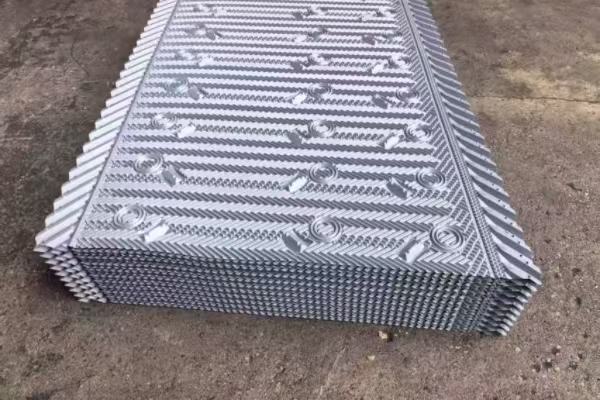
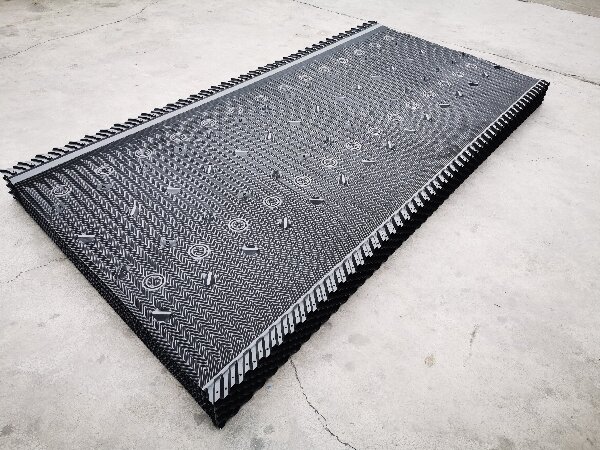
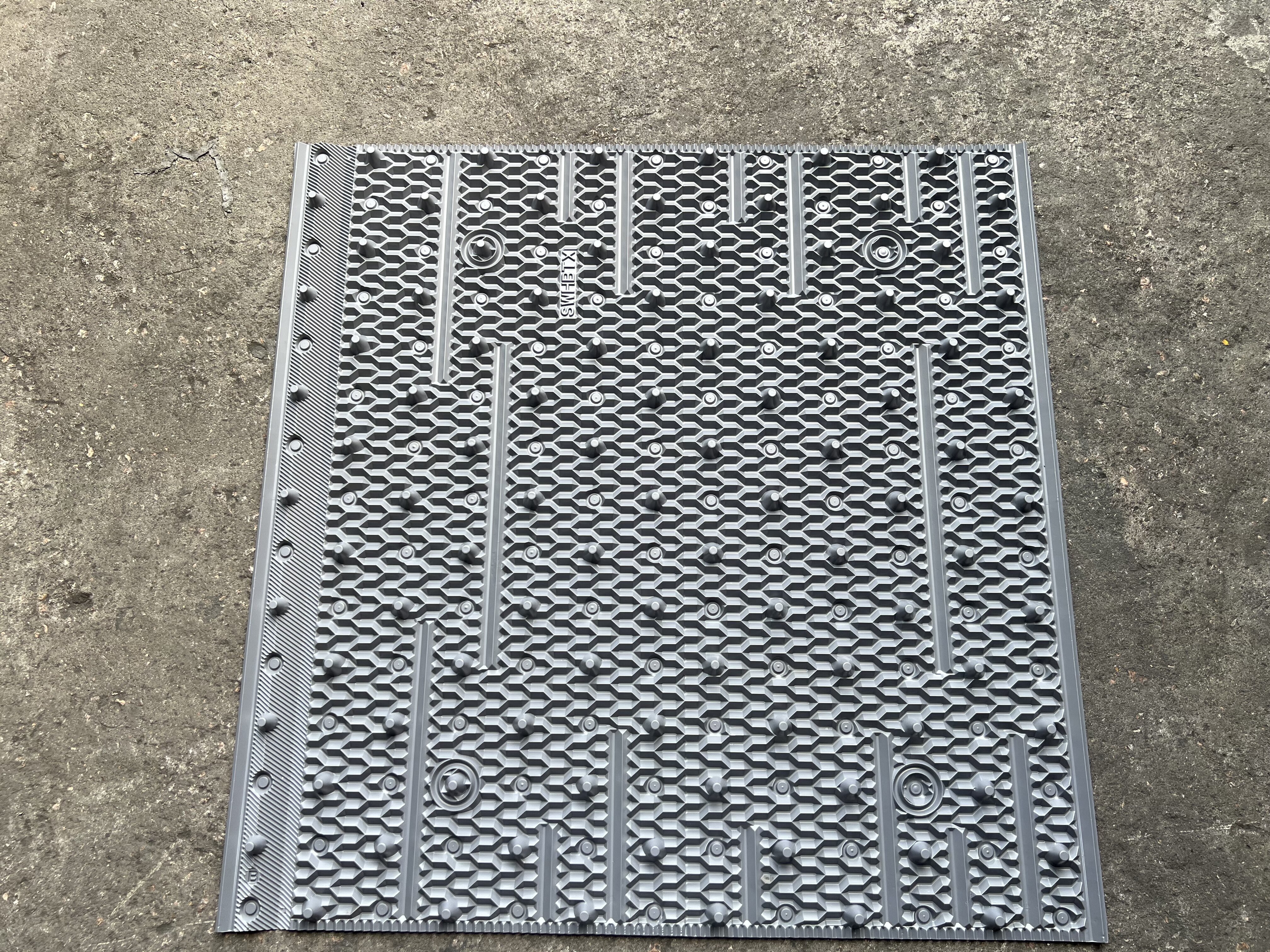
The basic job of tower fill is to increase the contact area between circulating water and air. In a film fill system, water spreads across the surface of the sheets and forms a thin film while air moves through the fill.
For that process to work properly, the available fill surface needs to be wetted reasonably evenly.
If the distribution system leaves large dry areas, part of the installed fill is simply not being used effectively. At the same time, other sections may receive more water than they were designed to handle.
This changes the local water-to-air relationship inside the fill pack and can reduce the overall cooling performance of the tower.
Good fill cannot compensate for poor water distribution
This is an important point when evaluating film fill performance. Fill manufacturers normally establish performance characteristics under defined operating conditions, including appropriate water and air distribution.
If the water distribution system is not working properly, the actual tower conditions are different from those used to evaluate the fill.
So when a tower does not reach its expected cold-water temperature, replacing the fill immediately may not solve the real problem.
What Happens When Water Distribution Is Uneven?
Uneven distribution does more than create a few dry spots. If the problem continues for a long time, it can affect the condition of the fill itself.
1. Dry sections of fill reduce effective heat transfer
Film fill works by spreading water over a large surface area. If a section receives little or no water, that surface contributes much less to evaporation and heat transfer.
Air will still move through the tower, but the dry section is not doing the same cooling work as a properly wetted section.
This means the tower may have plenty of fill volume on paper while its effective cooling surface is much lower in actual operation.
2. Overloaded areas can receive excessive water
The opposite problem can happen at the same time.
When several nozzles are partially blocked, damaged or incorrectly positioned, water that should have been distributed across a larger area may become concentrated in certain sections.
These areas can experience higher local water loading. Depending on the fill design and operating conditions, this can affect airflow, water film formation and the overall balance of the fill pack.
3. Uneven wetting can encourage scale and deposits
This is where a small distribution problem can turn into a bigger maintenance problem.
When parts of the fill repeatedly alternate between wet and poorly wetted conditions, mineral deposits can develop more easily. Once scale begins to build up on the fill surface, the water pathways and air passages can become restricted.
For film-type tower fill, this can be particularly important because the closely spaced sheets provide a large heat-transfer area but can also be sensitive to fouling and blockage.
Common Causes of Poor Water Distribution
In the field, the cause is not always complicated. Many water distribution problems come from relatively simple operating or maintenance issues.
- Partially blocked or damaged spray nozzles
- Incorrect nozzle spacing or installation
- Low or unstable spray pressure
- Blocked distribution pipes
- Damaged distribution basins
- Uneven water flow across the tower
- Incorrect water flow rate for the existing fill design
- Scale, rust or debris entering the distribution system
- Changes to the tower operating conditions without checking the fill requirements
Even a relatively small number of blocked nozzles can create noticeable differences in how the fill is wetted. This is why water distribution should be inspected before concluding that the fill itself has failed.
How Poor Distribution Affects Film Fill Cooling Towers
A film fill cooling tower is designed around a simple idea: spread water into a thin film over a large surface while air passes through the fill.
When the water reaches the fill uniformly, the available surface area can be used much more effectively.
But if the water enters in concentrated streams, bypasses certain sections or leaves large areas almost dry, the actual heat-transfer pattern becomes uneven.
This can lead to several practical symptoms:
- Higher cold-water outlet temperature
- Increasing approach temperature
- Uneven wetting across the fill pack
- Local scale or biological deposits
- Reduced effective heat-transfer area
- Increasing pressure drop when fouling develops
- More frequent cleaning and maintenance
These symptoms can look similar to those caused by old or damaged Cooling Tower Fill, which is why checking the distribution system is an important part of troubleshooting.
Counterflow Fill Needs Consistent Water Coverage
In a counterflow cooling tower, water moves downward through the fill while air moves upward. The two streams interact throughout the fill pack.
That makes the relationship between water distribution, airflow and fill geometry especially important.
If you are replacing fill in a counterflow tower, the replacement material should not be selected only by dimensions. The fill design, sheet spacing, water loading, airflow conditions and existing distribution system all need to work together.
For counterflow applications, you can learn more about our Counter Flow Fill Media, which is designed for counterflow cooling tower applications.
Corrugated Fill: Why Distribution Still Matters
Corrugated geometry helps guide water across the fill surface and increases the contact between air and water. But the geometry cannot fix a distribution system that is delivering water unevenly in the first place.
If water enters one side of the fill at a much higher rate than another, the entire pack is no longer being used under balanced conditions.
When selecting replacement Corrugated fill, it is therefore useful to look at the complete operating condition rather than treating the fill as an isolated component.
Our Corrugated Cooling Tower Fill is available for different cooling tower configurations and replacement applications.
How to Check Water Distribution Before Replacing the Fill
If a tower is showing reduced cooling performance, I would not start by pulling out the entire fill pack. A basic inspection of the water distribution system can tell you a lot.
Check the nozzles
Look for blocked or damaged nozzles and compare the spray pattern between different areas of the tower. A nozzle that is spraying weakly or in the wrong direction can create a local dry zone.
Check the distribution basin or pipes
Make sure water is reaching the different sections of the tower as intended. Deposits, debris and damaged components can change the flow pattern.
Look at the fill wetting pattern
If safe inspection conditions allow, look for obvious differences between heavily wetted and poorly wetted sections.
Compare operating conditions
Check the actual circulating water flow, inlet water temperature, cold-water temperature and fan operating condition against the tower's normal operating range.
This helps separate a distribution problem from a genuine fill degradation problem.
When Is Cooling Tower Fill Replacement Actually Necessary?
Fixing water distribution should come before replacing good fill simply because the tower is not cooling as expected.
However, if the fill has already suffered severe scaling, biological fouling, deformation, cracking or physical collapse, correcting the distribution system alone may not bring the tower back to its original performance.
This is where cooling tower replacement of the fill becomes a practical option.
A useful approach is to separate the problem into two questions:
- Is the existing fill still physically and thermally serviceable?
- Is water and air being distributed correctly through the fill?
If the fill is still in reasonable condition but the distribution system is poor, repair the distribution first. If both the distribution system and fill have deteriorated, a coordinated refurbishment may make more sense.
Choosing Replacement Cooling Tower Media
When replacement is necessary, do not select new Cooling Tower Media only because the dimensions look similar to the old material.
At minimum, compare:
- Cooling tower type: counterflow or crossflow
- Existing fill dimensions
- Sheet pitch and corrugation design
- Circulating water flow rate
- Airflow and fan operating conditions
- Water quality and fouling risk
- Operating temperature
- Available fill volume
- Existing water distribution arrangement
This approach is much safer than simply ordering a replacement fill based on length and width.
A Practical Troubleshooting Rule
Here is a simple rule worth remembering:
If the fill looks acceptable but the cooling performance has suddenly dropped, check water distribution before blaming the fill.
If the distribution pattern is uneven, correcting the nozzles, pipes or basin may recover part of the lost performance without immediately replacing the entire fill pack.
If the distribution is good but the fill is heavily fouled, damaged or deformed, then replacement becomes much easier to justify.
Final Thoughts
Cooling tower fill does not work alone. The fill geometry, water flow, air flow and distribution system all have to work together.
For a film fill cooling tower, uniform water coverage is particularly important because the whole point of the fill is to create a large, effective contact area between air and water.
So the next time a tower shows poor cooling performance, do not immediately assume that the cooing fill has reached the end of its life. Check the water distribution first. A few blocked nozzles or an uneven distribution pattern can make a good fill look like a bad one.
If the existing fill really does need replacement, the replacement should be selected according to the tower type, dimensions, water loading, airflow, water quality and operating conditions—not just the appearance of the old fill.
Need Replacement Cooling Tower Fill?
If you are working on a cooling tower refurbishment or replacement project and need help matching the fill to your existing tower, you can send us the tower dimensions, fill size, water flow rate, tower type or drawings.
We can provide suitable Cooling Tower Fill options for different applications, including PVC and PP film fill, corrugated fill and customized replacement solutions.
Contact us for cooling tower fill information and a quotation.