Why Does Cooling Tower Fill Performance Decline After Several Years
If a cooling tower has been running for several years, it is quite normal for its cooling performance to gradually change. Sometimes the difference is obvious: the outlet water temperature is higher, the tower needs more fan power, or the same process load simply takes longer to cool.
But here is something that is often overlooked: the cooling tower fill may be one of the reasons.
Cooling tower fill does not normally fail overnight. In most cases, performance declines little by little as scale, dirt, biological growth, chemical exposure, temperature, UV radiation and mechanical stress affect the fill over time.
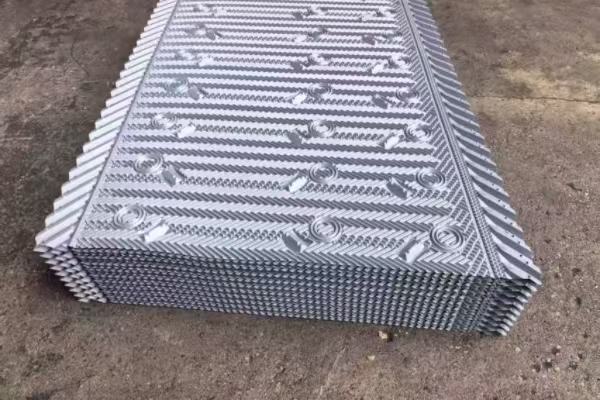
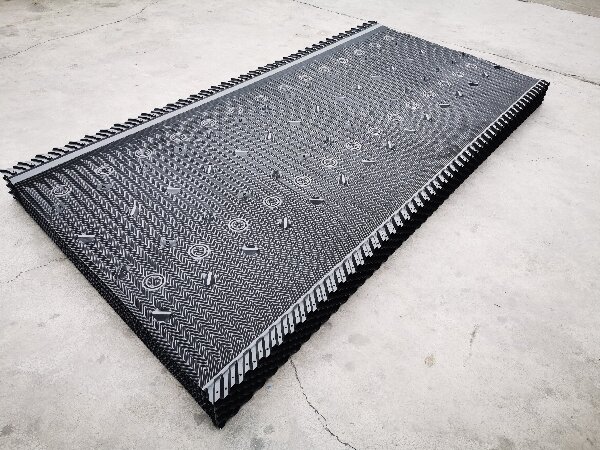
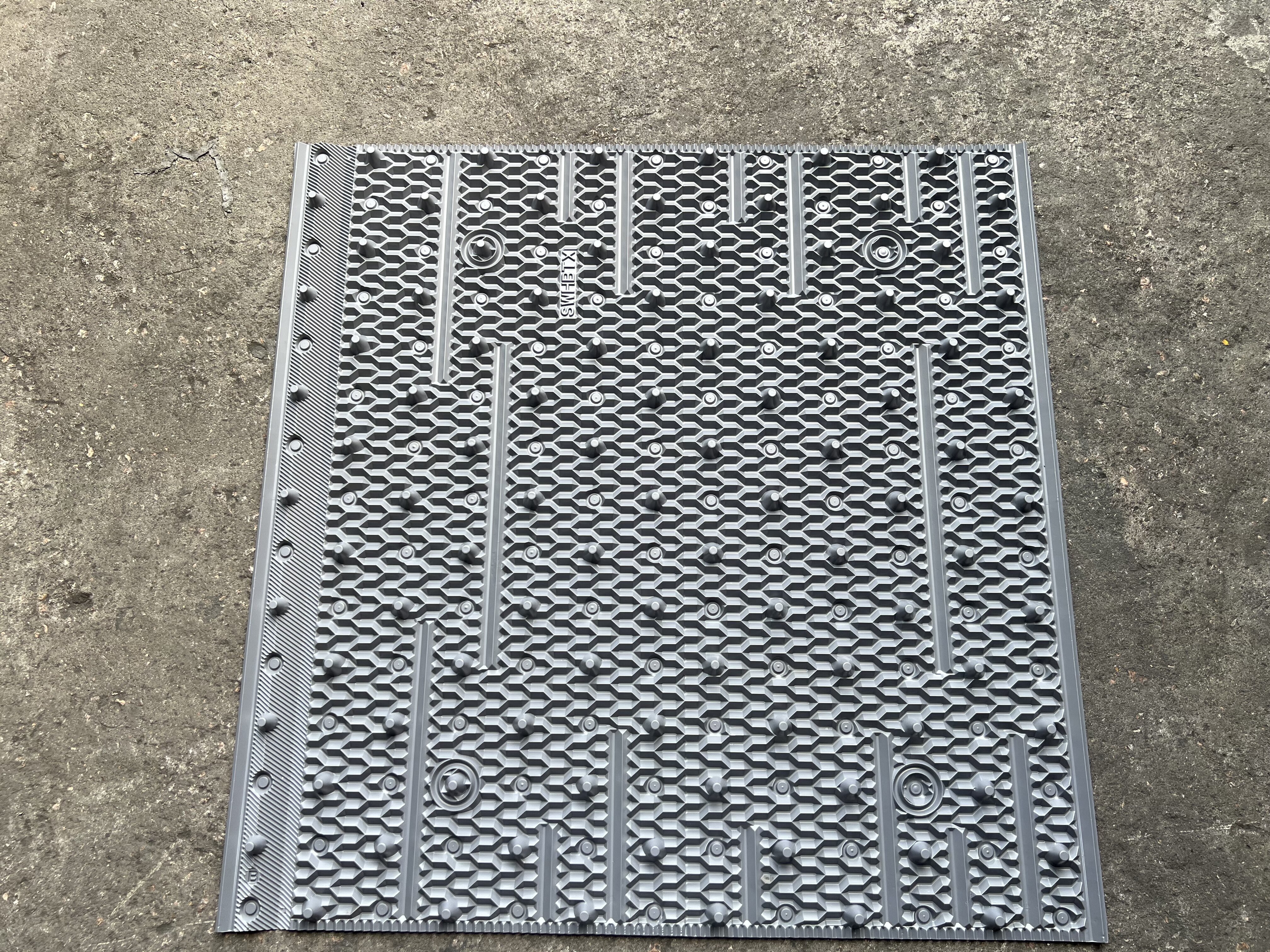
That is why an old Cooling Tower Fill can still look acceptable when you open the tower, while its actual cooling performance is already much lower than it was when new.
So, why does this happen, and how can you tell whether cleaning is enough or a cooling tower replacement project should be considered?
Why Does Cooling Tower Fill Lose Performance Over Time?
There is usually not one single reason.
In real cooling tower operation, several small problems tend to build up together. The fill becomes fouled, some passages become restricted, the plastic slowly ages, water distribution becomes less uniform and the effective contact area between water and air decreases.
Eventually, the tower is no longer operating the way it did when the original tower fill was installed.
The most common causes are:
- Scale and mineral deposits
- Biological growth and algae
- Dust and suspended solids
- Chemical exposure
- High operating temperature
- UV exposure
- Physical damage
- Fill deformation
- Poor water distribution
- Long-term ageing of the material
1. Scale Build-Up Slowly Reduces the Effective Cooling Area
Scale is one of the most common reasons for declining cooling tower fill performance.
As circulating water evaporates, dissolved minerals can become concentrated. If water treatment is not properly controlled, deposits can gradually form on the surface of the fill.
At first, the effect may be difficult to notice.
A thin layer of deposits may only slightly change the water flow. But as the scale becomes thicker, the original surface pattern of the Film Fill becomes less effective.
The passages can also become narrower.
This creates a simple chain reaction:
Scale build-up → Restricted passages → Poorer water distribution → Less air-water contact → Lower cooling performance
For towers operating with hard water, regular inspection and water treatment are therefore just as important as choosing good-quality cooling media.
2. Biological Growth Can Block Film Fill
Algae, slime and other biological deposits can cause a similar problem.
This is particularly common when water treatment is not well controlled or when the cooling tower operates under conditions that encourage biological growth.
A film fill cooling tower depends on relatively open passages for air and water movement. Once these passages become covered with biological material, the original airflow and water distribution pattern can change.
In severe cases, the fill can become difficult to clean without damaging the sheets.
If you find that the tower needs frequent cleaning but the cooling performance continues to decline, it may be time to look at the condition of the fill itself rather than simply increasing the cleaning frequency.
3. Suspended Solids and Dirt Accumulate Inside the Fill
Industrial cooling towers can be exposed to dust, dirt, sediment and suspended solids from the surrounding environment or the process water.
Over several years, these materials can accumulate inside the fill passages.
This is one reason why a fill that worked well when the tower was new may not perform as well after years of operation.
The problem is not necessarily that the original fill was poor. The operating environment has simply changed the condition of the media.
For applications with a high fouling risk, it can be useful to consider an anti fouling fill media solution when planning a future replacement.
The goal is not just to get the largest possible surface area. The goal is to maintain useful water-air contact under the actual operating conditions.
4. High Temperature Can Gradually Change the Fill
Temperature is another factor that should not be ignored.
Plastic cooling tower media operates under continuous exposure to warm circulating water. If the actual operating temperature is close to or above the suitable range of the selected material, long-term deformation can become a problem.
You may notice:
- Warped sheets
- Sagging fill packs
- Collapsed passages
- Changes in the original corrugation pattern
- Reduced mechanical strength
Once the original geometry changes, water and air no longer move through the Corrugated Fill in the way it was designed to.
This is especially important when replacing old media. If high temperature contributed to the original failure, simply installing exactly the same material may not be the best long-term solution.
5. UV Exposure Can Affect Cooling Tower Fill
UV exposure is easy to overlook because most of the fill is located inside the tower.
However, some sections of cooling tower media may be exposed to sunlight, especially in open or poorly protected areas. Long-term UV exposure can contribute to material ageing and loss of mechanical properties.
This is more relevant for cooling towers installed outdoors in regions with strong sunlight and high annual solar exposure.
When UV exposure is an important operating factor, UV resistant fill media can be considered when selecting replacement media.
It is worth remembering that UV resistance is only one part of fill selection. Water temperature, chemical compatibility, fouling and mechanical requirements still need to be evaluated together.
6. Chemical Exposure Can Shorten Fill Service Life
Cooling tower water is not simply water.
Depending on the application, the circulating water may contain biocides, corrosion inhibitors, scale-control chemicals or other treatment chemicals.
Industrial process cooling can also introduce contaminants that are not normally present in standard HVAC systems.
Over a long period, these conditions can affect the performance and service life of plastic fill.
If an existing fill has deteriorated much faster than expected, check the water chemistry and chemical treatment history before blaming the product immediately.
Sometimes the real issue is a combination of material selection and operating conditions.
7. The Fill Structure Can Become Less Effective Even Before It Breaks
This is one of the more interesting points about cooling tower media.
People often assume that fill only needs to be replaced when it is visibly broken.
That is not necessarily true.
The cooling performance can decline before the fill actually collapses.
A film-fill system relies on its original geometry to spread water and maintain suitable air passages. If the sheets become distorted, fouled or partially blocked, the effective surface area can be significantly different from the original design.
In other words, the fill may still be physically present, but it may no longer be doing the same job.
8. Water Distribution Problems Can Make Old Fill Look Worse
Before deciding that the fill needs replacement, always check the water distribution system.
Blocked nozzles, damaged spray pipes or uneven water distribution can create dry areas and overloaded sections inside the fill.
When this happens, the cooling tower may show poor performance even though the fill itself is still usable.
A good inspection should therefore look at three things together:
- Condition of the cooling tower fill
- Condition of the water distribution system
- Condition of the air movement system
Replacing the fill without correcting a badly blocked distribution system may simply move the problem to the new media.
9. Why Cooling Tower Film Fill Is Sensitive to Fouling
Film fill is popular because it can provide a large effective surface area in a relatively compact volume.
That is one of its biggest advantages.
But the same compact structure means that water quality matters.
If the circulating water is clean and well treated, film fill can provide excellent heat-transfer performance.
If the water contains a lot of suspended solids, scale or biological material, the passages may gradually become restricted.
This is why there is no universal answer to the question:
"Which Cooling Tower Media is the best?"
The better question is:
"Which Cooling Tower Media is best for this water quality and operating condition?"
10. How to Tell Whether the Fill Needs Cleaning or Replacement
This is probably the question most operators actually want answered.
If the fill has light deposits but remains mechanically strong and its structure is intact, cleaning may be enough.
Replacement becomes more reasonable when several problems appear together.
Cleaning May Be Enough When:
- Deposits are relatively light
- Fill passages are still open
- The sheets are mechanically sound
- There is no significant deformation
- Cooling performance improves after cleaning
Replacement Should Be Considered When:
- Fill passages are heavily blocked
- Sheets are cracked or brittle
- Fill blocks have collapsed
- Severe deformation is visible
- Cleaning no longer restores performance
- Cooling capacity has declined significantly
- The existing material is unsuitable for current temperatures
- The tower operating conditions have changed
There is no need to replace good fill simply because it is old. Condition matters more than age alone.
11. Does Old Cooling Tower Fill Always Need to Be Replaced With the Same Product?
No.
This is actually one of the best opportunities to improve a cooling tower during a replacement project.
If the old fill lasted well and performed reliably, a similar specification may make sense.
But if the old fill repeatedly suffered from fouling, deformation or UV-related ageing, it is worth asking whether a different material or structure would be more suitable.
For example:
Fouling problem → Consider a more fouling-resistant fill structure
UV exposure → Consider UV resistant fill media
High temperature → Review material selection
Different tower configuration → Confirm counter flow or cross flow fill
This is where a cooling tower fill replacement project becomes more than simply replacing old plastic sheets.
12. What Should You Check Before Ordering New Cooling Tower Fill?
If you are planning a replacement, collect the basic information before contacting a supplier.
- Cooling tower type
- Counter flow or cross flow
- Existing fill dimensions
- Fill block dimensions
- Existing fill material
- Sheet thickness
- Operating water temperature
- Water flow rate
- Water quality
- Fouling condition
- Required quantity
- Photos of the existing fill
If you can provide these details, it becomes much easier for a manufacturer to recommend the right Cooling Tower Fill instead of simply offering a standard product.
13. Don't Forget the Original Reason for the Failure
Here is a practical point that is often missed during replacement projects.
If you replace the fill without understanding why it failed, the new fill may eventually develop the same problem.
For example, if the old fill was blocked by scale, improve the water treatment system.
If it was damaged by high temperature, review the material and operating conditions.
If it was exposed to excessive sunlight, consider whether UV-resistant material is appropriate.
If it repeatedly became fouled by suspended solids, review the fill structure and water quality before ordering the replacement.
The best cooling tower replacement project is not simply the one that installs new media. It is the one that prevents the same failure from happening again.
14. When Does Cooling Tower Fill Replacement Make Financial Sense?
Operators sometimes delay replacement because the fill itself is not the most expensive component of the cooling tower.
But the cost of poor cooling performance can be much larger.
If a degraded fill causes the tower to operate inefficiently, the plant may experience:
- Higher fan energy consumption
- Higher pumping requirements
- Higher process water temperature
- Reduced production efficiency
- More frequent maintenance
- Unexpected shutdowns
For an industrial cooling tower, the correct question is therefore not simply "How much does new fill cost?"
A better question is:
"How much is the current loss of cooling performance costing the plant?"
Sometimes that calculation makes a fill replacement decision much easier.
15. A Simple Inspection Method for Older Cooling Tower Fill
If you are responsible for an older tower, you do not necessarily need to wait for a major cooling problem before inspecting the media.
A practical inspection can start with:
- Check the outlet water temperature trend.
- Compare current performance with historical operating data.
- Inspect the fill for scale and biological growth.
- Look for deformation or collapsed sections.
- Check whether air passages are blocked.
- Inspect water distribution nozzles.
- Check the fill support structure.
- Measure representative sections of the existing fill.
- Take photographs for replacement evaluation.
This gives you a much better starting point if replacement becomes necessary.
Final Thoughts: Old Fill Does Not Always Look Bad
One of the biggest mistakes with cooling tower maintenance is waiting until the fill is obviously broken.
Performance can decline gradually long before the media physically collapses.
Scale, biological growth, suspended solids, high temperature, UV exposure, chemical conditions and long-term deformation can all reduce the effectiveness of Cooling Tower Media.
If your cooling tower has been running for several years and performance is no longer what it used to be, take a closer look at the fill. Check the actual condition, review the operating environment and compare the cost of continued cleaning with the cost of replacement.
And if replacement is required, do not automatically order the same fill again. Use the opportunity to ask whether the material and structure still match the tower's current operating conditions.
Need Technical Support for Cooling Tower Fill Replacement?
If you are interested in our Cooling Tower Fill products and need technical specifications, product information or a quotation, please send us your cooling tower type, existing fill dimensions, operating temperature and required quantity.
We can help you evaluate the suitable fill material and structure for your replacement project.