Cooling Tower Fill Surface Area vs Pressure Drop: What Is the Right Balance
Cooling Tower Fill Surface Area vs Pressure Drop: What Is the Right Balance?
When people talk about Cooling Tower Fill, surface area is usually one of the first numbers they look at. More surface area sounds better, and in many cases it can help improve heat transfer. But there is another number that should not be ignored: pressure drop.
A cooling tower fill needs enough surface area to give water and air plenty of contact, but it also needs to let air move through the fill without creating excessive resistance. In real projects, the best Cooling Tower Media is not necessarily the one with the highest surface area. It is the one that gives a good balance between heat transfer and airflow.
Why Does Cooling Tower Fill Surface Area Matter?
The main job of Film Fill is to increase the contact between circulating water and air. When water spreads over the fill surface, it forms a thin film. Air moving through the fill removes heat from the water, with evaporation playing an important role in the cooling process.
A larger effective surface area can provide more opportunities for water-air contact. This is one reason why modern film fill cooling tower designs use corrugated surfaces and carefully designed flute patterns.
However, surface area should not be considered by itself. A fill with very high specific surface area may also have smaller air passages. If those passages restrict airflow too much, the cooling tower fan has to work harder to move the required amount of air.
What Is Pressure Drop in Cooling Tower Fill?
Pressure drop is the resistance the air experiences as it passes through the tower fill. You can think of it quite simply: the more difficult it is for air to pass through the fill, the higher the pressure drop.
For an induced-draft cooling tower, excessive pressure drop can affect fan operating conditions and increase energy consumption. In some cases, it may also reduce the actual airflow available to the tower.
That is why experienced cooling tower engineers normally look at both sides of the equation. We want enough surface area for effective heat and mass transfer, but not so much restriction that airflow becomes the limiting factor.
How Corrugated Fill Creates a Balance
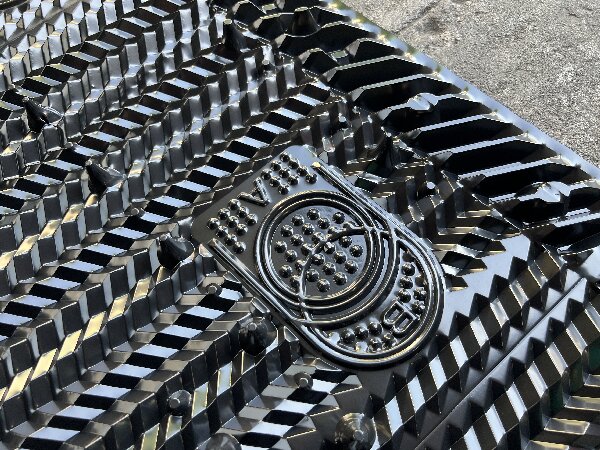
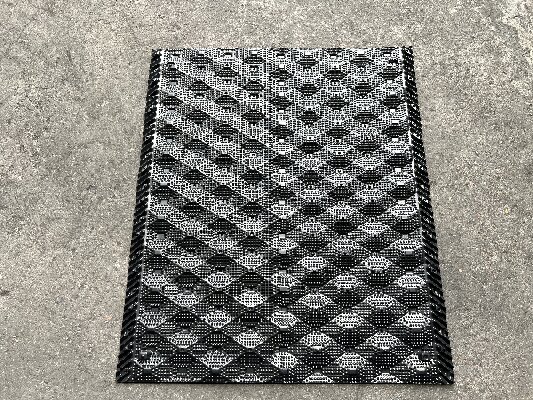
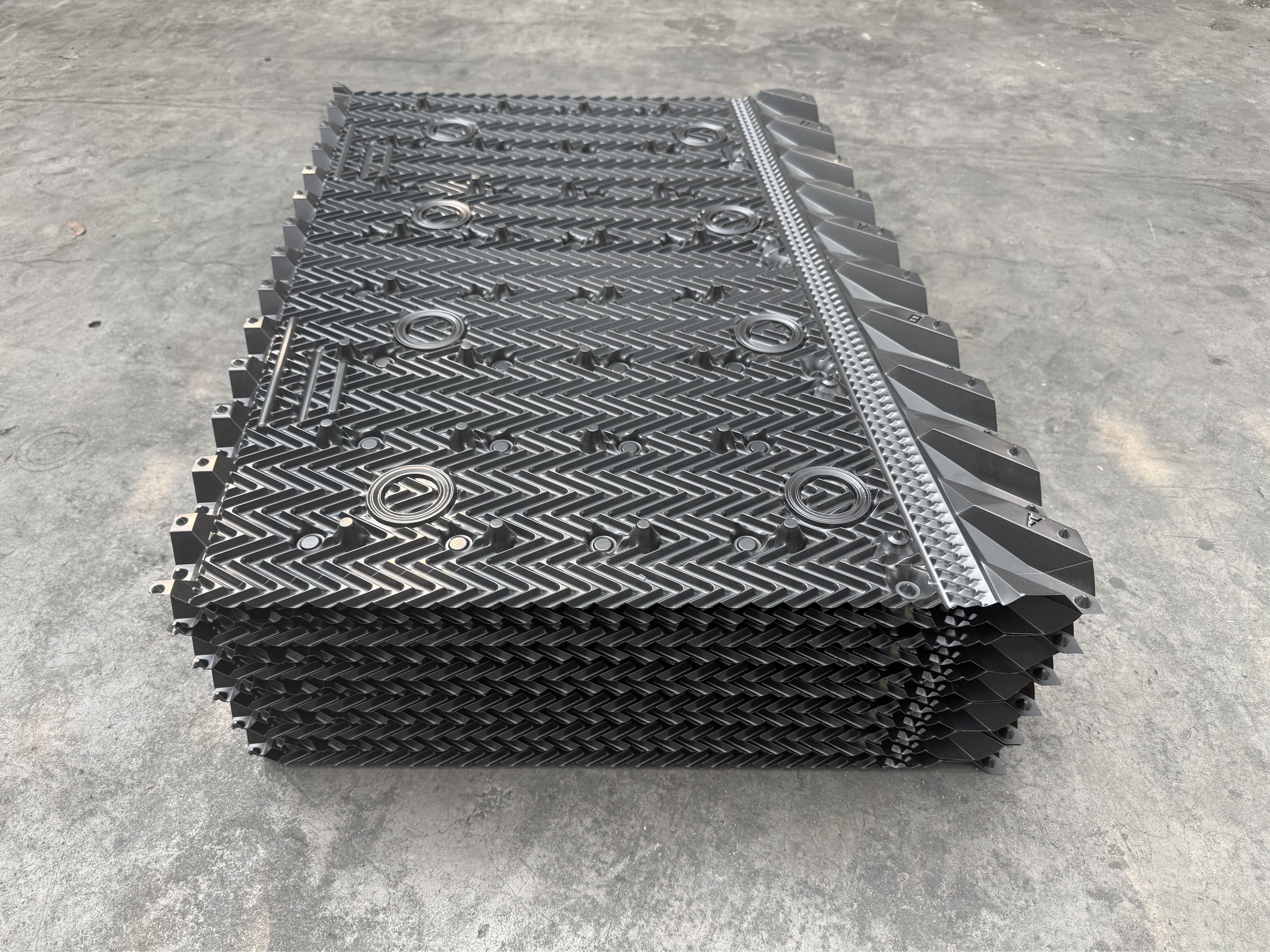
Corrugated fill is designed to create a large effective contact area while maintaining passages for air and water. The shape, flute size, pitch, angle, and sheet arrangement all influence the final performance of the tower fill.
For example, changing the flute geometry can increase the contact area between water and the fill surface. At the same time, the geometry determines how easily air can travel through the fill pack.
This is why simply choosing the fill with the highest advertised surface area is not always the best approach. The complete design needs to be considered, including water loading, airflow, fill depth, operating temperature, and the condition of the circulating water.
Higher Surface Area Is Not Always Better
This is a common point of confusion when selecting tower fill. A higher surface area can look attractive on a specification sheet, but the number only tells part of the story.
If the fill passages are too restrictive for the tower's airflow requirements, pressure drop can increase. The cooling tower may then need more fan power to achieve the required airflow. For an existing tower, installing a denser fill without checking the fan and air system can therefore create an unexpected problem.
For this reason, fill selection should be based on the overall cooling tower design rather than one specification alone.
What Should Engineers Check When Selecting Tower Fill?
1. Specific Surface Area
Specific surface area indicates how much fill surface is available within a given volume. It is an important factor in evaluating heat and mass transfer performance, but it should always be considered together with airflow resistance.
2. Pressure Drop
Check the expected pressure drop at the actual air and water loading of the cooling tower. A fill that performs well under laboratory conditions may not deliver the same result if the operating conditions are significantly different.
3. Flute and Pitch Design
The flute size and pitch influence water distribution, air passages, fouling resistance, and pressure drop. A smaller pitch can provide more contact area, while a larger passage may help reduce airflow resistance. The right choice depends on the tower and operating conditions.
4. Water Quality
If the circulating water contains suspended solids, biological growth, or a high mineral load, a very dense fill may be more difficult to keep clean. In these situations, a design that provides a practical balance between performance and fouling resistance can be more valuable than simply maximizing surface area.
5. Existing Cooling Tower Fan System
For a cooling tower replacement project, do not look only at the dimensions of the old fill. The existing fan, airflow, water flow, and operating temperature should also be considered before selecting a replacement tower fill.
Surface Area and Pressure Drop in Different Cooling Tower Applications
The ideal balance is not identical for every cooling tower. HVAC towers, industrial process towers, power plant cooling systems, and towers operating with poorer water quality can have very different requirements.
For industrial applications, for example, the priority may be reliable operation under variable water quality and higher thermal loads. For HVAC applications, low pressure drop and efficient fan operation may receive more attention.
For larger industrial systems, our Industrial Cooling Tower Fill can be selected according to the tower configuration and operating requirements.
Choosing the Right Film Fill for a Cooling Tower
There is no single “best” film fill for every project. The right Cooling Tower Fill Media depends on the relationship between heat load, water flow, air flow, fill depth, operating temperature, and water quality.
For example, a counterflow tower and a crossflow tower have different airflow and water distribution arrangements. The fill geometry should therefore match the tower design rather than being selected only by its nominal surface area.
For systems exposed to strong sunlight or outdoor conditions, material durability can also be an important consideration. Our UV Resistant Fill Media is designed for applications where resistance to long-term UV exposure is an important part of the fill selection.
Surface Area, Pressure Drop and Long-Term Performance
Another point that is easy to overlook is that the pressure drop of a cooling tower fill can change as the fill becomes dirty. Scale, algae, dust, and other deposits can partially block the air passages and increase resistance.
This means a fill that has an acceptable pressure drop when new may behave differently after years of operation if maintenance is poor. Good water distribution, regular inspection, and appropriate cleaning can help maintain the original airflow passages and cooling performance.
In other words, the best fill design is not simply the one that looks best on a new-product specification sheet. It should continue to provide a reasonable balance between heat transfer, airflow, maintenance, and operating cost over its service life.
So, What Is the Right Balance?
The practical answer is simple: do not maximize surface area at the expense of airflow.
A well-designed Cooling Tower Media should provide sufficient water-air contact for the required heat transfer while keeping pressure drop within a range that the tower fan and air system can handle efficiently.
When selecting Cooling Fill, look at surface area, flute design, pitch, pressure drop, water loading, air loading, and operating conditions as one complete system. This approach usually gives a more reliable result than comparing surface-area figures alone.
Conclusion
Surface area and pressure drop are closely connected in cooling tower fill design. Increasing the available contact area can support better heat transfer, but excessive airflow resistance can reduce fan efficiency and affect the overall performance of the cooling tower.
Whether you are selecting new Film Fill, upgrading an existing system, or planning a cooling tower replacement, the goal should be a balanced fill design that provides effective heat transfer without unnecessarily restricting airflow.
Need a cooling tower fill solution based on your actual tower dimensions and operating conditions? Contact our team to discuss your project requirements.