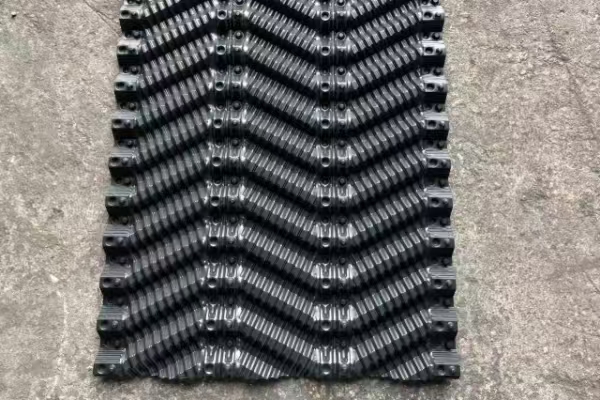
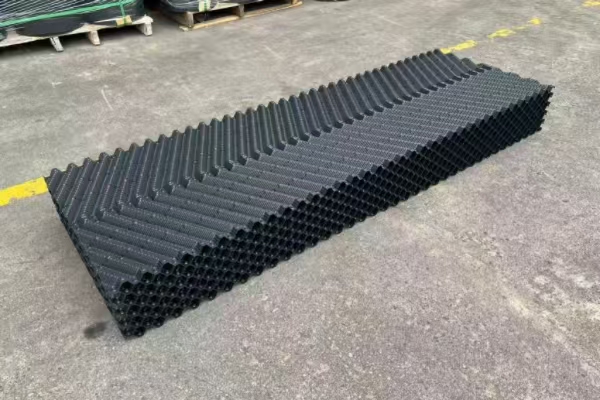
How Airflow and Water Flow Affect Cooling Tower Fill Performance
How Airflow and Water Flow Affect Cooling Tower Fill Performance
When a cooling tower is not reaching the expected cold-water temperature, people often look at the fan, pump, or water temperature first. Those are important, but there is another part that is easy to overlook: the way air and water actually move through the Cooling Tower Fill.
A good tower fill does not create cooling by itself. Its job is to create a large contact area between air and water while keeping the air pressure drop and water distribution within a practical range. If the airflow is too low, the water flow is poorly distributed, or the two flows do not work well together, even a high-performance film fill cooling tower can lose a noticeable amount of cooling capacity.
From an engineering point of view, the real question is not simply “Which fill has the highest surface area?” It is “Does the fill work properly with the actual air and water flow in this tower?”
Why Airflow Matters Inside Cooling Tower Fill
In a wet cooling tower, hot water comes into contact with moving air as it passes through the fill. The air removes sensible heat from the water, but evaporation is responsible for a large part of the total cooling effect.
That means airflow has a direct influence on the performance of the tower fill.
Too Little Airflow Can Reduce Cooling Capacity
If the fan is not moving enough air through the tower, there is less air available to contact the falling water. The fill may still look completely normal, but the actual heat and mass transfer can be much lower than expected.
This can happen because of:
- Low fan speed
- Incorrect fan or blade selection
- Damaged fan blades
- Blocked air inlets
- High pressure drop through the fill
- Dirty or fouled fill
- Improper airflow distribution inside the tower
This is why replacing the fill alone does not always solve a cooling problem. If the new fill creates more resistance than the existing fan system can handle, the actual airflow may decrease.
More Air Is Not Always Better
It is tempting to think that increasing airflow will always improve cooling. In practice, there is a balance.
Higher airflow can improve air-water contact and evaporation, but it can also increase fan power consumption, pressure drop, vibration, and drift if the system is not properly designed.
For this reason, experienced cooling tower engineers normally look at the complete system rather than choosing a fill based only on its advertised surface area.
How Water Flow Affects Cooling Tower Fill Performance
Water distribution is just as important as airflow. Even an excellent Film Fill will perform poorly if some parts of the fill receive too much water while other areas remain almost dry.
The purpose of the fill is to spread the water into thin films or droplets and maintain good contact with the air. To do that, the water needs to enter the fill evenly across the available area.
Uneven Water Distribution Creates Dry Spots
Imagine a fill block where the left side receives a lot of water and the right side receives very little. The wet area is being overloaded while part of the available fill surface is not being used effectively.
This reduces the effective contact area, even if the nominal surface area of the fill is very high.
Common causes include:
- Blocked or damaged nozzles
- Incorrect nozzle spacing
- Low or unstable water pressure
- Improper distribution pipe design
- Clogged fill channels
- Incorrect fill installation
- Water flow outside the fill manufacturer's recommended range
Too Much Water Can Also Be a Problem
More water does not automatically mean more cooling.
If the water loading becomes too high for a particular fill design, the water film can become thicker and the available air-water contact conditions can change. Pressure drop can also increase, while the fill may no longer operate close to its intended design condition.
This is one reason why cooling tower fill should be selected according to actual water loading and airflow rather than simply choosing the product with the largest surface area.
Airflow and Water Flow Must Work Together
The most important point is that airflow and water flow cannot really be considered separately.
Cooling tower fill performance depends on the relationship between:
- Airflow rate
- Water flow rate
- Air-to-water ratio
- Fill surface area
- Fill geometry
- Pressure drop
- Water distribution
- Entering and leaving water temperatures
- Entering air conditions
If one of these factors changes significantly, the actual performance of the fill can change as well.
For example, a high-surface-area corrugated fill may provide excellent heat transfer under the right conditions. But if it is installed in a tower with insufficient airflow or poor water distribution, the theoretical performance of that fill cannot be fully achieved.
Counterflow vs Crossflow: Why Air and Water Direction Matters
The direction in which air and water move through the tower is another major factor.
Counterflow Cooling Tower Fill
In a counterflow cooling tower, water generally moves downward while air moves upward through the fill. The two streams move in opposite directions, creating a useful temperature and moisture driving force throughout the fill.
Counterflow systems are often designed with relatively compact fill arrangements and can achieve high thermal performance when the fill, air velocity, water loading, and distribution system are properly matched.
If you are working on a counterflow tower replacement or upgrade project, you can see the relevant product configuration here:
Crossflow Cooling Tower Fill
In a crossflow cooling tower, air normally moves horizontally through the fill while water travels downward. This creates a different airflow and water distribution pattern compared with a counterflow tower.
Because the air enters from the side, the fill geometry and water distribution system need to be designed specifically for this airflow arrangement. Simply moving a fill from one tower design to another without checking the operating conditions can lead to disappointing results.
For crossflow tower replacement and retrofit applications, see:
What Happens When Airflow and Water Flow Are Not Balanced?
When airflow and water flow are not properly matched, several problems can appear.
1. Higher Outlet Water Temperature
This is usually the first thing operators notice. The cooling tower continues to run, but the cold-water temperature is higher than expected.
2. Increased Fan Power
If the fill has excessive resistance, the fan may need to work harder to maintain the required airflow. In some cases, operators increase fan speed to compensate, which can increase electricity consumption.
3. Poor Water Distribution
Changes in water flow or pressure can affect spray patterns and create areas of over-wetting or under-wetting.
4. Higher Fouling Risk
When water does not move correctly through the fill, suspended solids, scale, algae, and other contaminants can accumulate more easily in certain areas. Over time, this can further restrict airflow and water flow.
5. Reduced Effective Fill Area
A fill may have a large nominal surface area, but only the portion that is properly wetted and exposed to suitable airflow contributes effectively to heat and mass transfer.
Why Pressure Drop Should Be Checked Before Changing Fill
One of the most common mistakes in cooling tower replacement projects is choosing a new fill based only on thermal performance.
Pressure drop should be checked at the same time.
A fill with a very aggressive heat-transfer design may provide excellent thermal performance, but if its pressure drop is too high for the existing fan system, the actual tower performance may not improve as expected.
This is particularly important when replacing old fill in an existing tower. The original fan, motor, air inlet, tower dimensions, and structural arrangement may limit how much airflow the tower can actually handle.
How to Check Airflow and Water Flow Before a Cooling Tower Fill Replacement
Before ordering new Cooling Tower Media, I would recommend collecting a few basic operating numbers first. You do not need a complicated investigation to identify many potential problems.
- Hot water inlet temperature
- Cold water outlet temperature
- Water circulation rate
- Entering wet-bulb temperature
- Fan diameter and operating speed
- Motor power
- Existing fill type and dimensions
- Fill thickness and flute geometry
- Number and size of fill blocks
- Water distribution system
- Any recent changes in fan or pump operation
With this information, a fill supplier or cooling tower engineer can make a much more useful recommendation than simply selecting a replacement based on the old product name.
Does Higher Surface Area Always Mean Better Cooling?
Not necessarily.
Surface area is important, but it is only one part of the equation. The real performance of a Corrugated Fill depends on how effectively that surface is used under the actual operating conditions.
A practical cooling tower fill needs to balance:
- Heat transfer performance
- Airflow resistance
- Water loading
- Fouling resistance
- Mechanical strength
- Material compatibility
- Operating temperature
- Expected service life
That is why two fills with similar dimensions can perform quite differently in the same tower.
Common Signs That Airflow or Water Flow Is the Real Problem
If a cooling tower suddenly loses performance, I would not immediately assume that the fill needs to be replaced.
Look for these signs first:
- Fan airflow is lower than normal
- Fan vibration or abnormal noise has increased
- Water pressure at the distribution system is unstable
- Some nozzles have weak or irregular spray patterns
- Parts of the fill appear dry
- Some areas of the fill are heavily fouled
- Pressure drop across the fill has increased
- Cold-water temperature has gradually increased over time
If several of these conditions appear together, the problem may be related to airflow or water distribution rather than the basic thermal rating of the fill.
When Should You Consider Cooling Tower Fill Replacement?
Replacement becomes more reasonable when the fill is physically damaged, heavily fouled, deformed, brittle, or no longer able to maintain proper water distribution.
However, replacement is also an opportunity to review the original tower design. If the tower has changed operating conditions over the years, simply installing the same type of fill may not be the best solution.
For example, a factory may increase production and therefore increase its cooling-water load. The original fill may have been suitable for the old operating point but no longer provide the right balance between airflow, water loading, pressure drop, and heat transfer.
In this situation, a properly selected cooling tower replacement can do more than restore the original performance. It may also improve the tower's ability to handle the current operating conditions.
Final Thoughts: Match the Fill to the Whole Cooling Tower
When selecting Cooling Tower Fill, it is easy to focus on surface area, material, thickness, or price. Those specifications matter, but they do not tell the whole story.
The fill has to work together with the fan, water pump, distribution system, tower dimensions, air conditions, and operating load.
If the airflow is too low, the fill cannot achieve its expected heat-transfer performance. If the water distribution is poor, much of the available fill surface may not be used effectively. And if pressure drop is too high, the fan system may not be able to provide the required airflow.
So, when evaluating a new Film Fill, Corrugated Fill, or other Cooling Fill, don't just ask how much surface area it has. Ask whether it is suitable for the actual air and water flow conditions in your cooling tower.
That is usually where the difference between a good-looking specification sheet and a good-performing cooling tower becomes clear.
Need Help Selecting Cooling Tower Fill?
If you are planning a cooling tower replacement, revamp, or new installation, providing the existing fill dimensions, tower type, water flow, operating temperatures, and basic fan information can make the selection much more accurate.
We can help review the operating conditions and recommend suitable Cooling Tower Media, including customized sizes and different fill designs for industrial applications.
Contact us for Cooling Tower Fill technical support and quotation