How Cooling Tower Fill Affects Heat Transfer and Overall Cooling Efficiency
How Cooling Tower Fill Affects Heat Transfer and Overall Cooling Efficiency
When a cooling tower is not reaching its expected outlet water temperature, many engineers first look at the fan, water flow, pump, or heat load. Those are important, of course. But there is another part inside the tower that is often overlooked: the Cooling Tower Fill.
The fill is where a large part of the actual heat and mass transfer takes place. If the fill is properly selected and maintained, water can spread into a thin film while air moves through a large contact area. If the fill is poorly designed, fouled, damaged, or simply not suitable for the operating conditions, cooling performance can gradually drop even though the fan and pump are working normally.
This is why understanding how Cooling Tower Fill affects heat transfer is important when designing a new tower, upgrading an existing system, or planning a cooling tower replacement.
What Does Cooling Tower Fill Actually Do?
In simple terms, cooling tower fill gives water and air more opportunities to contact each other.
Hot process water enters the cooling tower and is distributed over the fill. Instead of falling directly through the tower, the water flows across the surface of the fill in a thin layer. At the same time, air passes through the fill area.
This creates a much larger contact area between water and air. Heat is transferred from the water to the air, while a small amount of water evaporates. The evaporation removes additional heat from the circulating water.
That is the basic reason why the fill has such a significant influence on cooling tower performance.
The three things that matter most
From an engineering point of view, the effectiveness of a fill system is mainly influenced by:
- Water distribution – water needs to reach the fill evenly.
- Airflow – air needs to pass through the fill without excessive resistance.
- Water-air contact area – the fill should provide sufficient surface area and contact time for heat and mass transfer.
When these three factors are balanced properly, the cooling tower can achieve good thermal performance without unnecessary fan power or excessive water pressure.
Why Film Fill Can Improve Heat Transfer
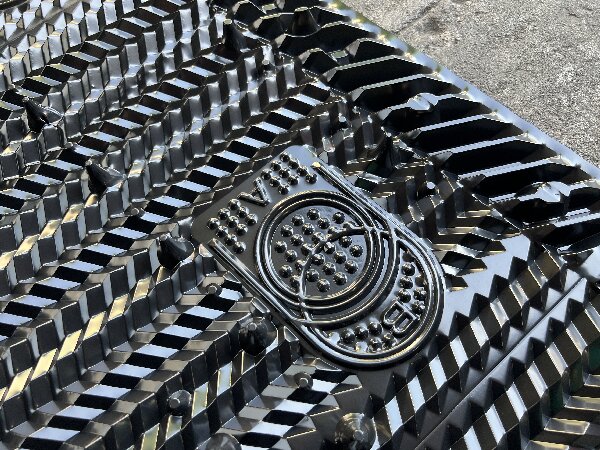
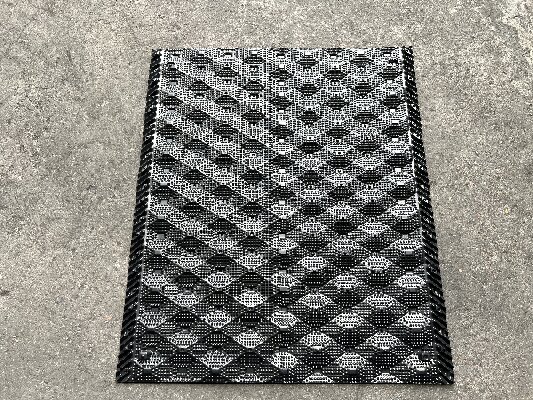
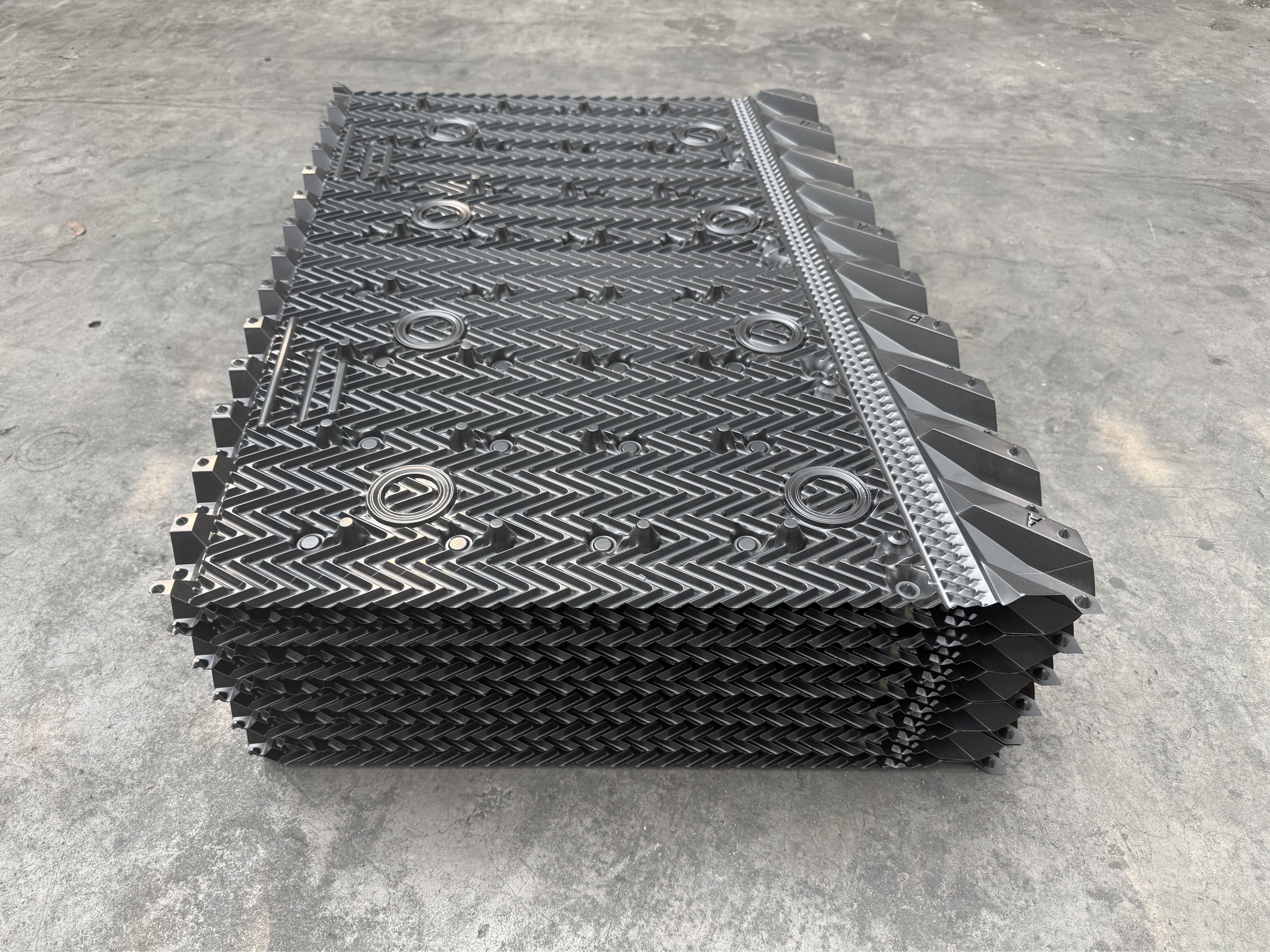
A film fill cooling tower uses specially formed sheets to spread water into a thin film over a large surface area.
Compared with simply allowing water to fall through open space, film fill creates considerably more water-air contact. The corrugated surface also helps control the movement of water and air through the fill pack.
This is one reason why Film Fill is widely used in many industrial and HVAC cooling tower applications where high thermal performance and compact tower dimensions are important.
However, a higher theoretical surface area does not automatically mean better real-world cooling. The fill must still match the water quality, temperature, airflow, water loading, and tower configuration.
More surface area is not always better
This is a common point that can cause confusion when selecting Cooling Tower Media.
A fill with very fine channels may provide a large theoretical surface area, but if the circulating water contains suspended solids, biological growth, or a high scaling tendency, those small passages can become blocked relatively quickly.
Once the passages become restricted, airflow and water distribution change. Pressure drop can increase, wetting becomes less uniform, and the actual heat transfer performance can become much lower than the original design value.
So, when selecting cooling fill, engineers should look at the complete operating environment rather than only comparing surface-area numbers.
How Corrugated Fill Helps Water and Air Contact
Corrugated Fill is designed with formed channels and contact points that guide water across the fill surface while allowing air to pass through the pack.
The geometry of the corrugation affects several important characteristics:
- Effective heat transfer area
- Water film distribution
- Airflow characteristics
- Pressure drop
- Resistance to fouling
- Mechanical strength of the fill pack
Different flute sizes and sheet designs therefore produce different performance characteristics. A fill designed for clean industrial water may not be the best choice for a system with high suspended solids.
For applications where corrugated film fill is suitable, you can see the construction and application details of our Corrugated Cooling Tower Fill.
How Cooling Tower Fill Affects Cooling Efficiency
Cooling efficiency is not determined by the fill alone. The tower works as a complete system. Still, the condition and design of the fill can strongly influence the final result.
1. Effective heat transfer area
The first factor is the amount of effective surface area available for water-air contact.
When water spreads evenly across the fill, a large amount of surface is available for heat and mass transfer. This allows the tower to remove more heat within a given fill volume.
If water distribution is poor, some areas of the fill may remain relatively dry while other areas receive too much water. The actual effective area then becomes much smaller than the theoretical area of the fill.
2. Water film thickness
A good film fill encourages water to form a relatively thin and continuous film.
A thin water film generally provides favorable conditions for heat transfer because the distance that heat needs to travel through the water layer is reduced.
But again, there is a practical balance. The fill must be designed for the actual water loading and operating conditions. Simply making the channels smaller is not always the correct solution.
3. Airflow through the fill
Airflow is just as important as water distribution.
If the fill creates excessive resistance, the cooling tower fan may need to work harder to move the required amount of air. This can increase energy consumption and reduce the overall efficiency of the tower.
For this reason, experienced engineers normally consider thermal performance and pressure drop together rather than selecting a fill based only on one performance number.
4. Fouling and scaling
This is where the difference between laboratory performance and actual plant performance often becomes obvious.
Dust, dirt, algae, scale, biological deposits, and suspended solids can gradually build up on the fill surface. As deposits accumulate, the water film becomes less uniform and air passages can become restricted.
The result can be a gradual increase in approach temperature and a noticeable reduction in cooling capacity.
What Happens When Cooling Tower Fill Becomes Fouled?
One of the easiest mistakes is to assume that a cooling tower problem must be caused by the fan because the outlet water temperature has increased.
In practice, fouled fill can produce very similar symptoms.
Typical signs include:
- Higher outlet water temperature
- Reduced cooling capacity
- Uneven water distribution
- Higher air-side pressure drop
- Visible scale or biological growth
- Blocked or damaged fill channels
- Increasing fan energy consumption
If cleaning cannot restore the original water and airflow passages, replacement may become more economical than continuing to operate heavily fouled media.
Cooling Tower Fill Selection: What Should Engineers Check?
When choosing tower fill, it is better to start with the operating conditions rather than asking only, “Which fill has the highest efficiency?”
Water quality
Check suspended solids, hardness, biological activity, oil contamination, and the general cleanliness of the circulating water.
For relatively clean water, a high-surface-area film fill may be a good option. For dirtier water, a more open fill design may provide better long-term reliability.
Operating temperature
Temperature is another important consideration when choosing the fill material and construction.
PVC is widely used in many cooling tower applications, while PP can be considered for applications where higher temperature resistance or different chemical resistance characteristics are required.
The material should always be selected according to the actual water temperature, chemical environment, and tower operating conditions.
Counterflow or crossflow tower
The fill must also match the tower configuration.
Counterflow towers and crossflow towers have different airflow and water distribution arrangements, so the fill geometry and installation method should be selected accordingly.
Existing tower dimensions
For a replacement project, measure the existing fill carefully before ordering.
Important dimensions can include fill height, width, length, sheet thickness, block arrangement, flute configuration, support arrangement, and available installation space.
A technically good product can still cause problems if the dimensions do not match the existing tower.
Can the Right Cooling Tower Fill Reduce Energy Consumption?
Yes, but it is important to understand the relationship.
The fill does not generate cooling by itself. Instead, it helps the tower achieve the required heat transfer with an appropriate combination of water flow and airflow.
If the fill provides good heat transfer while maintaining reasonable air pressure drop, the tower may be able to achieve the required cooling duty without unnecessarily increasing fan power.
On the other hand, heavily fouled or poorly selected fill can increase airflow resistance and reduce thermal performance at the same time. This is a particularly important consideration for cooling towers that operate for long hours every year.
When Should You Consider Cooling Tower Replacement Fill?
Not every performance problem means that the entire cooling tower needs to be replaced.
In many cases, replacing the internal fill can be a much more practical approach.
Consider a fill replacement project when the existing media has become:
- Severely scaled
- Heavily fouled
- Broken or deformed
- Blocked by deposits
- Too brittle due to aging
- Unsuitable for the current water quality
- Unable to achieve the original cooling performance
A properly planned cooling tower replacement can restore the effective heat transfer area without requiring a complete rebuild of the tower structure.
Industrial Cooling Tower Fill for Different Applications
For industrial applications, fill selection normally needs to balance thermal performance, water quality, mechanical durability, chemical conditions, and expected service life.
Our Industrial Cooling Tower Fill is designed for industrial cooling tower applications where reliable water-air contact and long-term operating performance are important.
When replacing existing media, engineers should compare the new fill with the original tower design instead of treating the project as a simple material purchase. The correct fill geometry, dimensions, material, and installation arrangement all contribute to the final cooling result.
A Practical Way to Diagnose Poor Cooling Performance
If a cooling tower suddenly starts performing worse, I would not recommend replacing the fill immediately.
Start with the basics.
- Check the actual entering and leaving water temperatures.
- Check circulating water flow.
- Check fan operation and airflow.
- Inspect the water distribution system.
- Open the tower and inspect the fill condition.
- Look for scale, algae, dirt, broken sheets, and blocked channels.
- Compare the current operating data with the original design conditions.
This simple process can help determine whether the problem is related to water flow, airflow, distribution, fill condition, or a combination of several factors.
Final Thoughts: Good Fill Design Means More Than High Surface Area
The role of Cooling Tower Fill is easy to underestimate because it is hidden inside the tower. But in reality, it is one of the key components controlling how effectively water and air interact.
A good film fill cooling tower system needs more than a high surface-area number. The fill should provide effective water distribution, suitable air passages, reasonable pressure drop, adequate mechanical strength, and good resistance to the actual operating environment.
For clean-water applications, high-performance Film Fill and Corrugated Fill can provide excellent heat transfer. For more challenging applications, the better choice may be a more open or specially designed Cooling Tower Media that is easier to keep clean.
Most importantly, choose the fill according to the tower, water quality, temperature, airflow, and operating conditions—not simply according to the lowest price or the highest advertised surface area.
Need Help Selecting Cooling Tower Fill?
If you are planning a new cooling tower project, upgrading an existing tower, or looking for cooling tower replacement fill, send us your existing fill dimensions, tower type, operating temperature, water flow, and application details.
We can help you evaluate the appropriate Cooling Tower Fill, material, fill type, and dimensions for your application.
Contact us for cooling tower fill and replacement requirements