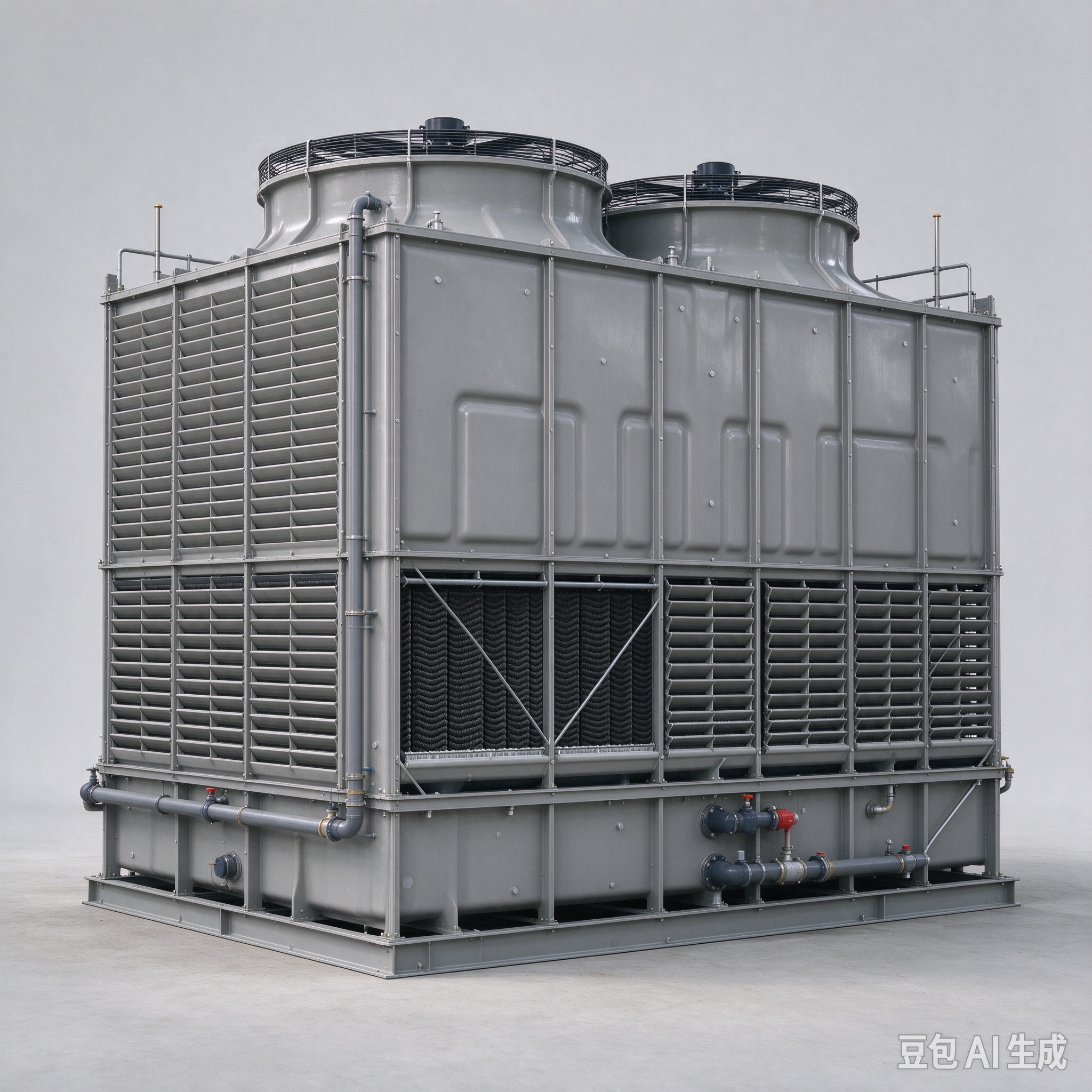
Film Fill vs Splash Fill: Which Cooling Tower Fill Is Right for Your System
Film Fill vs Splash Fill: Which Cooling Tower Fill Is Right for Your System?
Choosing the right Cooling Tower Fill is not simply a matter of picking the product with the highest cooling efficiency. In real projects, engineers often have to balance thermal performance, water quality, operating conditions, maintenance requirements and the condition of the existing tower.
Two of the most common options are Film Fill and Splash Fill. Both are widely used in industrial cooling towers, but they work in very different ways. Choosing the wrong type can lead to fouling, high pressure drop, difficult maintenance or disappointing cooling performance.
If you are planning a new project or a cooling tower replacement, this guide will help you understand the practical difference between Film Fill and Splash Fill and decide which one makes more sense for your system.
What Is Film Fill in a Cooling Tower?
Film Fill works by spreading water into a thin film across a large surface area. As the water flows over the structured sheets, it comes into contact with the upward or cross-flowing air, allowing heat to transfer more efficiently.
This is why a modern film fill cooling tower can often achieve high thermal performance with a relatively compact fill height.
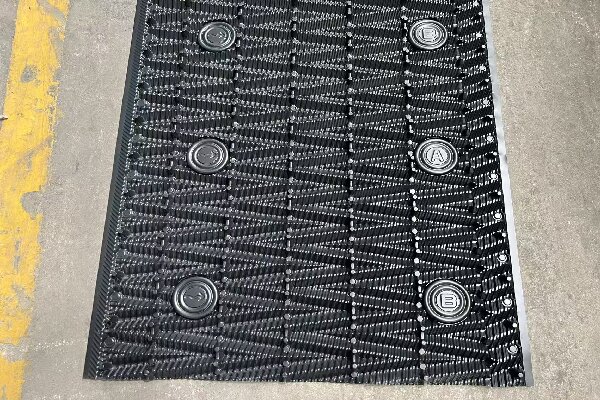
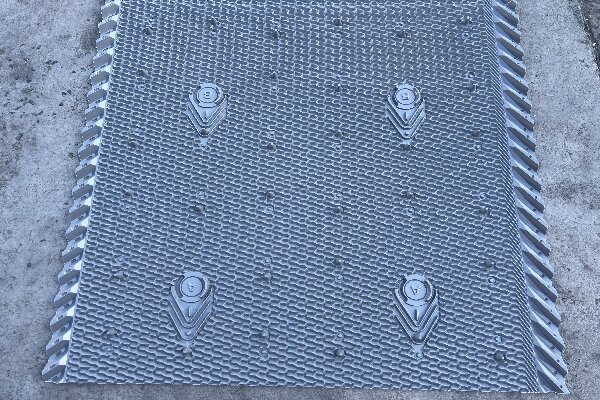
Most Film Fill is manufactured with corrugated sheets. The corrugated pattern creates multiple channels that guide both air and water through the fill pack. Depending on the design, the flute spacing and surface geometry can be optimized for different operating conditions.
For general industrial applications, Industrial cooling tower fill is commonly selected because it provides a good balance between cooling efficiency and long-term operating reliability.
Main Advantages of Film Fill
- High heat transfer efficiency
- Large effective surface area
- Compact fill design
- Lower tower size requirements in many applications
- Suitable for many industrial cooling systems
However, Film Fill is not always the best choice. Its performance depends heavily on water quality. When circulating water contains large amounts of suspended solids, biological growth or oily contaminants, narrow fill channels may gradually become blocked.
What Is Splash Fill?
Splash Fill works differently. Instead of forming a thin water film across a continuous surface, it breaks the falling water into smaller droplets.
The fill elements interrupt the water flow repeatedly, causing the water to splash and disperse. This increases the contact area between water and air and promotes cooling.
Splash Fill usually has a more open structure than traditional Film Fill. Because of this, it can tolerate dirtier water and larger suspended particles.
Main Advantages of Splash Fill
- More resistant to clogging
- Suitable for water containing suspended solids
- Open structure makes cleaning easier
- Can perform well in demanding industrial environments
The trade-off is that Splash Fill generally requires more tower volume to achieve the same cooling performance as a high-efficiency Film Fill system.
Film Fill vs Splash Fill: The Main Difference
| Factor | Film Fill | Splash Fill |
|---|---|---|
| Cooling Efficiency | High | Moderate |
| Water Quality Requirement | Cleaner water preferred | Better tolerance for dirty water |
| Structure | Corrugated sheets and channels | Open splash elements |
| Fouling Resistance | Depends on flute spacing | Generally higher |
| Cooling Tower Size | More compact | May require more space |
| Maintenance | Requires water quality control | Usually easier to clean |
When Should You Choose Film Fill?
From practical experience, Film Fill is usually the better option when the cooling water is reasonably clean and the system needs maximum thermal efficiency.
Typical applications include:
- Power plants
- HVAC cooling towers
- Data centers
- Manufacturing facilities
- Chemical plants with controlled water treatment
- Industrial process cooling systems
For these applications, a properly selected Corrugated fill can provide excellent cooling performance while keeping the tower relatively compact.
However, not all Film Fill designs are the same. Channel spacing, sheet thickness and surface geometry should match the actual water condition. If the system has a higher fouling risk, using an Anti fouling fill media with a wider channel design may be a better solution than simply using a standard narrow-flute Film Fill.
When Should You Choose Splash Fill?
Splash Fill is often a safer choice when water quality is difficult to control.
For example, if your cooling tower handles process water containing suspended solids, fibers, biological contamination or other debris, a tightly structured Film Fill may foul too quickly.
In these situations, an open tower fill design can reduce maintenance problems and keep the tower operating more consistently.
Splash Fill is often considered for:
- Dirty industrial water systems
- Steel and metal processing plants
- Mining applications
- Wastewater-related cooling systems
- Older cooling towers with limited water treatment
The Most Common Mistake: Choosing Fill Based Only on Efficiency
This is something we see quite often in cooling tower retrofit projects.
An engineer sees a high-efficiency Film Fill design and assumes it must be the best option. On paper, the thermal performance may look excellent. But after installation, the fill begins to foul because the actual circulating water contains more suspended solids than expected.
A year later, the cooling performance drops and the maintenance team has to clean or replace the fill again.
That is why the best Cooling Tower Media is not always the one with the highest theoretical efficiency.
The better question is:
Which fill design will maintain stable performance under the actual operating conditions of this cooling tower?
Water Quality Should Be Checked Before Selecting Cooling Fill
Before selecting any Cooling Fill, it is worth reviewing a few basic operating conditions:
- Suspended solids concentration
- Water hardness
- Biological growth risk
- Oil contamination
- Operating temperature
- Water treatment method
- Cleaning frequency
For relatively clean water, a high-efficiency Film Fill may be the logical choice.
For difficult water conditions, a more open fill structure may deliver better long-term results even if its theoretical thermal efficiency is lower.
Material Selection Also Matters
Structure is important, but material selection should not be ignored.
PVC remains one of the most common materials for cooling tower fill because it offers good chemical resistance, reasonable temperature performance and competitive cost.
For higher-temperature applications, PP cooling tower fill may be considered depending on the operating conditions.
When selecting materials, engineers should consider:
- Maximum operating temperature
- Chemical exposure
- UV exposure for outdoor towers
- Mechanical strength
- Expected service life
What About Cooling Tower Replacement Projects?
For a cooling tower replacement project, replacing the existing fill with exactly the same type is not always necessary.
Older cooling towers may have been designed decades ago, and newer fill technologies can sometimes improve thermal performance or reduce fouling problems.
Before replacing the fill, it is useful to check:
- Existing fill dimensions
- Fill height
- Support structure
- Airflow direction
- Water distribution pattern
- Current fouling problems
- Cooling capacity requirements
For example, a counterflow tower may require a completely different fill configuration from a crossflow tower. Choosing the right structure for the tower configuration is just as important as choosing between Film Fill and Splash Fill.
You can explore Counter flow fill media or Cross flow fill media depending on your tower design.
Film Fill Is Not One Single Product
Another important point is that Film Fill should not be treated as one standard product.
Different Film Fill designs may have:
- Different flute heights
- Different channel spacing
- Different corrugation angles
- Different sheet thicknesses
- Different bonding methods
This means two products that are both called film fill cooling tower media can perform very differently in actual operation.
For projects requiring a traditional structured sheet design, Corrugated cooling tower fill can provide an efficient heat transfer surface while allowing different configurations based on tower requirements.
How to Make the Right Choice
If you are unsure whether to use Film Fill or Splash Fill, don't start with the product catalog. Start with the cooling tower itself.
Ask these questions first:
1. How clean is the circulating water?
Cleaner water generally allows the use of higher-efficiency Film Fill designs.
2. Does the system have a fouling history?
If the existing fill regularly becomes blocked, a wider-channel or more open structure may be necessary.
3. Is space limited?
When tower size is restricted, Film Fill can often provide higher cooling efficiency in a smaller volume.
4. What is the tower configuration?
Counterflow and crossflow towers have different airflow and water distribution characteristics, so the fill design should match the tower structure.
5. Is this a new installation or a retrofit?
For retrofit projects, existing support structures and dimensions must also be considered.
Final Thoughts
There is no universal answer to the question of Film Fill vs Splash Fill.
Film Fill usually provides higher cooling efficiency and is ideal for systems with reasonably clean water and controlled operating conditions. Splash Fill offers a more open structure and can be a practical choice when fouling and water contamination are major concerns.
The key is to look beyond the product name. Water quality, tower type, temperature, airflow and maintenance capability should all be part of the decision.
If you are planning a new cooling tower project or considering a cooling tower fill replacement, sharing your tower dimensions, operating conditions or existing fill specifications can make the selection process much more accurate.
Need Help Selecting the Right Cooling Tower Fill?
Whether you need high-efficiency Film Fill, wider-channel anti-fouling media, custom-sized fill blocks or replacement Cooling Tower Media for an existing system, the right selection should be based on your actual operating conditions rather than a standard specification.
Contact us to discuss your cooling tower project, fill dimensions, drawings or replacement requirements.
```