How Fill Flute Size Affects Cooling Tower Performance
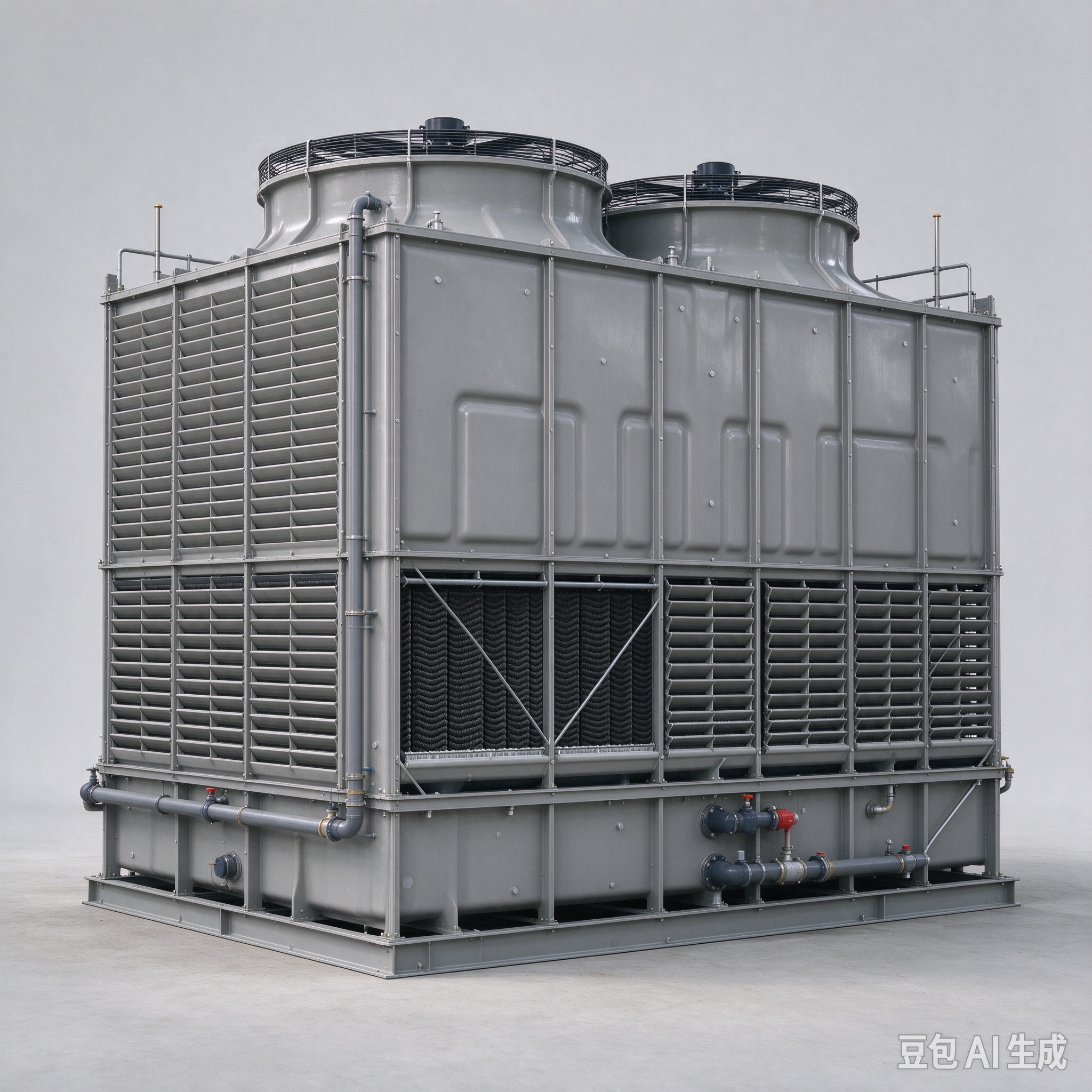
When people talk about cooling tower performance, they often focus on fan power, water flow, approach temperature, or tower size. But one detail inside the tower can have a surprisingly large impact on thermal performance: the flute size of the cooling tower fill.
The flute geometry determines how water spreads across the fill surface, how air moves through the tower, how much heat-transfer area is available, and how easily the fill can resist fouling. In other words, choosing the right flute size is not simply a matter of selecting a thicker or thinner Cooling Tower Fill. It is a balance between thermal efficiency, airflow resistance, water quality, and operating conditions.
For engineers planning a new tower, a retrofit, or a cooling tower replacement project, understanding flute size can help avoid one of the most common mistakes: choosing fill based only on appearance or price.
What Is Flute Size in Cooling Tower Fill?
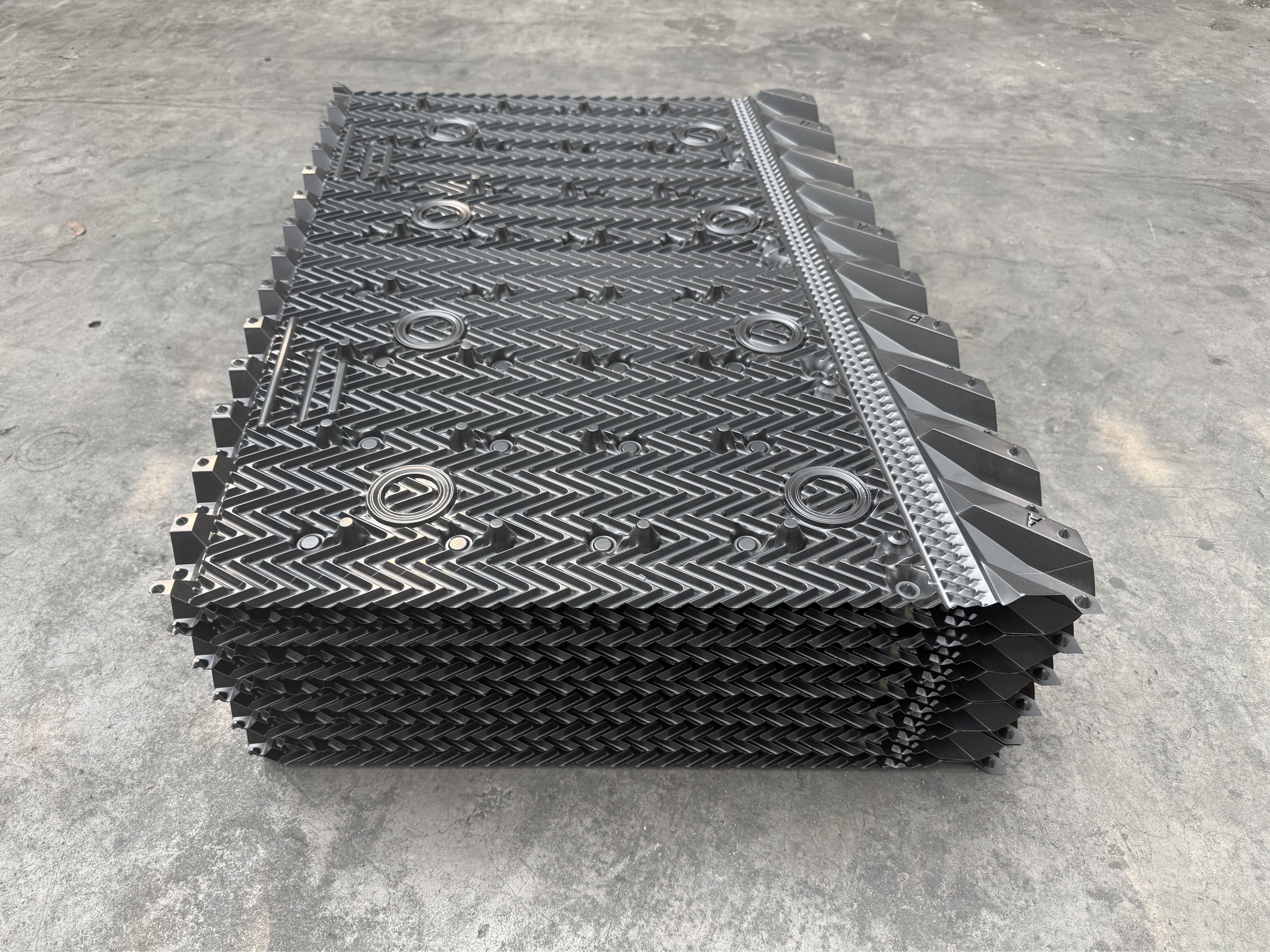
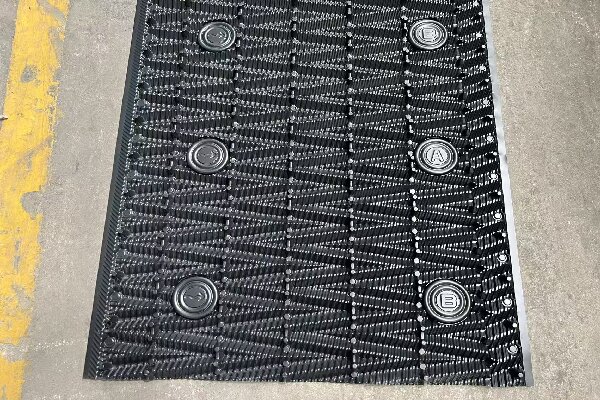
In a film fill cooling tower, the fill sheets are usually thermoformed into corrugated patterns. When multiple sheets are assembled together, these corrugations create channels for both water and air.
The size and shape of these channels are commonly referred to as the flute geometry or flute size.
A smaller flute creates narrower channels and usually provides more surface area for heat transfer. A larger flute creates wider passages, allowing air and water to move through the fill more easily.
That sounds simple, but the engineering trade-off is important.
- Smaller flutes: Higher surface area and potentially higher thermal efficiency.
- Larger flutes: Better resistance to clogging and lower airflow resistance.
This is why there is no single “best” flute size for every cooling tower.
How Smaller Flute Size Can Improve Cooling Performance
A smaller flute design increases the available contact area between water and air. More contact area generally means more opportunity for evaporation and heat transfer.
For relatively clean water systems, this can be a major advantage.
When water enters the Cooling Tower Media, it spreads into thin films across the corrugated surfaces. Air moves through the channels and comes into contact with these water films. The larger the effective wetted surface area, the more efficiently heat can be transferred.
Benefits of Smaller Flutes
- Higher heat-transfer surface area
- Potentially better cooling efficiency
- Suitable for towers where maximum thermal performance is important
- Can help improve tower performance during retrofit projects
For many industrial systems using relatively clean circulating water, a high-performance PVC film fill with optimized flute geometry can significantly improve thermal efficiency.
For example, our Industrial cooling tower fill is designed for industrial cooling applications where reliable thermal performance and stable operation are both important.
The Problem With Flutes That Are Too Small
Here is where real-world experience becomes important.
A fill design that performs extremely well in clean laboratory conditions may not always perform well inside an industrial cooling tower.
Smaller channels can become more sensitive to fouling.
If the circulating water contains:
- Scale
- Algae
- Suspended solids
- Biological growth
- Oil contamination
- Fibers or debris
these materials can gradually block narrow passages inside the tower fill.
Once this happens, the tower may experience reduced airflow and poor water distribution. The fill technically has a high surface area, but much of that surface area may no longer be working efficiently.
That is why experienced engineers do not select Film Fill based only on thermal performance data.
Water quality always matters.
How Larger Flute Size Helps in Dirty Water Applications
Larger flute channels provide wider passages for air and water. This makes the fill more tolerant of suspended solids and biological fouling.
In industrial environments where water quality is difficult to control, a wider channel design can sometimes provide better long-term performance than a very fine flute structure.
The initial thermal efficiency may not always be the highest possible, but the fill can remain cleaner and maintain more stable performance over time.
Larger Flutes Are Often Better For:
- Industrial cooling systems
- Dirty circulating water
- High suspended solids
- Older cooling towers
- Systems with frequent fouling problems
- Applications where maintenance access is limited
For these operating conditions, engineers often consider designs such as Anti fouling fill media, which are designed to reduce the risk of blockage and maintain more stable airflow over long operating periods.
Flute Size Also Affects Airflow Resistance
Cooling tower performance is not only about water.
The fan must move a large volume of air through the fill, and the fill creates resistance to that airflow.
Generally speaking:
- Smaller channels can create higher airflow resistance.
- Larger channels usually allow air to pass through more easily.
This is particularly important when replacing fill in an existing tower.
If a new Corrugated fill design creates significantly higher resistance than the original fill, the existing fan may not be able to deliver the required airflow.
The result can be disappointing cooling performance even if the new fill has a theoretically high heat-transfer area.
This is one reason why a cooling tower replacement project should always consider the complete system rather than treating fill as an isolated component.
Why Flute Size Must Match the Cooling Tower Type
Different tower designs operate differently, so the fill geometry should also be selected accordingly.
Counterflow Cooling Towers
In a counterflow cooling tower, air moves vertically upward while water flows downward through the fill.
The fill must provide good water distribution while maintaining acceptable airflow resistance. The flute geometry should be selected according to water quality, tower height, airflow capacity, and thermal requirements.
For these systems, you can explore our Counter flow fill media for replacement and retrofit applications.
Crossflow Cooling Towers
In a crossflow tower, air moves horizontally through the fill while water flows vertically downward.
The fill design must allow uniform airflow across the tower while helping distribute water evenly over the fill surface.
Different flute structures may be required depending on the tower design and water distribution system.
For this type of tower, our Cross flow fill media is designed for crossflow cooling tower configurations.
Flute Size vs. Surface Area: Bigger Is Not Always Better
A common misunderstanding is that the fill with the largest surface area will automatically provide the best cooling performance.
In practice, cooling performance depends on several factors working together:
- Effective wetted surface area
- Airflow resistance
- Water distribution
- Flute geometry
- Fill height
- Water quality
- Operating temperature
- Maintenance conditions
A very fine flute may provide excellent surface area, but if fouling blocks the channels, the actual performance can decline quickly.
On the other hand, a wider flute may provide less surface area but maintain stable airflow and water distribution for a longer period.
The goal is not simply to choose the fill with the most surface area.
The goal is to choose the cooling fill that provides the best performance under your actual operating conditions.
How Water Quality Should Influence Your Fill Selection
If you are selecting a new Cooling tower Fill, water quality should be one of the first questions you ask.
Clean Water
Systems with well-controlled water treatment may be suitable for finer flute designs that maximize heat-transfer area.
Moderately Contaminated Water
A balanced flute geometry is often the safest choice. You want good thermal efficiency without creating channels that are too easy to block.
Dirty or High-Fouling Water
Wider channels and anti-fouling designs are often more practical. In these applications, stable long-term performance is usually more valuable than maximum theoretical efficiency.
Flute Geometry Matters During Cooling Tower Replacement
When replacing old fill, many buyers simply measure the length, width, and height of the existing fill blocks.
Those dimensions are important, but they are not enough.
Before ordering replacement Cooling Tower Media, you should also check:
- Existing flute size and geometry
- Water quality
- Operating temperature
- Cooling tower type
- Fan capacity
- Airflow resistance
- Required cooling capacity
- Fouling history
Sometimes replacing old fill with exactly the same design makes sense.
But sometimes a retrofit is an opportunity to improve the tower by selecting a different flute geometry that better matches current operating conditions.
Corrugated Cooling Tower Fill and Flute Design
Modern Corrugated fill uses carefully designed sheet geometry to create water films and airflow passages throughout the cooling tower.
The angle, depth, spacing, and shape of the corrugations all influence thermal performance.
This is why two fill products may look similar from a distance but perform very differently inside a cooling tower.
For replacement projects requiring corrugated film structures, you can review our Corrugated cooling tower fill options.
What Engineers Should Check Before Choosing Flute Size
If I were helping a customer select fill for a real project, I would usually ask these questions first:
- What type of cooling tower are you using?
- What is the circulating water quality?
- Has the existing fill experienced fouling or blockage?
- What is the operating water temperature?
- Is the project a new installation or a cooling tower replacement?
- Are you trying to increase cooling capacity?
- Can the existing fan handle additional airflow resistance?
- What are the dimensions of the existing fill?
These answers usually provide a much clearer direction than simply asking, “Which fill has the highest efficiency?”
PVC or PP: Material Still Matters
Flute geometry is important, but material selection should not be ignored.
PVC is widely used for many industrial cooling tower applications because of its good thermal performance, durability, and cost efficiency.
However, higher-temperature or more demanding applications may require different materials.
For applications requiring higher temperature resistance, PP cooling tower fill may be a better option depending on the operating conditions.
Material and flute geometry should always be considered together.
A Simple Rule for Choosing the Right Flute Size
Here is the simple version:
Clean water + high thermal performance requirements = finer flute designs may be suitable.
Dirty water + fouling concerns = wider flute channels are usually safer.
Existing tower retrofit = check both thermal performance and fan capability before changing flute geometry.
The best fill is not necessarily the one with the smallest flute or the largest surface area.
The best fill is the one that continues performing efficiently after months or years of real operation.
Final Thoughts
Flute size is one of those details that can easily be overlooked during cooling tower fill selection, but it has a direct influence on thermal efficiency, airflow resistance, fouling resistance, and long-term operating stability.
A well-designed film fill cooling tower system needs the right balance between surface area and open channel space.
If the channels are too narrow for the water quality, fouling can quickly reduce performance. If the channels are unnecessarily large, you may lose valuable heat-transfer efficiency.
That is why the smartest approach is to select Cooling Tower Fill based on the actual operating environment rather than choosing the cheapest or most common design.
Need Help Selecting Cooling Tower Fill for Your Project?
If you are planning a new cooling tower installation, maintenance project, retrofit, or cooling tower replacement, we can help evaluate your application and recommend a suitable fill structure based on tower type, operating temperature, water quality, and required performance.
We manufacture different types of PVC and PP Cooling Tower Media, including film fill, corrugated fill, industrial fill, and customized replacement solutions.
Send us your existing fill dimensions, cooling tower type, and project requirements, and we can help you identify a suitable solution.
Contact Us for Cooling Tower Fill Selection and Replacement Support →
```