How to Install Cooling Tower Fill Correctly: Common Mistakes That Reduce Cooling Efficiency
How to Install Cooling Tower Fill Correctly: Common Mistakes That Reduce Cooling Efficiency
Installing new Cooling Tower Fill may look like a simple job: remove the old media, put the new fill inside the tower, and start the system again. In reality, installation quality can have a major effect on cooling performance.
Even high-quality film fill cooling tower media can perform poorly if it is installed in the wrong direction, compressed too tightly, unsupported, or exposed to uneven water distribution. In some cases, the problem is not the Cooling Tower Media itself — it is simply the way the fill was installed.
This is especially important during a cooling tower replacement or refurbishment project. Engineers often focus heavily on selecting the correct fill profile, material, and flute spacing, but installation details can be overlooked once the project reaches the site.
Based on common cooling tower refurbishment experience, here are the most important things to check when installing tower fill.
Why Correct Cooling Tower Fill Installation Matters
The main purpose of cooling fill is to create a large contact surface between water and air. Water spreads across the surface of the fill, forms a thin film, and releases heat as air moves through the tower.
For this process to work properly, several things need to happen at the same time:
- Water must be distributed evenly across the fill surface.
- Air must pass through the fill with minimal obstruction.
- Fill sheets or blocks must remain stable during operation.
- The correct flow direction must be maintained.
- There should be no large gaps or compressed areas inside the fill pack.
When installation is poor, airflow and water distribution become uneven. The result can be reduced cooling efficiency, higher fan energy consumption, dry spots, fouling, vibration, or even premature damage to the fill.
1. Installing the Fill in the Wrong Direction
This is one of the most common mistakes, particularly when replacing older fill with a new profile.
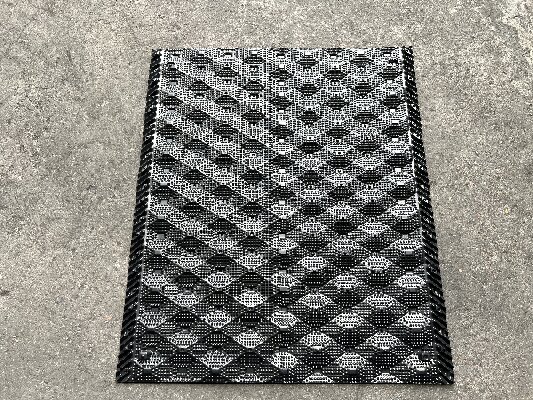
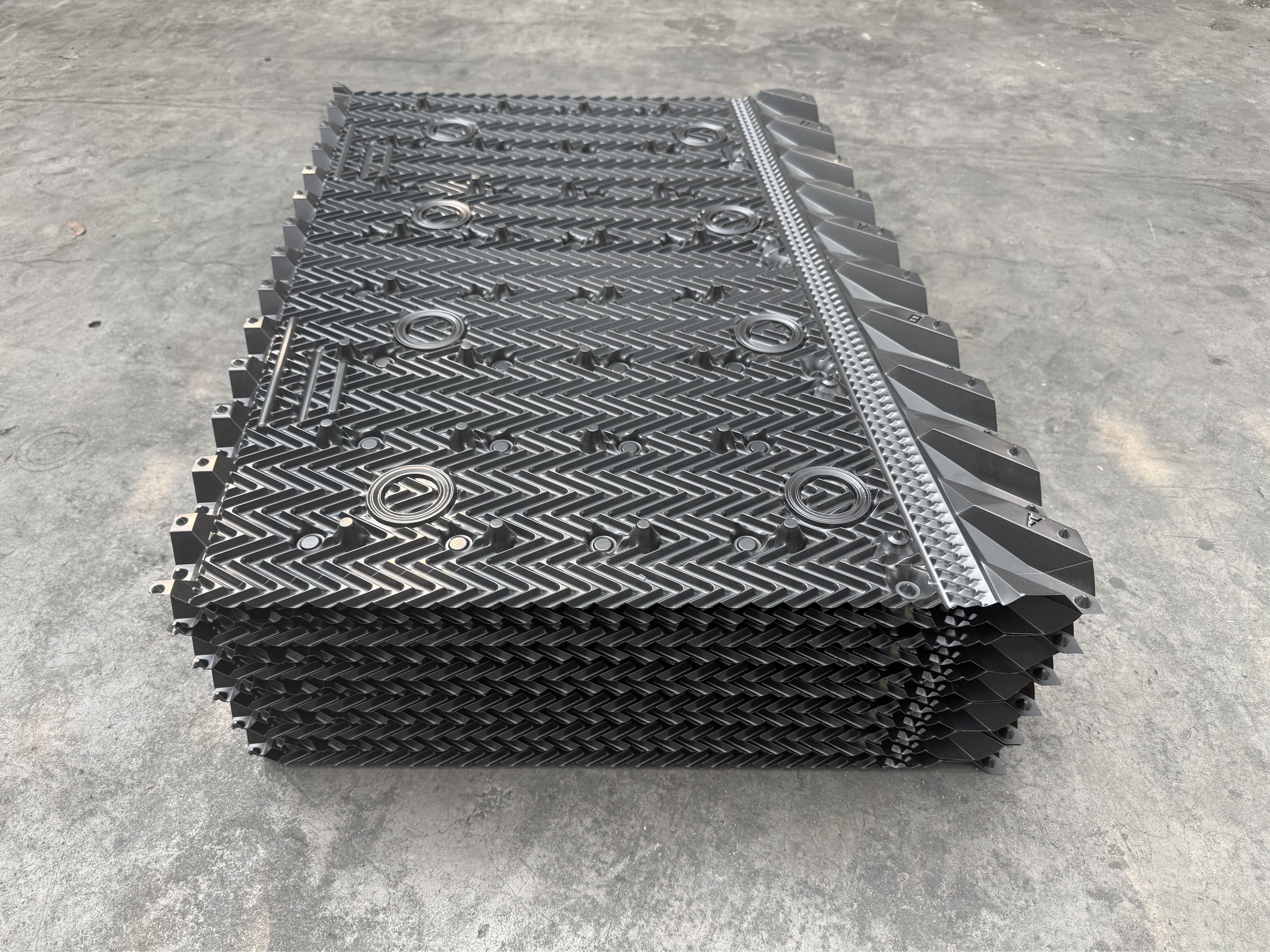
Most Corrugated fill designs are engineered with a specific water and airflow direction. The flute geometry is designed to improve water spreading, turbulence, and heat transfer.
If the fill is installed incorrectly, water may not spread evenly across the sheet surface. Instead of forming a thin film, water can channel through certain areas and bypass others.
What to check before installation
- Confirm the recommended airflow direction.
- Check the orientation of the corrugated channels.
- Follow the supplier's installation drawing.
- Make sure all blocks are installed consistently.
A simple orientation mistake across an entire tower can affect the performance of the whole cooling system.
2. Leaving Gaps Between Fill Blocks
Cooling tower fill should normally form a continuous and properly supported fill pack. Large gaps between blocks allow water and air to bypass the intended heat transfer surface.
During installation, gaps may appear because of incorrect cutting, poor measurement, damaged blocks, or attempts to fit different fill profiles together.
Small tolerances are sometimes unavoidable, especially in old cooling towers with irregular internal structures. However, installers should avoid creating unnecessary bypass channels.
This is particularly important when installing large modular Cooling Tower Fill Blocks in refurbishment projects.
For projects requiring modular replacement media, properly sized Cooling tower fill blocks can make installation easier and help maintain a more consistent fill structure.
3. Compressing the Fill Too Tightly
Sometimes installers assume that tighter is always better. It isn't.
Excessive compression can deform the fill structure and reduce the open area available for airflow. This increases air resistance and can reduce the efficiency of the cooling tower.
Film fill is designed with a specific geometry. When the sheets are compressed beyond their intended position, the water channels and airflow passages may no longer work as designed.
A practical rule
The fill should be stable, but it should not be forced into position. If excessive pressure is required during installation, stop and check whether the dimensions are correct.
4. Ignoring the Condition of the Support Structure
Replacing the fill without checking the fill support system is a common mistake during older cooling tower refurbishment projects.
Over time, support beams, grids, FRP structures, timber members, or steel frames may become damaged or corroded.
Installing new Cooling Tower Media on an uneven or weak support structure can cause:
- Uneven load distribution
- Fill deformation
- Block movement
- Partial collapse
- Reduced airflow
Before installing new fill, inspect the entire support system carefully. A new fill pack can be expensive, and there is little value in installing it on a structure that may fail shortly afterward.
5. Installing Fill Before Checking Water Distribution
Another common problem is installing the new fill without inspecting the water distribution system.
Even the best PVC or PP fill cannot compensate for badly distributed water.
Before installation, check:
- Nozzles
- Distribution pipes
- Spray pressure
- Blocked openings
- Uneven water flow
After the new fill is installed, perform a water distribution test whenever possible. Look for dry areas and zones receiving excessive water.
Ideally, water should be distributed as evenly as possible across the top of the fill pack.
6. Using the Wrong Fill Size During a Cooling Tower Replacement
One of the biggest challenges during a cooling tower replacement project is assuming that standard sizes will always fit.
Older cooling towers may have non-standard dimensions. Internal structures may also have been modified during previous repairs.
Before ordering replacement fill, measure:
- Available installation width
- Fill pack height
- Support spacing
- Access opening dimensions
- Existing fill orientation
Customized dimensions can significantly reduce cutting work at the installation site and help avoid unnecessary gaps.
For industrial refurbishment projects, using properly designed industrial cooling tower fill with dimensions matched to the existing tower structure can make installation faster and more reliable.
7. Mixing Different Fill Types Without Checking Compatibility
During emergency repairs, some operators install whatever fill is immediately available. This can create problems if different profiles have significantly different airflow resistance or water distribution characteristics.
For example, mixing fine flute film fill with wider channel fill may result in uneven airflow across the tower.
Different fill materials may also have different temperature limits:
- PVC film fill is commonly used for normal industrial cooling water applications.
- PP fill is often selected for higher-temperature applications.
- Splash-type fill may be preferred where water contains heavy solids or fouling is a major concern.
If different fill types must be used in the same tower, the layout should be reviewed carefully rather than installed randomly.
8. Forgetting About Thermal Expansion
Plastic cooling fill expands and contracts with temperature changes. This is something installers sometimes forget, especially in large industrial cooling towers.
If the fill pack is installed with no allowance for movement, thermal expansion may cause:
- Warping
- Block deformation
- Stress on support structures
- Movement between sections
The correct installation method depends on the fill design, material, operating temperature, and tower structure.
This is one reason why installation instructions should be discussed before shipment rather than after the fill arrives at the project site.
9. Poor Handling During Installation
Cooling tower fill is lightweight, but that doesn't mean it cannot be damaged.
Common handling problems include:
- Throwing fill blocks onto the ground
- Walking directly on unsupported fill
- Dragging blocks across rough surfaces
- Stacking too much weight on top of the fill
- Cutting fill incorrectly on site
Damaged sections may not always look serious at first, but deformation can affect water flow and airflow inside the fill pack.
It is better to plan the installation route and staging area before the project begins.
10. Skipping a Final Inspection Before Startup
Before restarting the cooling tower, take time to inspect the installation.
A simple final checklist
- Is the fill installed in the correct direction?
- Are there any large gaps between fill sections?
- Is the fill properly supported?
- Are any blocks damaged or deformed?
- Is the water distribution system working correctly?
- Are there any obvious bypass areas?
- Can air move freely through the fill pack?
A short inspection before startup can prevent a much larger problem later.
Film Fill vs. Splash Fill: Installation Considerations
Different types of cooling fill require different installation considerations.
Film Fill
Film fill cooling tower media generally requires accurate alignment and even water distribution. Because of the closely designed surface geometry, correct orientation is important.
Splash Fill
Splash fill systems may be more tolerant of dirty water and suspended solids, but support and spacing remain important. Individual splash components should be securely installed to prevent movement during operation.
Corrugated Fill
Corrugated cooling tower fill is designed to create turbulence and increase the contact area between air and water. The orientation and connection between fill sheets should follow the intended design.
How to Make Future Fill Replacement Easier
A good installation project should also consider the next replacement cycle.
When planning a major cooling tower refurbishment, it can be useful to document:
- Fill profile
- Material type
- Flute spacing
- Block dimensions
- Installation orientation
- Support structure layout
Keeping these records makes future maintenance much easier. When the next replacement is required, the project team will not need to measure everything again from the beginning.
Frequently Asked Questions About Cooling Tower Fill Installation
Can cooling tower fill be installed in any direction?
No. Most film fill and corrugated fill designs have a recommended orientation based on water flow and airflow. Always confirm the correct installation direction before starting.
Should old fill supports be replaced when installing new fill?
Not always, but they should be inspected carefully. If the supports are corroded, uneven, damaged, or unable to safely carry the new fill pack, replacement or repair should be considered.
Can different cooling tower fill types be used together?
It is possible in some applications, but the airflow and water distribution characteristics should be evaluated first. Randomly mixing different fill profiles can reduce overall tower performance.
How do I know if customized fill dimensions are needed?
If the cooling tower has non-standard internal dimensions, restricted access, unusual support structures, or existing gaps caused by standard fill sizes, customized dimensions may provide a better installation result.
Final Thoughts
Installing Cooling Tower Fill correctly is just as important as selecting the right fill in the first place.
A good film fill product can only perform properly when water distribution, airflow, support structure, dimensions, and installation direction all work together.
For a successful cooling tower replacement project, don't treat fill installation as simply placing plastic media inside the tower. Measure the structure, inspect the supports, check the water distribution system, confirm the fill orientation, and inspect the installation before startup.
Those small details can make a noticeable difference in cooling efficiency and the service life of the fill.
Need Support for a Cooling Tower Fill Replacement Project?
Whether you are planning a cooling tower refurbishment, replacing damaged fill, or looking for customized Cooling Tower Media for an industrial project, selecting the correct fill profile and dimensions before installation can save significant time on site.
We can provide PVC and PP cooling tower fill solutions, customized dimensions, and technical support for replacement and retrofit projects.
Contact us to discuss your cooling tower fill requirements and upcoming replacement projects.