How to Improve Cooling Tower Efficiency in Hot and Humid Climates
How to Improve Cooling Tower Efficiency in Hot and Humid Climates
Cooling towers often have a much harder job in hot and humid climates. High ambient temperatures already increase the cooling load, while high humidity reduces the air's ability to absorb additional moisture. As a result, a cooling tower that performs well in a dry climate may struggle to achieve the same outlet water temperature in tropical or coastal regions.
From an engineering perspective, improving cooling tower efficiency is not always about installing a larger tower or increasing fan power. In many cases, the real problem comes from airflow restrictions, dirty Cooling Tower Fill, incorrect water distribution, or using the wrong type of Cooling Tower Media for the operating environment.
Below are some practical ways to improve cooling tower performance when operating in hot and humid climates.
1. Understand Why Hot and Humid Weather Reduces Cooling Tower Performance
A cooling tower does not cool water based only on dry bulb temperature. Its performance is strongly related to the wet bulb temperature.
When humidity is high, the air entering the cooling tower already contains a large amount of moisture. This means the air has less capacity to absorb additional water vapor from the circulating water.
For example, during a hot and humid afternoon, operators may notice that:
- Cold water temperature increases
- Approach temperature becomes larger
- Chiller efficiency drops
- Fans run at higher speeds
- Energy consumption increases
This does not always mean there is something wrong with the cooling tower. Sometimes the weather conditions simply reduce the available cooling potential. However, a properly maintained tower can still perform much better than one with poor airflow or fouled fill.
2. Keep the Cooling Tower Fill Clean
If I had to check only one component when a cooling tower starts losing performance, I would usually look at the fill first.
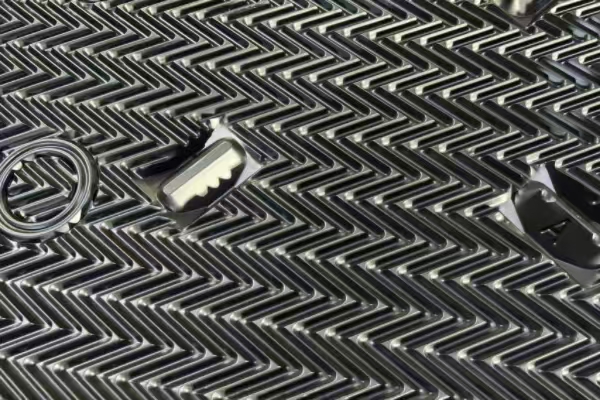
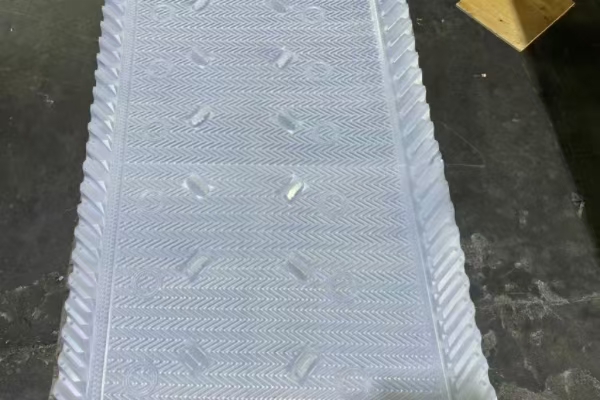
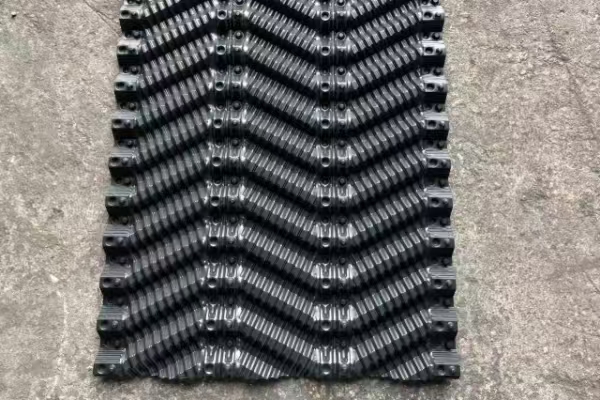
The Cooling tower Fill is where most of the heat transfer happens. Water spreads across the fill surface and comes into contact with moving air. The larger the effective contact area between water and air, the better the cooling performance.
But in hot and humid climates, biological growth and water contamination can become more serious. Algae, scale, suspended solids and biofilm can gradually block the flow channels inside the fill.
Once this happens, several problems appear at the same time:
- Reduced water-air contact area
- Higher airflow resistance
- Uneven water distribution
- Reduced evaporation efficiency
- Higher fan energy consumption
In other words, even a small amount of fouling can slowly reduce cooling capacity.
For industrial systems operating with relatively clean water, a properly designed Film Fill can provide a large heat transfer surface. However, regular inspection is still important. Waiting until the tower completely loses performance is usually more expensive than performing preventive cleaning.
3. Choose the Right Fill Design for the Water Quality
Not every cooling tower should use the same fill design.
In clean water systems, high-efficiency film fill cooling tower designs can provide excellent heat transfer performance because the water forms a thin film across the corrugated surface.
However, systems with poor water quality may require a different approach.
If the circulating water contains suspended solids, dust, fibers or biological contamination, narrow flow channels can become blocked more easily. In these cases, engineers should pay attention to flute geometry and channel spacing rather than simply choosing the fill with the highest surface area.
A well-designed Anti fouling fill media can be a better option for systems exposed to dirty water conditions, because the design focuses more on maintaining water flow and reducing blockage.
The important point is simple: higher surface area is not always better if the fill becomes fouled quickly.
4. Improve Airflow Before Increasing Fan Power
When cooling performance drops, many operators immediately increase fan speed. Sometimes that helps, but it may also hide the real problem.
Before adding more fan power, check whether the airflow path is restricted.
Common airflow problems include:
- Blocked air inlet louvers
- Damaged drift eliminators
- Fouled tower fill
- Fan blade damage
- Incorrect fan rotation
- Air recirculation around the cooling tower
Hot and humid climates make airflow management even more important. If warm discharge air is pulled back into the cooling tower inlet, the tower will operate with hotter entering air and cooling performance can drop significantly.
Sometimes improving airflow around the tower structure can provide a better result than simply installing a larger motor.
5. Check Water Distribution Across the Tower Fill
Even the best Corrugated fill cannot perform properly if water is not distributed evenly.
Uneven water distribution creates dry areas inside the tower fill. Some sections receive too much water while other sections receive almost none. This reduces the effective heat transfer area and wastes part of the installed Cooling Tower Media.
During inspection, look for:
- Blocked spray nozzles
- Broken distribution pipes
- Uneven spray patterns
- Low water pressure
- Dry sections inside the tower fill
A simple visual inspection can often reveal problems that are difficult to identify from temperature readings alone.
6. Use Fill Material Suitable for High Temperature Operation
Material selection also becomes important in hot climates.
Different cooling towers operate at different circulating water temperatures. Standard PVC cooling fill is widely used in industrial cooling towers, but operating temperature, chemical exposure and mechanical conditions should always be considered before selecting the material.
For higher temperature applications, PP materials may be considered depending on the actual operating conditions.
When selecting a tower fill, engineers should consider:
- Maximum operating water temperature
- Water chemistry
- Suspended solids
- UV exposure
- Required cooling capacity
- Airflow resistance
- Expected service life
The cheapest fill is not always the lowest-cost solution. If the material deforms or loses structural strength under operating conditions, the cost of an early cooling tower replacement can be much higher than choosing the correct material from the beginning.
7. Reduce Air Recirculation Around the Cooling Tower
Air recirculation is often underestimated, especially in crowded industrial facilities.
When hot discharge air from the cooling tower is pulled back into the air inlet, the entering air temperature increases. The tower then starts operating with less favorable conditions.
This problem becomes more serious when:
- Multiple cooling towers are installed close together
- Buildings block natural airflow
- Wind conditions push discharge air toward the intake
- Fan stacks are too short
- Cooling towers are installed inside partially enclosed spaces
Before modifying the cooling tower itself, it is worth checking the surrounding environment. Sometimes the problem is not inside the tower at all.
8. Consider the Fill Structure During Cooling Tower Upgrades
When an older cooling tower cannot meet the required outlet water temperature, replacing the fill can be one of the most effective upgrade options.
A modern high-efficiency film fill cooling tower design can provide better water distribution and increased contact surface compared with older splash-type media.
For many industrial retrofit projects, replacing outdated media with properly designed Industrial cooling tower fill can improve thermal performance without rebuilding the entire tower.
Of course, a cooling tower replacement project should not focus only on fill height. Engineers should also review flute geometry, sheet thickness, material, support structure and airflow resistance.
9. Monitor Approach Temperature Instead of Looking Only at Cold Water Temperature
One useful way to evaluate cooling tower performance is to monitor the approach temperature.
The approach is the difference between the cold water temperature leaving the tower and the entering air wet bulb temperature.
If the approach temperature gradually increases over time under similar operating conditions, it may indicate that the cooling tower is losing efficiency.
Possible reasons include:
- Fouled cooling fill
- Reduced airflow
- Damaged fans
- Poor water distribution
- Scale formation
- Blocked fill channels
This type of monitoring can help operators identify problems before they become serious.
10. Know When Cleaning Is No Longer Enough
Cleaning is usually the first option when cooling fill becomes dirty. However, there comes a point when cleaning no longer restores the original performance.
You should start considering cooling tower replacement of the fill when you see problems such as:
- Broken or collapsed fill sheets
- Permanent deformation caused by temperature
- Severe scaling inside flow channels
- Material becoming brittle
- Large sections missing
- Repeated fouling shortly after cleaning
Old cooling fill can also create higher airflow resistance, forcing fans to consume more energy while delivering less cooling capacity.
In these situations, replacing the cooling fill may provide better long-term economics than repeated cleaning and repair.
Practical Checklist for Hot and Humid Climate Operation
If your cooling tower is operating in a tropical, coastal or consistently humid environment, I would recommend checking these items regularly:
- Inspect fill for algae and biofilm
- Monitor approach temperature
- Check spray nozzle performance
- Inspect airflow restrictions
- Clean air inlet louvers
- Check for discharge air recirculation
- Review water treatment performance
- Inspect fill material for deformation
- Check fan rotation and blade condition
- Evaluate whether the existing cooling fill still matches the operating conditions
Final Thoughts
Improving cooling tower efficiency in hot and humid climates is usually not about one single modification. The best results normally come from looking at the entire system: wet bulb conditions, airflow, water distribution, water quality and the condition of the Cooling Tower Media.
From experience, keeping the cooling fill clean and selecting the correct fill structure for the actual water conditions can make a noticeable difference. A well-designed cooling fill provides excellent heat transfer, but only when water and air can move through it properly.
If an existing tower is struggling to maintain cooling performance, it is worth inspecting the fill before making expensive changes to fans or other equipment. Sometimes the most effective improvement is simply replacing an old or damaged cooling fill with a design better suited to the operating environment.
Need Help Selecting Cooling Tower Fill for Your Project?
If you are planning a cooling tower retrofit, maintenance project or cooling tower replacement, choosing the right fill structure and material is an important part of achieving stable long-term performance.
We can help evaluate different Cooling Tower Fill options based on operating temperature, tower type, water quality and project requirements.
Contact us to discuss your cooling tower fill requirements and request technical support.