How to Replace Cooling Tower Fill and Improve Cooling Efficiency
How to Replace Cooling Tower Fill and Improve Cooling Efficiency
When a cooling tower starts losing performance, many people immediately look at the fan, motor, pump, or water flow. But there is another component that is often overlooked: the cooling tower fill.
The fill is where most of the heat transfer takes place. If the fill becomes badly scaled, clogged, cracked, deformed, or chemically damaged, the tower may still be running normally while its cooling performance continues to decline.
In many cases, replacing the old Cooling tower Fill is a much more practical solution than trying to compensate for poor heat transfer by increasing fan speed or water flow.
This guide explains how engineers normally approach cooling tower replacement, how to know when the fill really needs to be replaced, what to check before ordering new tower fill, and how the right Cooling Tower Media can help restore cooling efficiency.
What Does Cooling Tower Fill Actually Do?
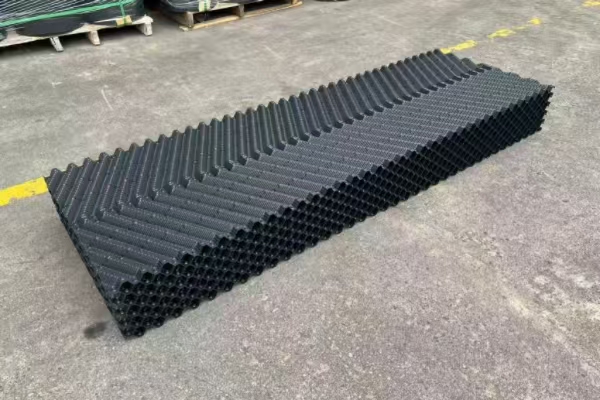
Cooling tower fill is the heat-transfer media installed inside a wet cooling tower. Its job is simple: spread the circulating water into a thin film and create as much contact area as possible between the water and the air.
The larger the effective contact area and the longer the water remains properly distributed over the fill surface, the better the opportunity for heat and a small amount of water to be transferred to the air.
This is why a tower can have a perfectly good fan and pump but still deliver poor cooling results if the fill is in bad condition.
Depending on the tower design, you may see different types of fill, including film fill, splash fill, corrugated fill, cross-flow fill, and counter-flow fill.
For modern film-fill towers, the geometry of the fill sheets is especially important because it controls water distribution, air passage, pressure drop, and effective heat-transfer area.
When Should Cooling Tower Fill Be Replaced?
Not every dirty fill needs to be replaced. Sometimes a proper cleaning and water-treatment adjustment can bring the fill back to acceptable condition.
The real question is whether the fill is still physically sound and capable of maintaining good water and air contact.
1. Heavy Scale Cannot Be Removed
Mineral scale can gradually build up on the surface of film fill. A thin layer may already reduce performance, while heavy deposits can partially block the air passages.
If the deposits are hard, thick, and deeply attached to the fill, aggressive cleaning may damage the PVC or PP sheets. At this point, replacement is often safer and more economical.
2. The Fill Has Become Brittle
Older PVC fill can become brittle after years of exposure to heat, chemicals, ultraviolet radiation, and operating conditions.
If the sheets crack or break when lightly handled, the fill may no longer provide a stable heat-transfer surface.
3. The Fill Has Collapsed or Deformed
Heat and mechanical stress can cause fill sheets to deform. Once the original corrugated or cellular structure is lost, water distribution and airflow can also change.
This is particularly important in towers that operate at elevated temperatures. A fill that looked acceptable during installation may gradually lose its designed shape after years of operation.
4. Air Passages Are Seriously Blocked
Dust, algae, sludge, biological growth, and suspended solids can accumulate between fill sheets. When the passages become heavily blocked, the fan has to work against greater resistance while less air actually reaches the wet surface.
If cleaning cannot restore the original passages, replacing the Cooling Tower Media may provide a much better result.
5. Cooling Performance Continues to Fall
If approach temperature has increased, outlet water temperature remains too high, or the tower struggles during peak summer conditions, inspect the fill before assuming that the fan or motor is the problem.
A simple inspection of the fill can sometimes reveal the real cause much faster than changing other equipment.
Cooling Tower Fill Replacement: A Practical Step-by-Step Approach
Step 1: Record the Existing Tower Conditions
Before removing the old fill, record as much information as possible.
- Cooling tower type
- Counter-flow or cross-flow design
- Existing fill dimensions
- Fill block dimensions
- Fill thickness and sheet spacing
- Water flow rate
- Hot water temperature
- Cold water temperature
- Design air flow
- Operating water chemistry
These details are much more useful than simply saying, “I need replacement fill.” Two cooling towers may look similar from the outside but require very different fill geometry.
Step 2: Inspect the Existing Fill
Take several fill blocks from different locations rather than inspecting only one small area.
Look for cracks, broken sheets, deformation, scale, algae, sludge, blocked air passages, and chemical discoloration.
Also check whether the water is being distributed evenly across the top of the fill. Poor distribution can sometimes be mistaken for a fill problem when the actual issue is with the spray nozzles or distribution system.
Step 3: Measure the Existing Fill
This is one of the most important steps when ordering replacement material.
Measure the length, width, height, number of layers, and approximate sheet thickness of the existing fill. If possible, take clear photographs of the fill structure and installation position.
For replacement projects, matching the existing dimensions is often more important than choosing a generic “high-efficiency” fill from a catalog.
Step 4: Choose the Correct Fill Type
The next decision is whether the replacement should use the same type of fill or a different design.
For many industrial applications, film fill cooling tower designs are widely used because they provide a large effective surface area in a relatively compact volume.
However, if the circulating water contains high levels of suspended solids or biological contaminants, an anti-fouling design may be more appropriate than simply selecting the highest surface-area fill available.
Step 5: Check the Material
PVC and PP are two common materials used for cooling tower fill.
PVC cooling tower fill is widely used in many industrial and commercial towers because of its balance between cost, formability, and operating performance.
PP can be a useful alternative in applications where higher temperature resistance or specific chemical resistance is required.
The material should always be selected according to actual operating temperature, water chemistry, UV exposure, and tower conditions rather than price alone.
How the Right Fill Can Improve Cooling Efficiency
Replacing old fill does not automatically guarantee better cooling. The improvement comes from restoring the conditions required for effective heat transfer.
A properly selected fill can help restore:
- Effective water-to-air contact area
- Water film distribution
- Air passage area
- Airflow through the fill
- Heat-transfer efficiency
- Stable water distribution
For example, when severely fouled film fill is replaced, the air passages can become much more open. Water can also spread more evenly over the fill surface. This allows the existing fan and water circulation system to work closer to their intended operating conditions.
In other words, you do not always need a bigger fan to get better cooling. Sometimes the tower simply needs the heat-transfer media restored to proper condition.
Choosing Film Fill for Counter-Flow Cooling Towers
Counter-flow towers require careful attention to fill geometry because air and water move in opposite directions through the fill section.
For these applications, the fill must provide sufficient heat-transfer area while maintaining acceptable airflow resistance.
When replacing the fill in a counter-flow tower, it is important to confirm the original fill height, sheet spacing, water loading, and available fan capacity before changing the design.
If you are replacing an existing system rather than designing a new tower, keeping the replacement fill compatible with the existing airflow and water distribution system is usually the safest approach.
For projects involving counter-flow towers, you can review our Counter Flow Fill Media specifications and compare them with your existing installation before making a replacement decision.
What About Fouling? Don't Replace Fill Too Early
One mistake I often see in cooling tower maintenance is replacing fill before understanding why it failed.
If the old fill is covered with dirt, algae, or scale, the first question should be: why did the fouling happen?
High suspended solids, poor water treatment, inadequate filtration, dead zones, poor blowdown control, and uneven water distribution can all contribute to fouling.
If the root cause is not addressed, new fill can eventually develop the same problem.
For towers with recurring fouling issues, an Anti Fouling Fill Media solution may be worth considering, particularly where keeping conventional film fill clean has been a continuing maintenance problem.
How to Avoid Common Cooling Tower Fill Replacement Mistakes
Don't Choose Fill Based Only on Price
The cheapest fill is not necessarily the lowest-cost solution. If the geometry is unsuitable for the tower, cooling performance can suffer and the tower may consume more energy to achieve the same cooling duty.
Don't Ignore the Existing Tower Design
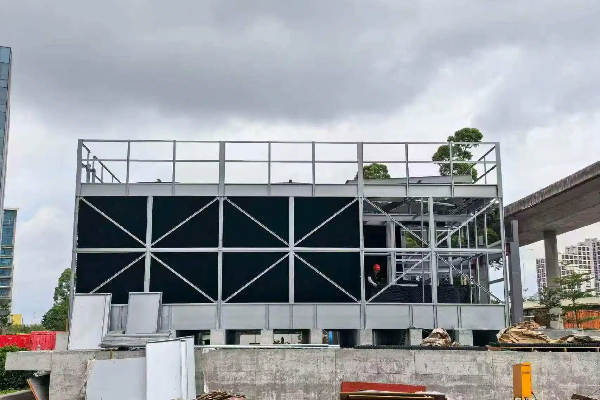
Always confirm whether the tower is cross-flow or counter-flow. The fill design, installation method, water distribution, and airflow arrangement can be different.
Don't Change Fill Height Without Checking the System
Adding more fill may sound like an easy way to increase heat-transfer area, but it can also increase airflow resistance. The fan system needs to be considered before making major changes.
Don't Forget Water Distribution
Even excellent fill cannot perform properly if the water is not distributed evenly across the fill surface.
During a replacement project, inspect spray nozzles, headers, distribution pipes, drift eliminators, and supporting structures at the same time.
Industrial Cooling Tower Fill Replacement: What Should You Ask the Supplier?
If you are contacting a cooling tower fill manufacturer, I recommend providing more than just the tower model number.
A supplier can normally give you a much more accurate recommendation if you provide:
- Tower type: counter-flow or cross-flow
- Existing fill dimensions
- Required fill quantity
- Operating water temperature
- Water quality information
- Existing fill material
- Photos of the old fill
- Cooling tower drawings, if available
For larger industrial projects, it is also useful to provide the required cooling capacity and water flow rate. This allows the fill selection to be checked against the actual operating conditions rather than simply matching physical dimensions.
For general industrial replacement projects, you can also review our Industrial Cooling Tower Fill for more information about industrial cooling tower fill solutions.
Can New Cooling Tower Fill Reduce Energy Consumption?
Potentially, yes, but the result depends on the condition of the old fill and the overall tower system.
If heavily fouled or damaged fill is restricting airflow and reducing heat transfer, replacing it can restore the tower's ability to achieve the required cold-water temperature.
In some cases, this means the fan does not need to operate at unnecessarily high speed to compensate for poor heat transfer.
However, it is important not to treat fill replacement as an automatic energy-saving measure. Fan efficiency, motor condition, water flow, approach temperature, ambient wet-bulb temperature, and water treatment all affect the final result.
The best approach is to compare the tower's operating data before and after replacement.
Final Checklist Before Ordering Cooling Tower Fill
- Confirm the cooling tower type.
- Confirm counter-flow or cross-flow configuration.
- Measure the existing fill accurately.
- Check the current fill condition.
- Identify the reason for failure or fouling.
- Confirm operating temperature.
- Review water chemistry and suspended solids.
- Select PVC or PP according to the application.
- Check fill geometry and airflow resistance.
- Confirm fill quantity and block dimensions.
- Inspect water distribution components.
- Discuss installation and support requirements with the supplier.
Cooling Tower Fill Replacement: The Bottom Line
Replacing cooling tower fill is not simply a matter of taking out the old blocks and installing new ones.
The real goal is to restore the tower's heat-transfer performance while keeping the new fill compatible with the existing water distribution, airflow, temperature, and operating conditions.
If the old Film fill is heavily fouled, cracked, brittle, collapsed, or permanently deformed, replacement can be a much better option than repeatedly cleaning a fill that has already reached the end of its useful life.
On the other hand, if the fill is still structurally sound, proper cleaning and water-treatment improvements may be enough.
For any cooling tower replacement project, the best decision usually starts with a simple inspection: understand what failed, measure what you have, and then select the right Cooling Tower Media for the actual operating conditions.
Need Help Selecting Replacement Cooling Tower Fill?
If you are planning a cooling tower fill replacement project, send us your existing fill dimensions, tower type, required quantity, operating temperature, or photos of the old fill.
We can help you check the suitable fill type, material, dimensions, and replacement configuration before you place an order.
Contact us for cooling tower fill replacement and tell us what type of cooling tower you are working with.